


How to Identify and Care for Flowers That Start With T
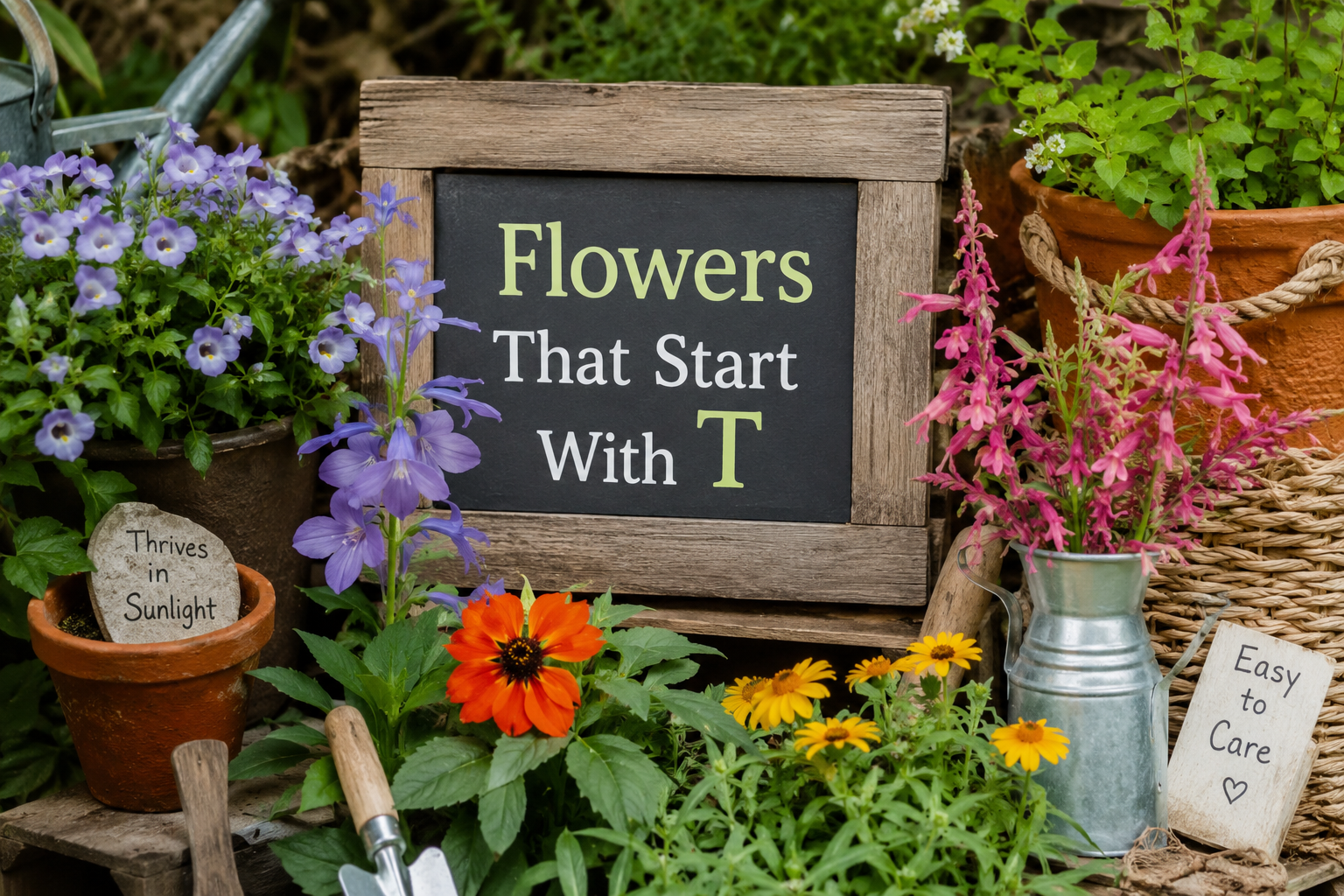
Learning to recognize Flowers That Start With T becomes easier when you study more than color. Many blooms share similar shades, but their petals, leaves, height, scent, season, and growth pattern often reveal the correct name.
This guide explains how to identify popular T-named flowers and care for them. It also shows which plants suit sunny beds, shaded corners, containers, and climbing spaces.
Quick Flower Identification Checklist
Before naming a flower, examine the whole plant:
- Flower shape: Look for cups, trumpets, stars, globes, or daisy-like blooms.
- Petals: Notice spots, stripes, curled edges, layers, and petal count.
- Leaves: Compare their shape, size, and position.
- Growth style: Check whether the plant climbs, trails, clumps, or grows upright.
- Season: Record when the plant flowers.
- Location: Sun, shade, damp soil, and containers provide useful clues.
Take photos of the bloom, stem, leaves, and full plant. One close-up rarely provides enough information.
1. Tulip
Tulips are among the easiest Flowers That Start With T to identify. Their smooth, cup-shaped blooms sit on straight stems above broad, pointed leaves. They appear in many solid and mixed colors.
Care Tips
Plant tulip bulbs in autumn in a sunny place. Choose soil that drains well. Remove faded flowers, but leave the foliage until it turns yellow.
2. Tithonia
Tithonia, or Mexican sunflower, produces bright orange, daisy-like flowers. The plant is usually tall, leafy, and upright. These features separate it from smaller orange blooms.
Care Tips
Give Tithonia full sun and room to grow. Water young plants regularly. Established plants can handle short dry periods. Avoid heavy feeding because it may produce more leaves than flowers.
3. Tricyrtis
Tricyrtis is commonly called toad lily. Its small cream, pink, or purple flowers have dark spots and often resemble tiny orchids. It usually blooms in shaded areas later in the growing season.
Care Tips
Choose partial or full shade. Keep the soil lightly moist and add mulch to reduce water loss. Leave a small gap between the mulch and stems.
4. Tiarella
Tiarella, or foamflower, forms low clumps with thin spikes of tiny white or pale pink flowers. Its leaves may have dark markings near the center.
Care Tips
Grow it in partial shade with soil that stays slightly moist. Protect it from harsh afternoon sunlight and remove damaged leaves when needed.
5. Torenia
Torenia, known as wishbone flower, has compact growth and small trumpet-shaped blooms. Its flowers often combine purple, blue, pink, white, or yellow.
Care Tips
Place Torenia in partial shade or gentle morning sun. Water when the soil surface begins to dry. It grows well in pots, baskets, and window boxes with drainage holes.
The yourhomify community gives home and garden lovers a friendly place to exchange plant ideas, practical lessons, and real growing experiences.
6. Thunbergia
Thunbergia is easy to recognize by its climbing stems. Some varieties have orange or yellow flowers with dark centers. Others produce blue or purple blooms.
Care Tips
Provide bright light and a trellis, fence, or arch. Guide young stems onto the support. Water when the soil surface feels dry and trim tangled growth.
7. Tiger Lily
Tiger lilies are bold Flowers That Start With T with orange petals that curve backward. Dark spots cover the petals, while long stamens hang from the center.
Care Tips
Plant them in sun or light shade. Use soil that drains freely. Water during long dry periods and leave enough space between plants for airflow.
8. Tuberose
Tuberose sends up tall spikes of narrow, pale flowers. Its rich, sweet fragrance is the clearest identification clue. Long, slim leaves grow from the plant’s base.
Care Tips
Choose a warm, sunny position. Water during active growth without leaving the roots wet. Protect the bulbs from severe winter cold.
9. Trillium
Trillium often has three petals, three sepals, and three broad leaves. This repeated pattern makes it one of the easiest woodland flowers to recognize.
Care Tips
Plant Trillium in shade with rich, moist soil. Avoid digging around established plants. They grow slowly and prefer to remain undisturbed.
10. Torch Lily
Torch lily produces tall spikes filled with narrow flowers. The color often changes from red at the top to orange or yellow below. This creates a flame-like appearance.
Care Tips
Give it full sun and well-drained soil. Water regularly during its first season. Remove old flower stems and protect the roots from long periods of winter wetness.
How to Avoid Misidentifying a Flower
Do not identify a plant from one feature. Flowers can change as they open or fade. Weather and growing conditions may also affect their size and color.
Follow this process:
- Compare the bloom shape and markings.
- Examine the leaves and stem.
- Note whether the plant climbs, trails, or grows upright.
- Record the flowering season and sunlight level.
- Confirm the name with a trusted nursery, field guide, or botanical source.
Avoid tasting unknown plants. Some garden flowers can irritate the skin or cause harm if eaten.
General Care for Flowers That Start With T
Many Flowers That Start With T share basic needs, but each plant still requires the right setting.
Match the Light to the Plant
Tulips, Tithonia, Tuberose, and torch lilies prefer bright conditions. Tricyrtis, Tiarella, and Trillium perform better in shade.
Check Before Watering
Feel the top layer of soil before adding water. Moisture-loving plants need regular watering, while Tithonia can tolerate short dry periods.
Protect the Roots
Use containers with drainage holes. Avoid places where rainwater collects unless the plant prefers damp ground.
Leave Enough Space
Crowded plants receive less light and airflow. Proper spacing supports healthy growth and makes each flower easier to examine.
Watch for Warning Signs
Yellow leaves may suggest excess water. Weak, stretched stems can mean too little light. Dry edges may point to heat, low moisture, or strong wind.
Choosing the Right T Flower
The best Flowers That Start With T depend on your garden conditions and available space:
- Choose Tithonia or torch lily for a sunny bed.
- Try Tricyrtis, Tiarella, or Trillium in shade.
- Grow Torenia in baskets and containers.
- Use Thunbergia for vertical color.
- Select Tuberose for fragrance.
- Plant tulips for a bright spring display.
Matching a plant to the existing space is easier than changing the entire garden around one flower.
Final Thoughts
Identifying Flowers That Start With T becomes simpler when you compare their shape, leaves, height, fragrance, season, and growth habit. Tulips form smooth cups, Tricyrtis carries spots, and Thunbergia climbs. Trillium repeats groups of three, while torch lily creates fiery spikes.
Correct identification also leads to better care. Once you know the plant, you can provide suitable light, water, soil, and space. This helps flowers remain healthy and makes garden care more manageable.
FAQs
1. Which T flower is easiest to identify?
Tulips are easy to recognize by their cup-shaped blooms, upright stems, and broad leaves.
2. Which T flowers have spotted petals?
Tricyrtis and tiger lily have spots, but their flower sizes and shapes differ greatly.
3. Which T flowers grow in shade?
Tricyrtis, Tiarella, Trillium, and Torenia prefer shade or partial shade.
4. Which T flowers need full sun?
Tithonia, Tuberose, torch lily, and many tulips grow best in bright light.
5. Can T flowers grow in containers?
Yes. Torenia, tulips, and compact Thunbergia varieties grow well in pots with good drainage.
6. How can I confirm a flower’s name?
Compare several plant features, then check your findings with a trusted nursery, field guide, or botanical database.

 English
 French
 Spanish
 Portuguese
 Deutsch
 Turkish
 Dutch
Dutch
 Italiano
 Russian
 Romaian
 Portuguese (Brazil)
 Greek
Greek