


How Carbon Fiber Reinforced Polymers Are Transforming Lightweight Engineering Across Industries
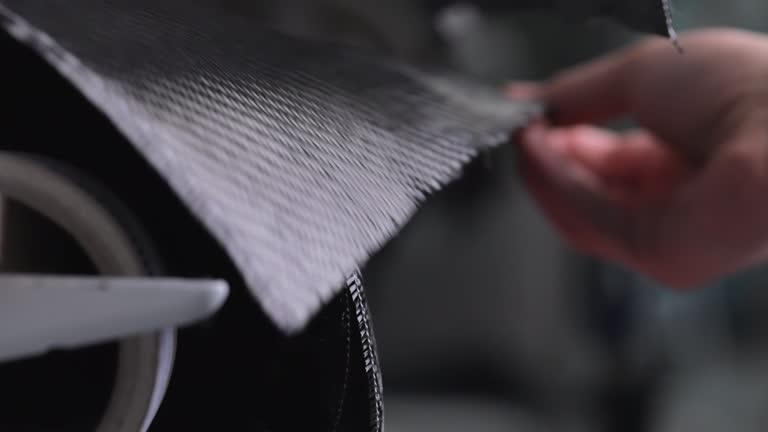
The growing demand for lightweight, durable, and high-performance materials is reshaping manufacturing across industries such as aerospace, automotive, renewable energy, construction, and sports equipment. Carbon fiber reinforced polymers (CFRPs) have emerged as one of the most important advanced composite materials due to their exceptional strength-to-weight ratio, corrosion resistance, and mechanical performance. As manufacturers seek materials that improve efficiency without compromising structural integrity, CFRPs are becoming increasingly integral to modern engineering.
According to the latest industry analysis, the carbon fiber reinforced polymers industry was valued at USD 22.5 billion in 2025 and is projected to reach USD 39.55 billion by 2032, expanding at a CAGR of 8.39% during 2026–2032. The industry's growth reflects rising adoption across transportation, renewable energy, and industrial manufacturing, where lightweight materials contribute to improved operational performance and energy efficiency.
Lightweight Materials Continue to Shape Modern Manufacturing
One of the primary advantages of carbon fiber reinforced polymers is their ability to deliver exceptional mechanical strength while weighing significantly less than conventional materials such as steel or aluminum. This combination allows manufacturers to reduce product weight without sacrificing durability or structural performance.
Weight reduction has become increasingly important across industries where improved fuel efficiency, lower emissions, and enhanced operational performance are key priorities. As a result, CFRPs are replacing traditional materials in applications requiring both strength and lightweight characteristics.
The versatility of composite manufacturing also enables engineers to produce complex shapes that would be difficult to achieve using conventional metal fabrication techniques. The U.S. Department of Energy's Advanced Materials and Manufacturing Technologies Office continues to support research focused on lightweight materials that improve industrial productivity and energy efficiency.
Aerospace Industry Remains a Major Driver
The aerospace sector continues to be one of the largest users of carbon fiber reinforced polymers. Commercial aircraft, military platforms, helicopters, satellites, and spacecraft increasingly incorporate CFRP components to improve fuel efficiency and reduce operating costs.
Aircraft manufacturers utilize carbon fiber composites in fuselage sections, wings, tail structures, engine components, and interior assemblies. Their high fatigue resistance and corrosion resistance help extend service life while reducing maintenance requirements.
As global investments in aviation modernization and space exploration continue, demand for advanced composite materials is expected to remain strong. NASA's Advanced Composites Project highlights ongoing research aimed at improving composite manufacturing technologies and structural performance for future aerospace applications.
Automotive Manufacturers Focus on Efficiency
Automotive manufacturers are increasingly adopting carbon fiber reinforced polymers to improve vehicle efficiency while meeting stricter fuel economy and emission regulations.
Lightweight body panels, chassis components, structural reinforcements, and interior parts made from CFRPs help reduce overall vehicle weight, contributing to improved fuel efficiency and extended driving range for electric vehicles.
Although carbon fiber composites have traditionally been associated with luxury and performance vehicles, advancements in manufacturing technologies are making these materials more accessible for broader automotive applications.
The continued transition toward electric mobility is expected to further strengthen demand for lightweight composite materials.
Renewable Energy Sector Expands Composite Applications
Renewable energy infrastructure represents another important application area for carbon fiber reinforced polymers. Wind turbine manufacturers increasingly utilize carbon fiber composites in turbine blades to improve strength while reducing weight.
Longer and lighter blades enable turbines to capture more wind energy while minimizing mechanical stress on supporting structures. Improved material durability also contributes to longer service life and reduced maintenance requirements.
As countries continue investing in renewable energy projects to support decarbonization goals, advanced composite materials are expected to play a growing role in wind energy development.
Technological Advancements Are Improving Manufacturing
Continuous innovation in composite manufacturing technologies is expanding the commercial use of carbon fiber reinforced polymers. Automated fiber placement, resin transfer molding, additive manufacturing, and advanced curing techniques are improving production efficiency while reducing manufacturing costs.
Automation also enables greater precision and consistency during component production, supporting higher-quality finished products across aerospace, automotive, and industrial applications.
Researchers are simultaneously developing faster curing resins, recyclable composite systems, and improved fiber architectures that enhance material performance while addressing sustainability considerations.
These technological improvements are helping broaden the adoption of CFRPs across industries.
Sustainability Is Influencing Material Innovation
Environmental sustainability has become an increasingly important consideration for composite manufacturers. While carbon fiber reinforced polymers contribute to lower energy consumption through lightweight product design, attention is also shifting toward improving material lifecycle management.
Manufacturers are investing in recycling technologies capable of recovering carbon fibers from end-of-life composite products. Advances in thermoplastic composite systems and closed-loop recycling processes are creating new opportunities to improve resource efficiency while reducing waste.
Longer product lifespans enabled by CFRPs also contribute to sustainability objectives by reducing maintenance requirements and replacement frequency across transportation and industrial equipment.
As circular economy initiatives gain momentum, recyclable composite materials are expected to become an increasingly important area of innovation.
Challenges and Emerging Opportunities
Despite their numerous advantages, carbon fiber reinforced polymers continue to face challenges related to production costs and manufacturing complexity. Carbon fiber production remains energy-intensive, and specialized processing equipment is often required for composite fabrication.
Repair and recycling processes also remain more complex than those associated with conventional materials. However, ongoing research into lower-cost precursor materials, automated manufacturing, and advanced recycling technologies is helping improve commercial viability.
Expanding applications in electric vehicles, hydrogen infrastructure, aerospace, construction, marine engineering, and industrial equipment continue to create substantial long-term opportunities for manufacturers.
Future Outlook
Carbon fiber reinforced polymers are expected to remain at the forefront of advanced materials innovation as industries prioritize lightweight engineering, improved energy efficiency, and high-performance manufacturing. Increasing investments in aerospace modernization, electric mobility, renewable energy infrastructure, and industrial automation continue to strengthen demand for advanced composite materials.
According to the study published by Vyansa Intelligence, the industry is projected to grow from USD 22.5 billion in 2025 to USD 39.55 billion by 2032, reflecting expanding adoption across multiple high-value industries. As manufacturing technologies continue to evolve and sustainability initiatives encourage material innovation, carbon fiber reinforced polymers are expected to play an increasingly important role in next-generation engineering solutions.

 English
 Arabic
 French
 Spanish
 Portuguese
 Deutsch
 Turkish
 Dutch
Dutch
 Italiano
 Russian
 Portuguese (Brazil)
 Greek
Greek