


How Dermatologists Treat Different Skin Conditions
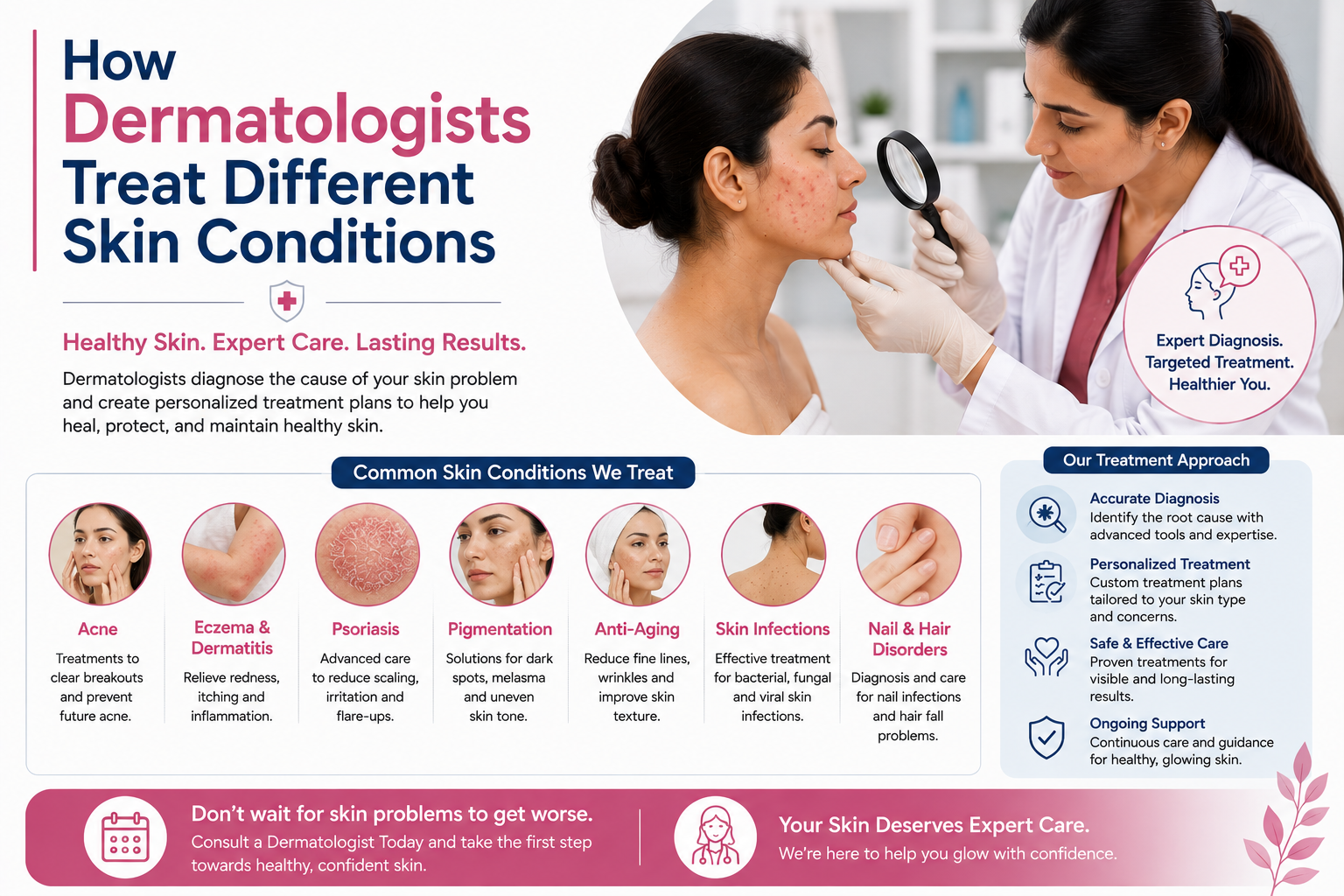
Skin conditions can affect people differently. A treatment that works for acne will not necessarily help eczema, while an itchy rash caused by an allergy may require a different approach from a fungal infection. Even when two skin problems look similar, their causes and treatments can be very different.
Understanding how dermatologists treat different skin conditions starts with one important step: getting the diagnosis right. Dermatologists examine the skin, review symptoms and medical history, and recommend tests when necessary before deciding on treatment. For persistent, recurring, or unexplained symptoms, professional dermatologist care for skin conditions can help identify the underlying problem and determine an appropriate treatment plan.
Why Does Treatment Differ Between Skin Conditions?
There is no single treatment that works for every skin problem.
Skin conditions can develop because of inflammation, infections, immune-system activity, allergies, irritation, hormonal influences, genetics, environmental factors, or a combination of causes.
For example, antifungal medicines may be appropriate for certain fungal infections but will not treat eczema. Similarly, treatment used to control psoriasis may not be suitable for an allergic skin reaction.
This is why dermatologists generally focus on the cause, severity, location, and duration of symptoms before recommending treatment.
How Do Dermatologists Diagnose Skin Problems?
Treatment usually begins with a dermatology consultation.
A dermatologist may ask when symptoms started, whether they repeatedly return, what makes them better or worse, and which treatments have already been tried.
Medical history, medications, allergies, skincare products, family history, occupation, and possible environmental exposures may also provide useful information.
The affected skin is then examined closely.
Many common conditions can be diagnosed through medical history and physical examination. When further information is necessary, skin scrapings, patch testing, blood tests, dermoscopy, cultures, or a skin biopsy may sometimes be considered.
How Do Dermatologists Treat Acne?
Acne treatment depends on the type and severity of the condition.
Mild acne may involve blackheads, whiteheads, and occasional pimples, while more severe forms can cause inflamed or deeper lesions that may increase the risk of scarring.
Dermatologists may recommend topical treatments containing ingredients that help unclog pores, reduce inflammation, or control acne-related bacteria. Oral medicines may be considered for some patients with moderate or severe acne.
A suitable skincare routine may also form part of the treatment plan.
When acne has caused persistent marks or scars, additional dermatological procedures may sometimes be considered after active breakouts are appropriately managed.
How Is Eczema Treated?
Eczema commonly causes dry, itchy, sensitive, and inflamed skin.
Treatment often focuses on repairing and maintaining the skin barrier while controlling inflammation.
Regular moisturizing, gentle cleansing, and avoiding known irritants can form an important part of everyday care. During flare-ups, a dermatologist may prescribe topical anti-inflammatory medicines.
Moderate or severe eczema that does not respond adequately to topical treatment may require additional therapies.
Because some forms of eczema are chronic, management often includes preventing or reducing future flare-ups rather than treating symptoms only when they become severe.
How Is Contact Dermatitis Managed?
Contact dermatitis can develop when the skin reacts to an irritant or allergen.
Common triggers can include detergents, fragrances, cosmetics, metals, cleaning products, preservatives, and workplace materials.
Treatment may involve identifying and avoiding the responsible substance, supporting the skin barrier with appropriate moisturisers, and controlling inflammation with prescribed medication.
When allergic contact dermatitis is suspected but the trigger remains unclear, patch testing may sometimes be recommended.
Avoiding the identified trigger can become an important part of preventing future reactions.
How Do Dermatologists Treat Psoriasis?
Psoriasis is a chronic immune-mediated condition that can cause raised, inflamed, and scaly areas of skin.
Treatment depends on how much skin is affected, the areas involved, symptom severity, and the impact on everyday life.
Mild psoriasis may be managed with topical medicines. More extensive or difficult-to-control psoriasis may require phototherapy, oral medicines, or injectable treatments.
Dermatologists may also examine the scalp and nails because psoriasis can affect these areas.
People with psoriasis should mention persistent joint pain, stiffness, or swelling because some patients can develop psoriatic arthritis.
How Are Fungal Skin Infections Treated?
Fungal infections can affect areas such as the body, feet, groin, scalp, skin folds, and nails.
Treatment generally involves antifungal medication. Some localised infections can be treated with topical medicines, while more extensive infections or certain scalp and nail conditions may require oral treatment.
However, diagnosis is important because eczema and other skin disorders can sometimes resemble fungal infections.
When the diagnosis is uncertain, a dermatologist may perform a skin scraping or another investigation before recommending treatment.
How Are Bacterial Skin Infections Treated?
Bacterial infections can cause symptoms such as redness, swelling, pain, warmth, sores, crusting, or discharge.
Treatment varies according to the type and severity of the infection.
Some conditions may require topical treatment, while others can require oral antibiotics. Certain infections may also need drainage, wound care, or another medical procedure.
Antibiotics should be used only when medically appropriate and according to professional instructions.
Rapidly spreading redness, significant pain, fever, or worsening swelling requires prompt medical assessment.
How Are Viral Skin Conditions Managed?
Viruses can cause several types of skin conditions.
Warts, for example, are caused by certain types of human papillomavirus (HPV). Herpes infections can produce painful blisters or sores.
Some viral skin conditions may resolve without specific treatment, while others can benefit from antiviral medicines or dermatological procedures.
Treatment depends on the virus, location, severity, symptoms, and individual health factors.
How Do Dermatologists Treat Skin Allergies?
Skin allergies can cause itching, redness, swelling, dryness, or recurring rashes.
A dermatologist first tries to identify whether the symptoms are related to an allergic reaction, irritation, eczema, or another condition.
Treatment may involve avoiding the suspected allergen and using appropriate medication to control inflammation and discomfort.
Patch testing may sometimes help identify specific allergens responsible for recurring allergic contact dermatitis.
Identifying the trigger can be particularly useful for people who experience repeated reactions.
How Are Pigmentation Problems Treated?
Pigmentation concerns can include dark spots, melasma, post-acne marks, uneven skin tone, or areas of reduced pigmentation.
Treatment varies because pigmentation changes can have different causes.
Sun protection is often an important part of managing many pigmentation concerns. Depending on the diagnosis, dermatologists may also recommend topical medicines, appropriate skincare, or selected procedures.
Treatment should be based on the cause rather than simply trying to lighten every dark area.
Using unsuitable products can sometimes irritate the skin and make pigmentation more noticeable.
How Do Dermatologists Treat Hair Loss?
Hair loss has many possible causes, so diagnosis is particularly important.
Genetics, hormonal influences, nutritional factors, stress, medications, medical conditions, and scalp disorders can all contribute.
A dermatologist may examine the scalp and pattern of hair loss and ask about its duration and progression. Blood tests or other investigations may sometimes be recommended.
Treatment depends on the cause and may include topical or oral medicines, management of an underlying scalp condition, or correction of contributing factors when appropriate.
Because hair grows slowly, treatment results often require time to assess.
How Are Scalp Conditions Treated?
Persistent dandruff, itching, scaling, or scalp inflammation can have several possible causes.
Seborrhoeic dermatitis, psoriasis, fungal conditions, and other disorders can affect the scalp.
Depending on the diagnosis, treatment may include medicated shampoos, topical medicines, or other therapies.
When scalp symptoms are associated with unusual hair loss, sores, or significant inflammation, further dermatological evaluation may be appropriate.
How Are Nail Conditions Treated?
Changes in nail color, thickness, shape, or texture can occur because of fungal infections, injury, psoriasis, or other conditions.
A dermatologist examines the nails and surrounding skin to determine the likely cause.
When fungal infection is suspected but uncertain, a nail sample may sometimes be tested.
Treatment depends on the diagnosis and may involve topical medication, oral medicines, or management of an underlying skin condition.
Nail problems can take time to improve because nails grow slowly.
Why Follow-Up Is Part of Dermatology Treatment
Some skin conditions can be treated relatively quickly, while others require ongoing care.
Acne treatment may need several weeks or months before meaningful improvement becomes visible. Eczema and psoriasis can repeatedly flare, while hair and nail conditions may take longer to respond.
Follow-up appointments allow dermatologists to evaluate progress, monitor possible side effects, and adjust treatment when necessary.
For chronic skin diseases, a long-term management plan can also help patients understand what to do during future flare-ups.
When Should You Visit a Dermatologist?
Consider seeing a dermatologist when a skin problem persists, repeatedly returns, spreads, becomes painful, or causes significant itching.
Professional evaluation may also be appropriate for persistent acne, recurring infections, unexplained hair loss, ongoing scalp problems, unusual nail changes, or pigmentation concerns.
New or changing moles and unusual skin growths should also be professionally assessed.
Severe, rapidly worsening, or widespread skin symptoms may require prompt medical attention.
Conclusion
Understanding how dermatologists treat different skin conditions highlights why correct diagnosis is so important.
Acne may require medicines that control blocked pores and inflammation, while eczema treatment focuses heavily on the skin barrier and inflammation. Fungal and bacterial infections require treatments directed at the responsible organism, while psoriasis may need long-term management of immune-related inflammation.
Skin allergies, pigmentation concerns, hair loss, scalp disorders, and nail conditions also require individual assessment.
Rather than using the same treatment for every rash, breakout, or irritated area, dermatological care focuses on identifying the cause and choosing treatment according to the condition, severity, and individual needs.
Frequently Asked Questions
Do dermatologists use the same treatment for every skin condition?
No. Treatment depends on the diagnosis, cause, severity, affected area, medical history, and other individual factors.
Can a dermatologist treat both skin and hair problems?
Yes. Dermatologists diagnose and manage conditions involving the skin, hair, scalp, and nails.
How long does dermatology treatment take to work?
It depends on the condition and treatment. Some problems improve relatively quickly, while acne, chronic inflammatory conditions, hair loss, and nail disorders may require longer treatment.
When should I consult a dermatologist?
Consider professional evaluation when symptoms persist, repeatedly return, worsen, spread, or fail to improve with appropriate basic care.

 Arabic
 French
 Spanish
 Portuguese
 Deutsch
 Turkish
 Dutch
Dutch
 Italiano
 Russian
 Romaian
 Portuguese (Brazil)
 Greek
Greek