


Why Auto Parts Warranty Information Matters on Online Stores
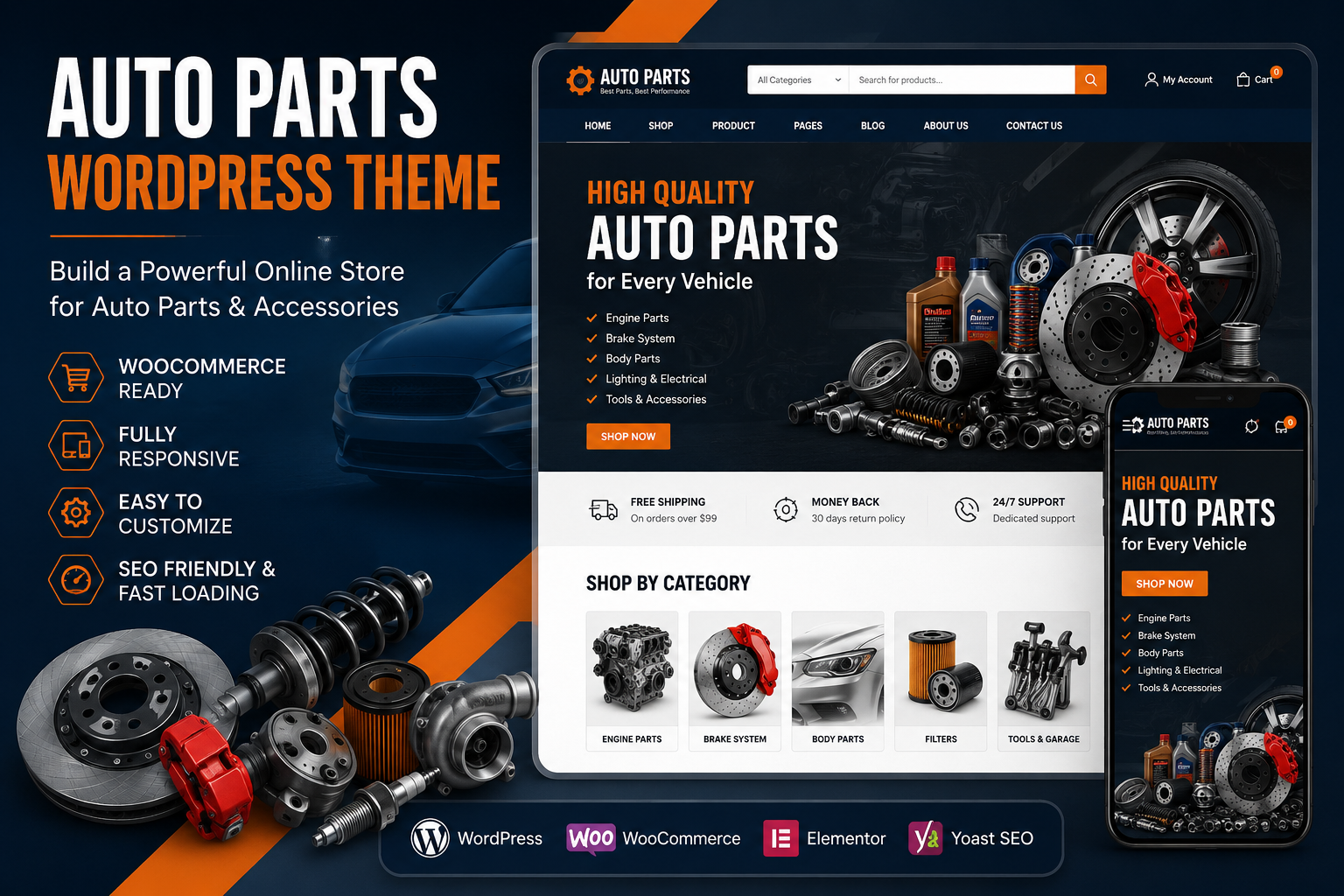
Buying a part online means trusting that it'll actually work once it's installed, without the reassurance of a salesperson standing there to answer questions or a physical store to return to if something goes wrong. That gap in trust is exactly what warranty information is supposed to fill, yet a lot of auto parts websites treat it as an afterthought, a single line buried somewhere near the footer instead of a genuine selling point. An Auto Parts WordPress Theme can help present warranty coverage, return policies, product guarantees, and support information clearly, giving customers greater confidence when purchasing parts online.
Clear, visible warranty information isn't just a legal formality for an online auto parts store, it's often a real factor in whether a hesitant customer decides to trust you with their purchase.
Why Warranty Information Carries Extra Weight in Auto Parts
Unlike many online purchases, auto parts often involve real safety implications and significant installation effort. A failed part isn't just an inconvenience, it can mean redoing labour, dealing with a vehicle that's not drivable, or worse, a genuine safety concern.
Installation Effort Raises the Stakes of a Bad Part
Many auto parts require real time and labour to install, sometimes by a professional mechanic at real cost. A defective part means not just replacing the item, but potentially paying for labour twice, which makes warranty protection genuinely meaningful, not just a nice bonus.
Some Parts Carry Real Safety Implications
Components like brakes, steering parts, or suspension elements directly affect vehicle safety. Customers purchasing these kinds of parts are often more cautious, and clear warranty backing reassures them that the manufacturer or retailer stands behind the part's reliability.
What Customers Actually Want to Know About Warranties
Exactly What's Covered
Vague phrases like "warranty included" don't tell customers much. Clearly specifying what's covered- defects, premature failure, workmanship issues- sets accurate expectations before a purchase, not after a problem arises.
How Long the Warranty Lasts
Specific timeframes, whether it's ninety days, one year, or a lifetime warranty, help customers factor coverage duration directly into their purchasing decision, especially when comparing similar parts at different price points.
What Voids the Warranty
Being upfront about common warranty exclusions, improper installation, and use beyond intended application prevents frustrating misunderstandings later and shows customers you're being transparent rather than hiding conditions in fine print.
Structuring Warranty Information Clearly on Product Pages
Displaying Warranty Details Directly on Each Product
Rather than requiring customers to search for a general warranty policy page, showing relevant warranty information directly on the specific product they're considering keeps this reassurance visible exactly when it matters.
Using Consistent Warranty Labeling Across the Catalog
Standardizing how warranty information is presented across different products, using consistent icons or labels for warranty length, helps customers quickly compare coverage between similar parts without needing to read full policy text each time.
Highlighting Warranty Information Near the Price
Placing warranty details close to pricing information reinforces that customers aren't just paying for the part itself, but also for the protection and confidence that comes with it.
Explaining the Claims Process Clearly
Step-by-Step Warranty Claim Instructions
Walking through exactly what a customer needs to do if a part fails within the warranty period, who to contact, and what documentation is needed removes uncertainty and builds confidence that the warranty is a real, functional promise.
Expected Timeframes for Warranty Resolution
Setting realistic expectations about how quickly warranty claims are typically processed prevents frustration if a customer does eventually need to use their coverage.
Contact Information Specific to Warranty Support
Providing a clear, dedicated contact path for warranty-related issues, separate from general customer service, streamlines communication and shows customers this process is taken seriously.
Differentiating Manufacturer and Retailer Warranties
Explaining the Difference Clearly
Many customers don't understand the distinction between a manufacturer's warranty and any additional coverage offered directly by your store. Clearly separating and explaining both prevents confusion about who's actually responsible for a given claim.
Noting When Manufacturer Warranties Require Separate Registration
If manufacturer warranties require customers to register their purchase separately, clearly explaining this step prevents customers from missing coverage simply due to an unclear or skipped process.
Highlighting Any Additional Store-Specific Guarantees
If your store offers extended protection or guarantees beyond standard manufacturer coverage, clearly highlighting this added value can be a genuine competitive differentiator.
Read More: Best Industrial WordPress Themes: Complete Guide for 2026
Building Trust Through Warranty Transparency
Being Honest About Limited or No-Warranty Items
For used or clearance parts that may carry limited or no warranty coverage, clearly stating this upfront, rather than leaving it ambiguous, builds trust through honesty even when the news isn't as reassuring.
Addressing Common Warranty Misconceptions
Content addressing frequent misunderstandings, like assuming a warranty covers installation costs when it may only cover the part itself, prevents frustrating surprises during an actual claim.
Visual Features That Reinforce Warranty Confidence
Warranty Badges on Product Listings
Simple visual badges indicating warranty length or coverage type help customers quickly identify protected products while browsing, without needing to click into each individual listing.
Comparison Tables Highlighting Warranty Differences
When multiple similar parts are available at different price points, a comparison table including warranty details helps customers understand whether a higher price reflects better long-term protection.
Making Warranty Policies Easy to Find
A Dedicated, Clearly Linked Warranty Policy Page
Beyond product-specific details, a comprehensive warranty policy page, easily accessible from the main navigation or footer, gives customers a complete reference for all warranty-related questions.
FAQ Sections Addressing Common Warranty Questions
A dedicated FAQ covering frequent warranty questions, claim process, coverage duration, exclusions, reduces repetitive customer service inquiries while giving customers quick, clear answers.
Mobile Access to Warranty Information
Since many customers research parts and compare options from their phones, ensuring warranty details display clearly and remain easy to find on mobile keeps this important trust-building information accessible regardless of device.
Conclusion
Warranty information isn't a minor legal detail to bury in fine print, it's often a genuine deciding factor for customers weighing whether to trust an online purchase with real installation effort and, sometimes, real safety implications behind it. Through clear coverage details, honest claims process explanations, and visible product-level warranty information, online auto parts stores can turn warranty protection into a genuine source of customer confidence. This kind of transparency-focused approach is exactly what you'll find supported in premium WordPress templates designed for auto parts retailers, helping your warranty policies build trust rather than sitting unnoticed in the footer.
Frequently Asked Questions
1. Should warranty information be shown on every individual product page, or just a general policy page?
Both, ideally, showing relevant warranty details directly on each product keeps this reassurance visible when it matters most, while a general policy page provides more comprehensive reference information.
2. Why does explaining the warranty claims process matter as much as stating coverage length?
Because customers want confidence that the warranty is a real, functional promise, not just marketing language, and a clear claims process demonstrates that the coverage genuinely works as advertised.
3. Should I clearly distinguish between manufacturer and store-specific warranties?
Yes, many customers don't understand this distinction, and clearly separating the two prevents confusion about who's actually responsible for handling a specific warranty claim.
4. Is it risky to be upfront about parts with limited or no warranty coverage?
No, honesty here actually builds more trust than ambiguity, since customers generally appreciate transparency even when the warranty terms aren't as strong as they might prefer.
5. Does displaying warranty badges on product listings really influence purchasing decisions?
Yes, visible warranty information can meaningfully increase buyer confidence, particularly when customers are comparing similar parts at different price points and trying to judge overall value.

 English
 Arabic
 French
 Spanish
 Portuguese
 Turkish
 Dutch
Dutch
 Italiano
 Russian
 Romaian
 Portuguese (Brazil)
 Greek
Greek