


The Ultimate Guide to Speech Therapy Games for Children: Activities for Speech, Language and Communication
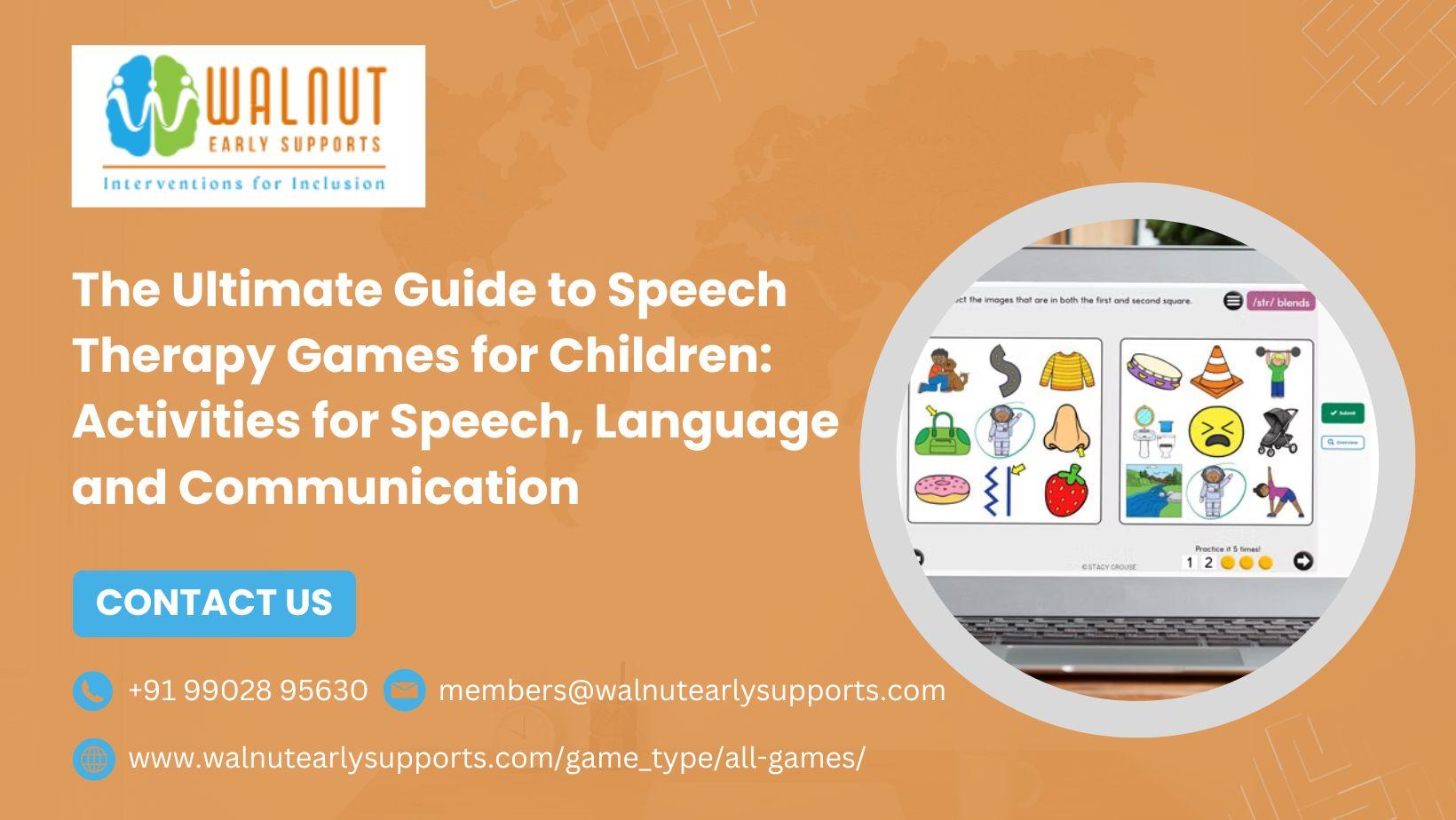
Children learn communication skills through everyday experiences such as talking, listening, playing, asking questions, and interacting with others. For children who need extra support, structured activities can provide additional opportunities to practice these skills. Speech Therapy Games make this practice more engaging by combining learning goals with play.
A well-planned game can encourage a child to use new words, produce speech sounds, follow directions, answer questions, build sentences, and participate in social interactions. The key is to choose activities that match the child's age, abilities, interests, and individual communication goals.
What Are Speech Therapy Games?
Speech Therapy Games are structured or play-based activities designed to support specific communication skills. They can be used during professional therapy sessions or adapted for practice at home and in educational settings.
For example, a picture-matching activity might help a child name objects, while a storytelling game can encourage sentence formation and comprehension. A turn-taking activity may focus on listening and social communication.
Games should have a clear purpose rather than being used only for entertainment. When an activity is connected to a specific goal, children can practice important skills while remaining actively involved.
1. Games for Speech Sound Practice
Some children have difficulty producing particular sounds clearly or using sounds correctly within words. Activities that provide repeated opportunities to practice target sounds can make speech practice less repetitive.
A speech sound therapy game might use pictures, matching cards, word activities, or simple challenges containing the child's target sounds. The therapist can gradually move from individual sounds to words, phrases, and conversational practice as appropriate.
The activity should always be adjusted to the child's current speech abilities rather than expecting the same level of performance from every child.
2. Games for Vocabulary and Language
Building vocabulary is an important part of communication. Children need to understand words and learn how to use them appropriately in sentences and conversations.
Language development games can include picture naming, categorization, describing objects, word associations, and guessing activities. For example, a child might sort pictures into groups such as animals, foods, or clothing and then describe each item.
These activities can also support sentence development by encouraging children to answer questions such as “What is it?”, “What does it do?” and “Where is it?”
3. Games for Reading and Phonological Awareness
Speech and language development also provides a foundation for early literacy. Children may benefit from activities that help them recognize sounds, understand rhyming, blend sounds, segment words, and connect spoken language with print.
Reading intervention games can make these skills easier to practice. Matching rhyming words, identifying beginning sounds, completing simple word patterns, and sequencing story pictures are examples of activities that can support early literacy skills.
4. Games for Social Communication and Emotional Skills
Communication involves much more than speaking. Children also need to understand emotions, respond to others, take turns, listen, and use appropriate language in different situations.
Social emotional learning games can help children explore feelings and practice communication in everyday social situations. Picture-based scenarios, emotion-matching activities, role-play, and simple conversation games can encourage children to recognize emotions and think about appropriate responses.
These activities can be especially useful when children need support understanding social situations or expressing their feelings.
5. Games That Support Cognitive Skills
Communication and cognitive skills often work together. Children use attention, memory, reasoning, and problem-solving when they listen to information, understand instructions, remember words, and respond to questions.
Cognitive games can be incorporated into communication practice by asking children to remember pictures, identify patterns, solve simple problems, or explain how they reached an answer. This creates opportunities to practice both thinking and language skills within the same activity.
6. Using Digital Games and Online Resources
Digital learning has created additional options for children, therapists, educators, and families. Online speech therapy materials can provide interactive activities that are convenient to access and can be incorporated into structured practice.
Digital activities can be useful when they are designed around clear learning objectives and are easy for children to understand. However, they should complement meaningful interaction rather than replace communication with adults or professional guidance.
How to Choose the Right Games
The best activity depends on the individual child's needs. Before choosing a game, consider the communication skill you want to practice, the child's developmental level, and whether the activity is motivating for them.
High-quality speech therapy resources should be flexible enough to adapt to different abilities. A child who is learning first words may need simple naming activities, while another child may benefit from sentence-building, storytelling, or conversation tasks.
It is also helpful to observe how the child responds during the activity. If a game is too difficult, simplifying the instructions may help. If it is too easy, adding another level of challenge can keep the child engaged.
Making Communication Practice Meaningful
Games are most effective when they create opportunities for children to communicate for a real purpose. Asking for an item, describing a picture, answering a question, telling a story, or taking a turn gives children a reason to use their skills.
Walnut Early Supports offers resources designed to support children's speech, language, communication, learning, and developmental needs. Its speech and language therapy resources can be incorporated into structured activities for different areas of communication and learning.
The goal of using games is not simply to complete an activity. It is to create enjoyable opportunities for children to practice communication skills that can transfer into everyday interactions at home, school, and in the community.
With thoughtful selection and appropriate guidance, Speech Therapy Games can make practice more engaging while helping children build confidence in using their communication skills.

 English
 Arabic
 French
 Spanish
 Portuguese
 Deutsch
 Turkish
 Italiano
 Russian
 Romaian
 Portuguese (Brazil)
 Greek
Greek