


Which Gangnammould Storage Box Mould Features Matter for Buyers
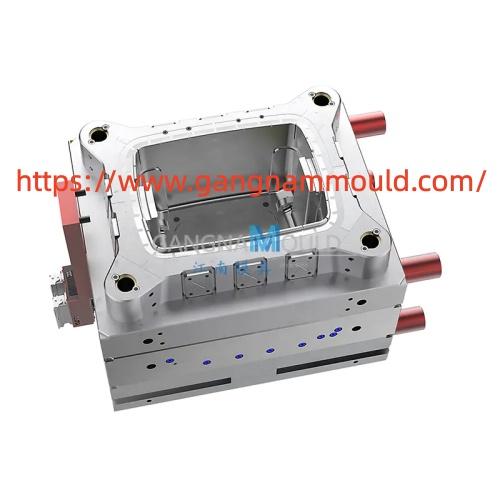
Storage Box Mould selection involves more than checking the quoted price or overall dimensions. Buyers should consider how the tooling will match the intended container design, selected resin, injection machine, production volume, cooling requirements, and expected service conditions. A clear technical review at the beginning can help manufacturers and purchasers align their expectations before machining starts. Product drawings, material information, target output, and machine parameters can provide useful references for the engineering team.
The first area to examine is product structure. Plastic containers may include reinforced corners, handles, ribs, lids, stacking features, or different wall thicknesses. Each detail can influence cavity design and processing behavior. A product with deep sections may require careful consideration of draft angles and ejection. Meanwhile, large flat surfaces can require attention to filling balance and cooling. Buyers should therefore provide accurate drawings and dimensional information rather than relying only on a simple product sample.
Material selection is another practical consideration. Common plastics can have different flow characteristics, shrinkage rates, processing temperatures, and wear effects on tooling components. The material selected for production should therefore be discussed during the engineering stage. Steel selection can also depend on expected production volume, resin characteristics, maintenance plans, and operating conditions. Instead of treating material choice as an isolated decision, buyers can evaluate it together with the intended production schedule.
Cavity arrangement deserves close attention as well. Depending on the product dimensions and expected output, the manufacturer may evaluate a single cavity or a multi cavity configuration. The choice can influence machine requirements, cycle planning, initial investment, and production capacity. Buyers should provide realistic information about annual demand and target cycle times so the proposed structure reflects actual manufacturing needs.
Cooling design can have a significant effect on cycle consistency. Larger plastic products often require thoughtful channel placement because different areas may cool at different rates. Uneven temperature control can contribute to deformation or dimensional variation. A suitable cooling arrangement should take the product geometry and material characteristics into account. During technical discussions, buyers can ask how the cooling system has been planned around thicker sections and areas where heat may remain longer.
Ejection is another detail that should not be overlooked. The finished item needs to separate from the cavity smoothly after cooling. Ejector positions, draft angles, release surfaces, and moving components should work together with the product geometry. Poorly planned ejection can create marks or make automated production less convenient. For products with handles, narrow sections, deep cavities, or complex reinforcement, this stage may require additional engineering attention.
Machine compatibility should also be confirmed before manufacturing begins. The tooling dimensions, injection volume, clamping requirements, opening stroke, and ejection arrangement should correspond with the equipment available at the production site. Providing the machine model and key specifications early gives the manufacturer useful information for preparing the design. This step can reduce avoidable modifications during trial production.
Maintenance planning is equally relevant for long term use. Buyers can ask about access to replaceable components, inspection points, lubrication requirements, and routine cleaning. A practical maintenance structure can make servicing easier for production teams. It is also useful to discuss how spare components will be handled if a project requires continued production over an extended period.
Customization may be necessary when a buyer has specific dimensions, branding details, stacking requirements, lid structures, or reinforcement patterns. Gangnammould can work with customers around these technical requirements and coordinate design, machining, assembly, and testing according to the project scope. Clear communication about product goals can help the engineering process stay aligned with the intended application.
Supplier selection should also include an assessment of communication and manufacturing processes. Buyers can review design support, machining capabilities, inspection procedures, trial arrangements, adjustment processes, and delivery coordination. These details provide a broader view of how a tooling project may progress from drawing approval to production testing.
For buyers preparing a new plastic container project, reviewing relevant solutions at https://www.gangnammould.com/product/ can help connect product requirements with available manufacturing capabilities. By discussing dimensions, materials, machine conditions, production targets, and customization needs in advance, customers can work with Gangnammould toward a tooling plan that fits their specific application.

 English
 French
 Spanish
 Portuguese
 Deutsch
 Turkish
 Dutch
Dutch
 Italiano
 Russian
 Romaian
 Portuguese (Brazil)
 Greek
Greek