


Mylar Bags for Cosmetics and Skincare: Why Beauty Brands Are Switching
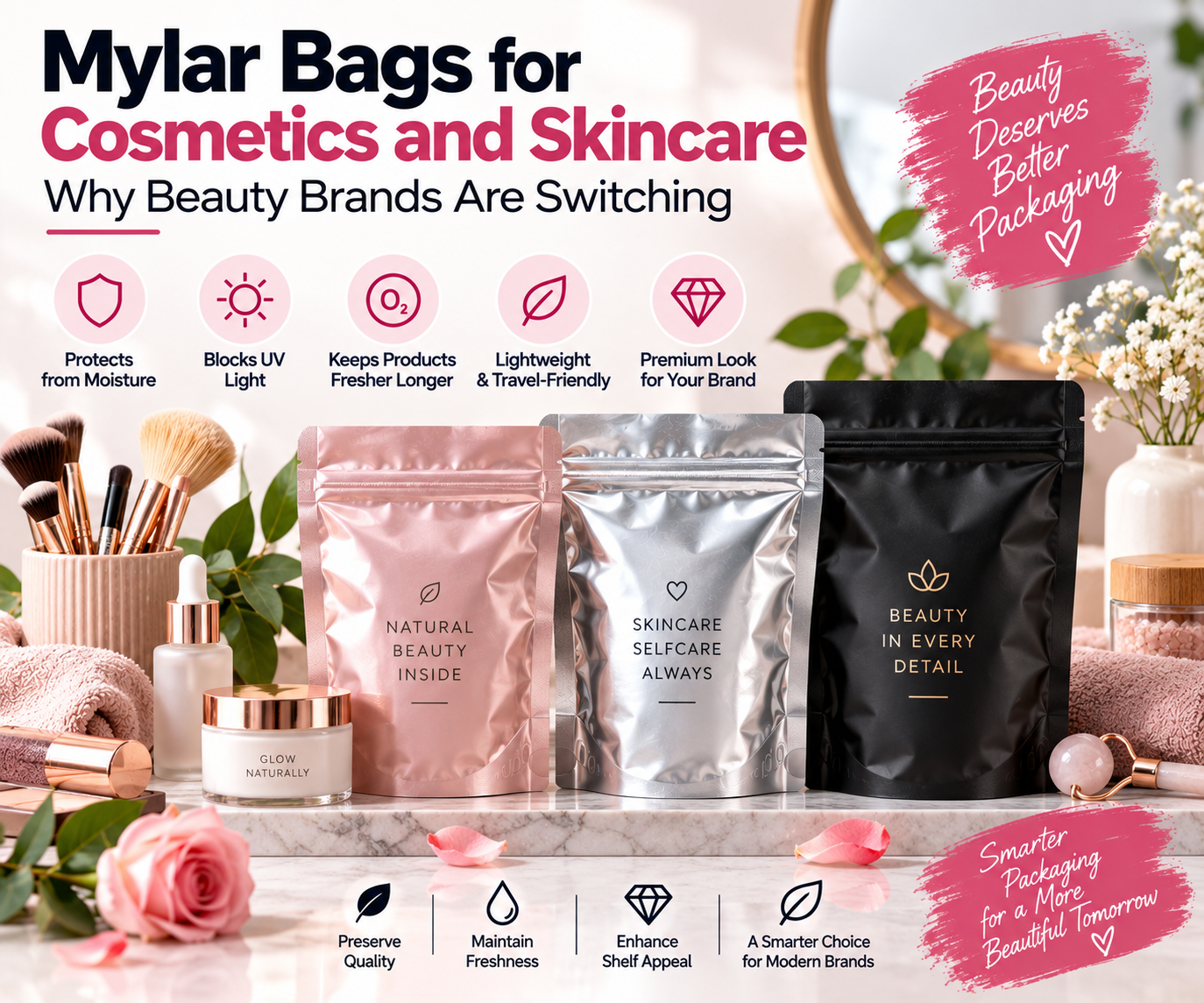
A serum loses potency the same way a bag of coffee loses aroma, just slower and less obviously. Active ingredients break down under light and air long before a product looks or smells noticeably different, which means the packaging around it is doing more work than most customers realize. Suppliers like premium mylar bags have watched demand grow steadily from beauty and personal care brands, and the reasons come down to the same barrier properties that made mylar useful for food long before cosmetics entered the picture.
Why Light Exposure Undermines Active Ingredients
Skincare formulas rely on specific active compounds to deliver results, and many of those compounds are chemically unstable once exposed to light.
- Vitamin C serums degrade rapidly under UV exposure, losing much of their effectiveness within weeks in clear packaging
- Retinol and other retinoid ingredients break down through light-triggered oxidation, reducing potency before the labeled expiration date
- Botanical extracts and natural preservatives lose stability faster in translucent or lightly tinted containers
- Color-based products, including tinted creams and pigmented masks, can visibly fade or shift shade under prolonged light exposure
Clear glass and lightly tinted plastic offer some protection, but neither blocks light as completely as a fully opaque barrier film.
What Mylar Actually Blocks
Mylar's metalized layer reflects rather than absorbs light, which is part of why it performs differently than tinted glass or plastic.
- Near-total UV and visible light blockage through the aluminum or metalized layer
- Oxygen barrier performance that slows oxidation of oils, actives, and preservative systems
- Moisture resistance that keeps powders, masks, and bath salts from clumping or absorbing ambient humidity
- Odor containment that prevents fragrance loss from the product and keeps external smells from affecting formulas
These four properties work together, which explains why a single material addresses several packaging concerns that beauty brands previously solved with separate solutions.
Comparing Mylar to Traditional Cosmetic Packaging
| Packaging Type | Light Protection | Oxygen Barrier | Typical Cost | Shelf Presence |
|---|---|---|---|---|
| Clear glass jars | Poor | Moderate | High | Strong, premium feel |
| Amber glass | Good | Moderate | High | Good, but limited color options |
| Clear plastic pouches | Poor | Weak | Low | Weak |
| Mylar stand-up pouches | Excellent | Excellent | Low to moderate | Strong, customizable finish |
Glass still carries a premium perception in some product categories, but mylar closes much of that gap through printed finishes while outperforming glass on both light and oxygen protection.
Products That Benefit Most From Switching
Not every cosmetic item needs this level of barrier protection, but several categories see a clear improvement.
- Vitamin C and retinol serums sold in single-use sachets or refill pouches
- Powdered face masks, bath salts, and exfoliating scrubs sensitive to moisture
- Sample kits and travel-sized products that need a compact, lightweight format
- Multi-use sheet mask packs where the outer pouch protects unopened masks between uses
- Natural and clean-formula products that rely on fewer synthetic preservatives and need stronger physical barrier protection instead
Branding and Finish Options Beauty Brands Are Using
Standing out on a crowded shelf matters as much to beauty brands as barrier performance does. Suppliers grouping options like specialized mylar bags typically offer finishes such as matte, soft-touch, holographic, and spot-gloss printing, which let brands achieve a premium look without switching to a heavier and more expensive substrate.
- Matte finishes convey a clean, minimalist aesthetic common in skincare branding
- Holographic and metallic finishes suit color cosmetics and younger-skewing brand positioning
- Clear windows combined with an otherwise opaque pouch let customers see the product while still protecting light-sensitive formulas around the visible area
- Soft-touch coatings add a tactile, premium feel that plain film alone doesn't provide
Choosing the Right Pouch Format for the Product
Format matters as much as material once a brand commits to mylar, since liquids, powders, and single-use samples all behave differently inside a flexible pouch.
- Stand-up pouches work well for retail shelf presence, giving products a self-supporting base similar to a bottle without the weight
- Flat lay-flat sachets suit single-use samples, sheet masks, and trial-size products meant for one application
- Spouted pouches handle liquids like serums or toners, allowing controlled dispensing without a separate pump or cap
- Zippered stand-up pouches fit multi-use powders and bath products that customers reopen repeatedly over several weeks
Matching format to product behavior prevents common complaints, like a liquid serum in a flat sachet that's awkward to fully empty, or a powder mask in a spouted pouch that clogs the opening.
A Shelf-Ready Option With Built-In Structure
For brands wanting a pouch that stands out physically as well as visually, 3d mylar bags add a dimensional, gusseted structure that holds its shape on a shelf without extra support, giving skincare and cosmetic products a sturdier presence than a flat pouch alone.
Regulatory and Labeling Considerations
Cosmetic packaging carries labeling requirements that differ somewhat from food packaging, even though the barrier material itself works the same way.
- Ingredient lists need to remain fully legible, which affects how much of the pouch surface goes toward decorative finishes versus required text
- Batch codes and expiration dates need a printable or stampable area that survives the pouch's finish coating
- Claims printed on the package, such as "cruelty-free" or "vegan," need to meet the same substantiation standards regardless of packaging format
- Child-resistant closures may apply to certain formulated products depending on ingredient content and local regulations
Working with a supplier familiar with cosmetic labeling requirements, rather than one focused purely on food packaging, helps avoid a compliance issue discovered only after a full production run ships. Reviewing a proof copy against these requirements before printing the full order catches most labeling gaps while they're still easy and inexpensive to fix.
Cost and Sustainability Considerations
Cost comparisons rarely tell the whole story without factoring in what each packaging type actually protects against over a product's shelf life.
- Mylar generally costs less per unit than glass, particularly at low to mid production volumes
- Reduced formula degradation means fewer returns and complaints tied to weakened or discolored product
- Lightweight film reduces shipping costs and carbon footprint compared to glass containers of similar capacity
- Recyclability remains a genuine tradeoff, since standard mylar's laminated structure is harder to recycle than single-material glass, though recyclable film options now exist for brands prioritizing this factor
Common Mistakes When Switching to Mylar Packaging
A handful of avoidable missteps come up often when beauty brands make this transition for the first time.
- Choosing a clear window that's too large, which undermines the light protection the switch was meant to achieve
- Assuming all mylar bags perform identically regardless of thickness or finish quality
- Skipping a physical sample review before committing to a full production run of a new pouch design
- Underestimating how much the finish choice affects perceived product quality compared to the packaging material itself
- Overlooking closure type, since liquids and powders need different seal and zipper configurations to prevent leaks or spills
Making the Switch With Confidence
The shift toward mylar in beauty and personal care packaging comes down to a straightforward tradeoff: better protection for the ingredients that actually determine whether a product works, at a lower cost than the glass and rigid plastic formats it often replaces. Brands weighing this change get the most value by matching finish and closure choices to the specific product inside, rather than treating every pouch design the same way regardless of whether it holds a liquid serum, a powdered mask, or a single-use sample. Testing a small run before committing to full production remains the simplest way to confirm that a chosen format, finish, and barrier thickness actually deliver the protection and shelf presence a formula needs before scaling up.

 English
 Arabic
 French
 Spanish
 Portuguese
 Deutsch
 Turkish
 Dutch
Dutch
 Italiano
 Romaian
 Portuguese (Brazil)
 Greek
Greek