


Similarity Checker: The Smart Way to Make Sure Your Writing Stands Alone
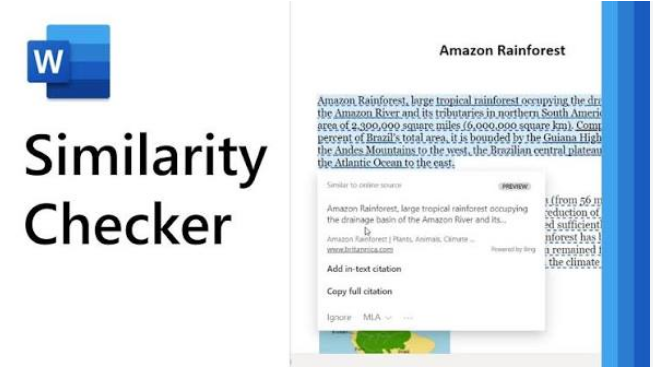
Every writer has felt it: that quiet worry that a sentence sounds a little too familiar. Maybe you read it somewhere months ago. Maybe it came from your own old draft. A similarity checker answers that worry in seconds, showing exactly where your text overlaps with other material so you can fix it before it becomes a problem.
What Is a Similarity Checker?
A similarity checker is a tool that scans your text and compares it with a large collection of sources, including websites, journals, books, and earlier submissions. It then reports how much of your writing matches existing content and where those matches appear.
Similarity vs. Plagiarism
These two words are often used as if they mean the same thing, but they don't. Similarity simply means text overlaps with something else. Piracy was making use of work by another person without giving them proper credit. A properly quoted passage with a citation will raise your similarity score without being plagiarism at all. That's why a similarity checker gives you data, and you supply the judgment.
How a Similarity Checker Works
Breaking Text Into Pieces
The tool splits your document into short strings of words and searches for identical or near-identical sequences across its database. The more consecutive words that match, the stronger the flag.
Looking Beyond Exact Wording
Better tools also detect reworded passages. If you swap a few synonyms but keep the original sentence structure, an advanced similarity checker can still notice the resemblance. Some even analyze meaning, so the idea itself is compared and not just the vocabulary.
Producing a Readable Report
Most reports include an overall percentage, color-coded highlights, and links to matching sources. The best ones separate quotes, references, and common phrases from genuinely suspicious overlap.
Who Gets the Most Value From It?
Students and Academics
Long research projects mean dozens of sources, and accidental echoes of a source's wording are easy to miss. Checking a draft helps you add citations, rewrite weak paraphrases, and submit with confidence.
Content Writers and SEO Teams
Search engines reward original, useful pages. Duplicate or lightly reworded copy can drag down visibility, especially across product pages or location pages that share templates. A quick scan keeps every page distinct.
Editors and Businesses
Anyone commissioning writing needs assurance that it's unique. A similarity checker works as an inexpensive quality gate before publication.
Reading Your Score Without Panic
A percentage alone says very little. Reference lists, names, technical terms, and quoted material all inflate the number. Focus on what the highlights reveal:
-
Long continuous matches deserve attention first.
-
Single-source matches often signal over-reliance on one article.
-
Self-matches may come from your own earlier publications.
-
Short common phrases can usually be ignored.
Chasing a perfect zero is neither realistic nor necessary. Aim for clean, properly credited writing.
Common Mistakes to Avoid
-
Trusting one scan blindly. Because different tools use different databases, the outcomes may differ.
-
Only swapping synonyms. This usually fails; restructure the idea instead.
-
Ignoring privacy. Check whether the tool stores or reuses what you upload.
-
Skipping citations. When in doubt, credit the source.
Picking the Right Tool for You
Look for a broad, regularly updated database, clear source links, and a clean interface. If you work in several languages, test a short sample in each. Free versions are fine for quick checks, while paid plans often add deeper scans and detailed reports. Whichever you choose, run it on your own writing first to see how it behaves.
Make Originality a Habit
A similarity checker works best as a final safety net, not a crutch. Build originality earlier: take notes in your own words, record each source as you read, and bring something new to the topic, such as a personal example, a fresh comparison, or your own analysis. When the thinking is yours, the wording naturally is too.
Conclusion
A similarity checker gives writers something rare: clear, fast feedback on originality. It protects your reputation, strengthens your credibility, and helps you publish work that readers and search engines can trust. Use it early, read the results with a calm eye, and let your own voice do the heavy lifting.

 English
 Arabic
 French
 Portuguese
 Deutsch
 Turkish
 Dutch
Dutch
 Italiano
 Russian
 Romaian
 Portuguese (Brazil)
 Greek
Greek