


Intraocular Lens Market Growth and Emerging Optical Technologies
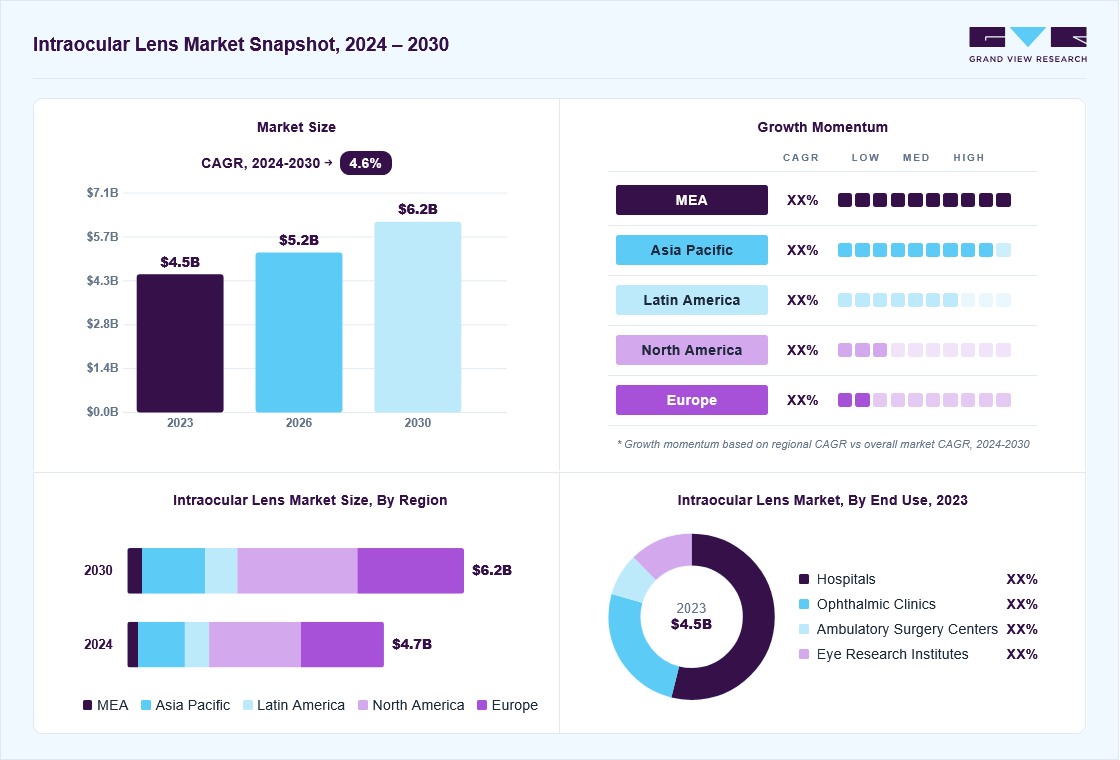
Restoring clear vision after cataract surgery is becoming more sophisticated as patients and ophthalmologists look beyond conventional lens replacement. Intraocular lenses (IOLs) are increasingly designed to address multiple vision requirements, including astigmatism and presbyopia, while supporting improved visual outcomes. The intraocular lens market was valued at USD 4.5 billion in 2023 and is projected to grow from USD 5.2 billion in 2026 to USD 6.2 billion by 2030, registering a CAGR of 4.6% from 2024 to 2030. Growing vision impairment, an aging population, and ongoing advances in lens materials and optical design are supporting market development.
Multifocal Lenses Bring Multiple Vision Needs Into Focus
Multifocal intraocular lenses accounted for 53.56% of market revenue in 2023, making them the leading product segment. These lenses are designed to provide vision at near, intermediate, and far distances, offering an option for patients seeking greater independence from spectacles after cataract surgery.
Growing interest in presbyopia correction and improvements in lens design are supporting this segment. Product development, research and development investment, and regulatory approvals are also helping expand the range of available solutions. In July 2022, Lenstec Inc.'s SBL-3 Multifocal Intraocular Lens received FDA approval for cataract surgery.
Toric intraocular lenses are expected to record the fastest growth during the forecast period. Designed to correct astigmatism, these lenses address a refractive error that can affect visual clarity. Advances in toric lens technology and increasing demand for more comprehensive vision correction are creating opportunities for this category.
Hospitals Remain the Primary Setting for Lens Implantation
Hospitals accounted for 54.27% of market revenue in 2023, reflecting their central role in cataract and vision-restoration procedures. Their specialized medical staff, advanced equipment, and ability to manage complex cases make them important settings for intraocular lens implantation.
Hospitals also benefit from established surgical infrastructure and access to multidisciplinary care. Ophthalmic clinics and ambulatory surgery centers provide additional treatment settings, while eye research institutes contribute to clinical research, specialist training, and the development of advanced surgical techniques.
Eye research institutes are projected to experience the fastest growth among end-use segments. Their involvement in innovation, collaboration with industry, and training in advanced ophthalmic procedures can help accelerate the development and adoption of new lens technologies.
Vision Impairment and Cataracts Sustain Long-Term Demand
The rising burden of eye disease is a major factor supporting intraocular lens demand. Cataracts remain a significant cause of vision impairment, while conditions such as diabetic retinopathy and other age-related eye disorders contribute to the need for diagnosis and treatment.
The World Health Organization estimates that around 2.2 billion people have vision impairment, with at least 1 billion cases preventable or yet to be addressed. As access to eye care improves, cataract surgery and lens replacement continue to represent important opportunities for the industry.
Increasing diabetes prevalence is another relevant factor because diabetes can contribute to eye complications. Growing awareness of eye health, improvements in surgical techniques, and initiatives to address untreated cataracts are further supporting demand for intraocular lenses.
Advanced Materials and Premium Lens Designs Shape Innovation
Manufacturers are investing in improved lens materials, surface modifications, and optical technologies to enhance visual performance and patient comfort. Multifocal, toric, and extended-depth-of-focus designs are expanding the range of options available to patients with different visual requirements.
In February 2024, Johnson & Johnson MedTech launched the TECNIS PureSee presbyopia-correcting intraocular lens in Europe, the Middle East, and Africa. The lens was designed to provide high-quality vision while reducing visual symptoms.
In March 2024, Alcon launched its Clareon family of intraocular lenses in India, including advanced technologies such as PanOptix and Vivity. In May 2024, Adaptilens secured USD 17.5 million in Series A financing to advance its accommodating intraocular lens technology, which aims to support near, intermediate, and distance vision.
Cost and Access Remain Important Market Considerations
Despite technological progress, high treatment costs and shortages of skilled ophthalmologists can restrict access to advanced lens procedures, particularly in underserved healthcare settings. Regulatory requirements can also increase product development costs and extend approval timelines.
The market's future will depend on expanding access to cataract treatment, developing improved lens designs, and balancing advanced optical performance with affordability.
FAQs
1. What is driving the intraocular lens market?
Increasing vision impairment, cataract prevalence, an aging population, diabetes-related eye complications, and advances in multifocal and toric lens technologies are supporting market growth.
2. Which segment leads the intraocular lens market?
Multifocal intraocular lenses led the product segment with a 53.56% revenue share in 2023, while hospitals led the end-use segment with a 54.27% share.
Key Intraocular Lens Companies:
· Alcon, Inc.
· Johnson and Johnson Vision Care, Inc.
· Bausch & Lomb Incorporated
· Carl Zeiss Meditec AG (ZEISS International)
About us:
Grand View Research, a market research and consulting company, provides syndicated research reports, customized research reports, and consulting services. Grand View Research database is used by the world's renowned academic institutions and Fortune 500 companies to understand the global and regional business environment. Our database features thousands of statistics and in-depth analysis on 46 industries in 25 major countries worldwide.

 Arabic
 French
 Spanish
 Portuguese
 Deutsch
 Turkish
 Dutch
Dutch
 Italiano
 Russian
 Romaian
 Portuguese (Brazil)
 Greek
Greek