


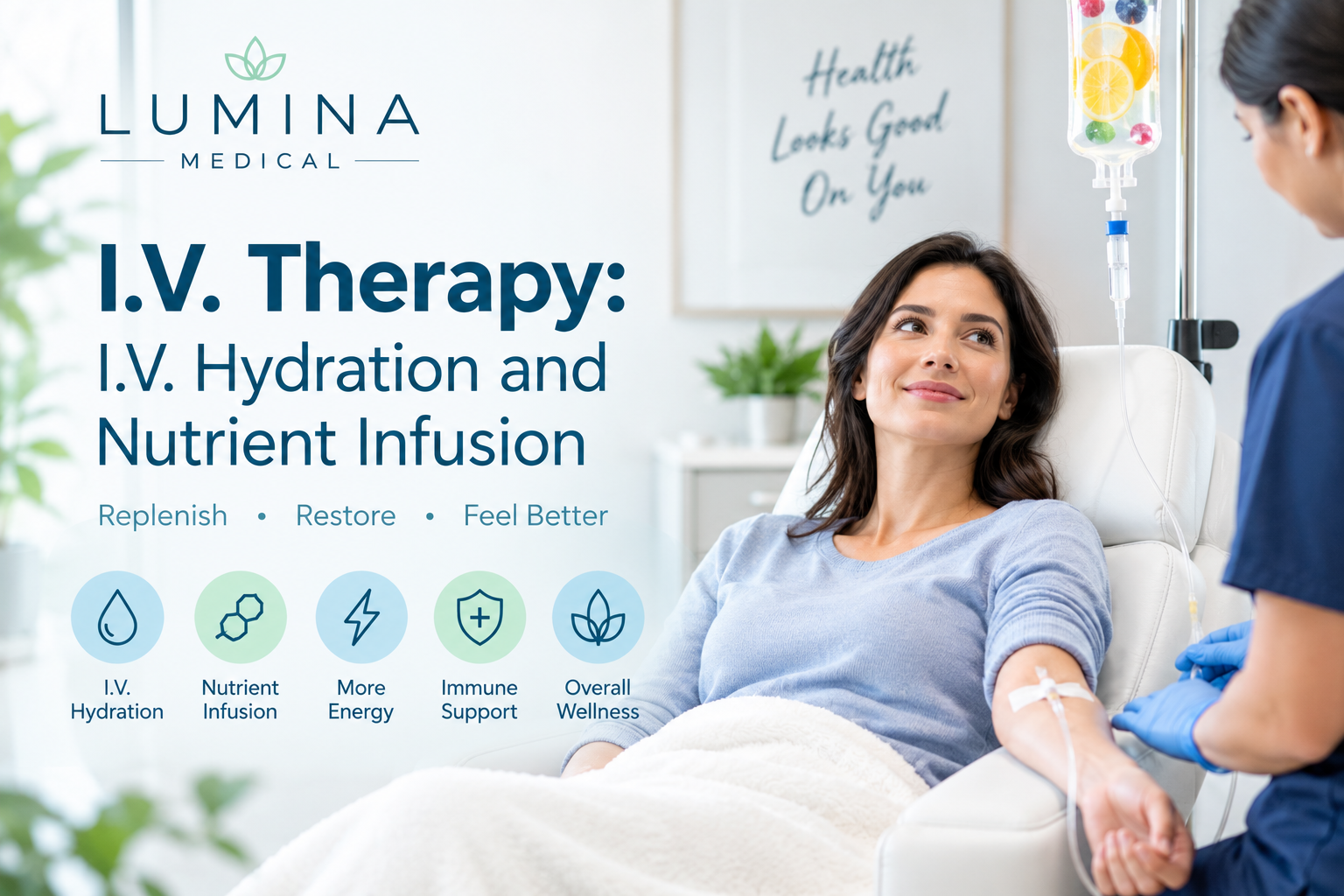
I.V. Therapy: I.V. Hydration and Nutrient Infusion
Introduction
Staying hydrated and maintaining balanced nutrition are important parts of overall health. However, some medical situations may require additional support to restore fluids or address specific nutrient deficiencies. I.V. therapy is one treatment option that delivers fluids or prescribed nutrients directly into the bloodstream through an intravenous line.
From medically indicated I.V. hydration to selected nutrient infusion treatments, this approach may be appropriate for certain individuals depending on their health needs. Understanding how I.V. therapy works, when it may be useful, and what safety considerations to keep in mind can help you make informed decisions about your care.
What Is I.V. Therapy?
I.V. therapy, also known as intravenous therapy, involves administering fluids, medications, or selected nutrients through a vein. Because the treatment enters the bloodstream directly, it can be useful when oral intake is insufficient or when a particular substance needs to be administered intravenously.
Healthcare professionals use I.V. therapy in various medical settings, including hospitals, clinics, and other appropriate care environments. The specific solution depends on the reason for treatment and the individual's medical condition.
Some wellness clinics also offer vitamin infusion services. However, these treatments are not necessary for everyone, and evidence supporting their benefits in otherwise healthy individuals is limited for many advertised wellness claims.
Understanding I.V. Hydration
I.V. hydration involves delivering fluids directly into the bloodstream to help correct or prevent dehydration when clinically appropriate. Dehydration can occur because of vomiting, diarrhea, excessive fluid loss, certain illnesses, or difficulty drinking enough fluids.
Symptoms may include thirst, dizziness, fatigue, and reduced urination. Mild dehydration can often be managed by drinking fluids, while oral rehydration solutions may be helpful in some circumstances. More significant dehydration may require medical evaluation and intravenous fluids.
The type and amount of fluid should be determined by a qualified healthcare professional. Factors such as age, kidney function, heart health, medications, and the severity of dehydration can influence treatment decisions.
I.V. hydration is not automatically better than drinking water. For people who can drink adequately and do not have a medical reason for intravenous fluids, oral hydration is generally the simpler option.
What Is a Nutrient Infusion?
A nutrient infusion delivers selected vitamins, minerals, or other prescribed substances through an intravenous line. Depending on the clinical situation, intravenous nutrients may be used when a diagnosed deficiency requires treatment or when a person cannot absorb or obtain adequate nutrients through the digestive system.
Some wellness services promote nutrient infusion for energy, immunity, or general well-being. However, receiving vitamins intravenously does not guarantee increased energy, improved immunity, or better health. Benefits depend on individual nutritional status, the ingredients used, and the underlying medical need.
Before choosing a nutrient infusion, discuss your health history, medications, and nutritional concerns with a qualified provider. Appropriate testing may help determine whether supplementation is necessary and which approach is suitable.
Potential Benefits and Important Considerations
When medically indicated, I.V. therapy can provide fluids, medications, or nutrients in situations where intravenous administration is appropriate. Treatment may be particularly useful when dehydration is significant or when a person's medical condition makes oral intake or absorption difficult.
Nevertheless, I.V. therapy carries potential risks. These include discomfort, bruising, infection at the insertion site, vein inflammation, and fluid or electrolyte imbalances. Excessive fluids may also be dangerous for people with certain heart or kidney conditions.
Unnecessary nutrient infusions can expose individuals to excessive amounts of particular vitamins or minerals. For this reason, treatment should be based on a clear clinical purpose rather than general wellness promises.
What to Expect During an I.V. Therapy Appointment
Before treatment, a healthcare professional should review your symptoms, medical history, medications, allergies, and reason for requesting I.V. therapy. They may check vital signs and recommend additional evaluation when appropriate.
If treatment is suitable, the provider selects the appropriate fluid or infusion and administers it using proper infection-control procedures. The treatment duration varies according to the prescribed solution and individual circumstances.
Afterward, you may receive guidance about hydration, nutrition, possible side effects, and any necessary follow-up. Always report unusual symptoms during or after treatment, particularly difficulty breathing, swelling, chest discomfort, or severe dizziness.
Choosing I.V. Therapy at Lumina Medical
Choosing an appropriate treatment begins with understanding your individual health needs. Whether you are exploring I.V. hydration or asking about nutrient infusion, a professional consultation can help determine whether intravenous treatment is appropriate or whether simpler alternatives would better meet your needs.
Lumina Medical in Plano, Texas, provides patient-centered healthcare and wellness services. If you are interested in I.V. therapy, contact the clinic to discuss available services, safety considerations, and whether a particular treatment may be suitable for you.
Good hydration, balanced nutrition, adequate sleep, and regular medical care remain important foundations of overall wellness. When used for an appropriate medical reason and administered by qualified professionals, I.V. therapy may be a useful part of an individualized care plan.

 Arabic
 French
 Spanish
 Portuguese
 Deutsch
 Turkish
 Dutch
 Italiano
 Russian
 Romaian
 Portuguese (Brazil)
 Greek