


What Qualities Should You Look for in Reliable PICU Manufacturers?
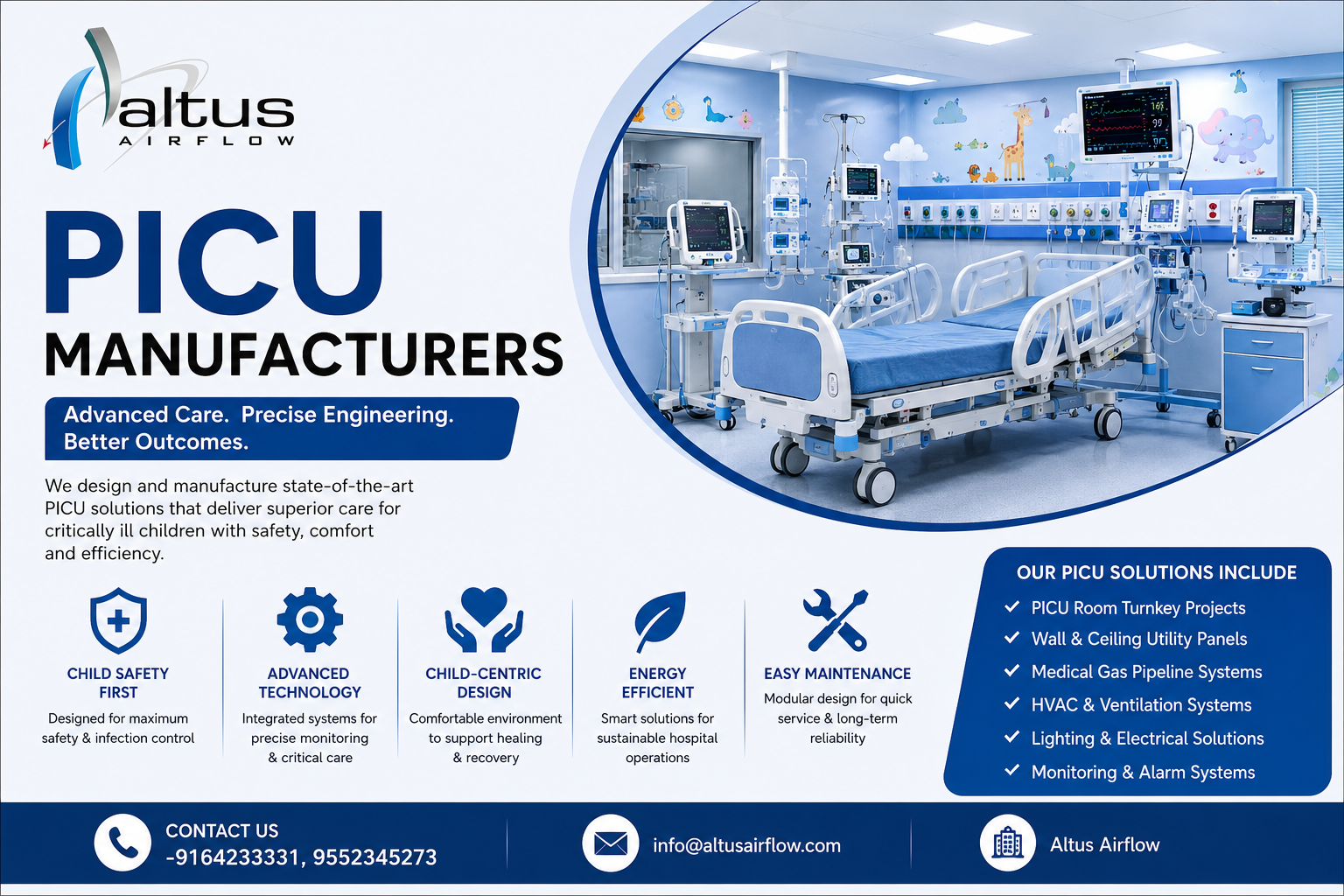
Introduction
A Paediatric Intensive Care Unit (PICU) requires a carefully designed environment where young patients can receive continuous monitoring, specialised treatment, and emergency support. Unlike general hospital wards, a PICU must accommodate age-appropriate medical equipment, accessible utilities, infection prevention measures, and efficient workflows for doctors, nurses, and other healthcare professionals. Every design and installation decision can influence how effectively the clinical team responds to a child's changing needs.
Choosing reliable PICU Manufacturers is therefore an important step when developing or upgrading a paediatric critical care facility. Hospitals should evaluate more than product availability or project cost. They should look for technical expertise, an understanding of paediatric care requirements, quality-conscious execution, and the ability to coordinate different infrastructure components. A well-planned PICU can support clinical teams while creating a safer, more organised, and patient-focused environment.
Understanding the Requirements of a Modern PICU
A PICU is designed to care for infants, children, and adolescents who require intensive observation or advanced medical intervention. Its infrastructure must support a range of clinical activities, including respiratory support, continuous monitoring, medication administration, emergency procedures, and post-operative care.
The needs of a paediatric critical care unit differ from those of an adult ICU. Bedside arrangements, equipment access, storage, lighting, and circulation should account for the size and treatment needs of younger patients. The facility must also allow staff to move quickly between beds and reach essential services without unnecessary obstacles.
Before selecting a manufacturer, hospital administrators should establish the unit's expected capacity, patient categories, clinical services, equipment requirements, and available space. This helps create a clear project brief against which potential manufacturers can be evaluated.
1. Experience in Healthcare Infrastructure Projects
One of the first qualities to assess is experience in specialised healthcare infrastructure. A manufacturer familiar with hospital environments is more likely to understand the coordination required between architectural elements, electrical systems, medical utilities, ventilation, and clinical equipment.
Hospitals should review the manufacturer's previous work and ask whether its team has handled intensive care or other specialised treatment areas. Relevant project experience can indicate an understanding of the practical challenges involved in creating spaces that must remain accessible, organised, and operational.
However, experience should be assessed through actual project scope rather than general claims. Ask for examples of completed installations, the responsibilities handled by the manufacturer, and how technical challenges were addressed. This makes it easier to determine whether the company's capabilities match the hospital's requirements.
2. Understanding of Paediatric Clinical Workflows
A reliable manufacturer should recognise that a PICU is built around the needs of both patients and clinical teams. Its layout must support routine care as well as urgent interventions.
Bedside access is particularly important. Doctors and nurses may need to reach monitoring equipment, ventilators, infusion systems, and medical gas outlets within a short time. Equipment positioning should avoid obstructing patient access or creating unnecessary movement around the bed.
The layout should also consider nursing visibility, staff circulation, emergency access, storage, and designated areas for clinical supplies. A manufacturer that consults hospital planners and clinical representatives during the design stage can help align the infrastructure with actual working practices.
3. Focus on Safety and Infection Prevention
Infection prevention is a fundamental consideration in any intensive care environment. A PICU may treat patients with different vulnerabilities, making suitable surfaces, cleaning access, ventilation coordination, and appropriate zoning important parts of the design process.
Hospitals should evaluate whether the manufacturer understands the role of cleanable finishes, properly sealed joints, accessible service areas, and suitable material selection. Surfaces should be chosen with routine cleaning and maintenance in mind rather than appearance alone.
Ventilation requirements should be coordinated with qualified HVAC professionals and the hospital's infection-control team. Air movement, filtration, pressure relationships, and monitoring requirements should be determined according to the facility's intended use and applicable standards. A manufacturer should be able to coordinate its work with these specialists instead of making unsupported performance claims.
4. Ability to Integrate Medical Equipment and Utilities
A modern PICU depends on several connected systems. These may include medical gas outlets, electrical points, emergency power connections, nurse call facilities, monitoring interfaces, lighting, and equipment support arrangements.
The manufacturer should understand how these elements fit into the overall bedside environment. Poor coordination can result in inaccessible outlets, cable congestion, obstructed movement, or difficulties during equipment replacement and servicing.
During planning, hospitals should review equipment schedules and utility requirements with the clinical engineering and biomedical teams. The design should provide appropriate access to essential services while keeping the patient area organised. A coordinated approach also helps reduce avoidable changes during installation.
5. Knowledge of Space Planning and Bedside Accessibility
PICU space planning must balance patient care, staff movement, equipment placement, and storage. Each bed position should provide adequate working space for routine treatment and emergency response.
Hospitals should assess whether the proposed layout accounts for:
-
Clear access around beds and essential equipment.
-
Convenient positioning of medical gas and electrical outlets.
-
Safe routes for staff, patients, and equipment.
-
Suitable storage for frequently used clinical supplies.
-
Access to service panels for inspection and maintenance.
-
Practical separation of clean and used materials.
A manufacturer should be willing to review these requirements with the hospital team before finalising drawings. This helps identify layout conflicts early and reduces the likelihood of expensive modifications after installation.
6. Commitment to Material Quality and Workmanship
Materials used in a PICU should be selected for durability, hygiene, safety, and suitability for a clinical setting. Wall and ceiling systems, doors, fixtures, protective components, and service panels should be appropriate for the intended environment.
Hospitals should ask manufacturers for product specifications, material details, relevant certifications where applicable, and information about cleaning and maintenance. They should also understand how components are assembled and finished, especially at joints and interfaces where dust or moisture could collect.
Good workmanship matters just as much as material selection. Consistent finishing, secure installation, proper sealing, and careful alignment contribute to the long-term usability of the facility. A reliable manufacturer should have a defined quality-checking process throughout the project.
7. Coordination Across Different Project Teams
PICU development often involves architects, hospital planners, civil contractors, electrical specialists, HVAC teams, medical gas providers, biomedical engineers, and clinical representatives. If these teams work without proper coordination, important details may be missed.
A capable manufacturer should communicate clearly with the other project stakeholders and identify dependencies before installation begins. This includes reviewing service routes, equipment dimensions, ceiling requirements, access panels, and the placement of utility connections.
An important supporting consideration is paediatric critical care equipment integration. Coordinating equipment requirements with the room layout and utility provisions helps create a more practical bedside environment. It also allows the hospital to identify potential clashes between infrastructure and clinical equipment before they become installation problems.
8. Transparent Project Planning and Documentation
A reliable manufacturer should provide a clear explanation of the proposed scope of work, technical specifications, project stages, and responsibilities. Hospitals should know which components are included, which are handled by other contractors, and where coordination is required.
Important documentation may include:
-
Layout drawings and technical plans.
-
Material and product specifications.
-
Equipment and utility coordination details.
-
Installation schedules and project milestones.
-
Inspection and quality-control records.
-
Testing, commissioning, and handover documents.
-
Maintenance instructions and relevant warranties.
Clear documentation supports accountability and makes future maintenance or facility upgrades easier. Hospitals should avoid relying only on verbal assurances when evaluating a project proposal.
9. Reliable Installation, Testing, and Handover Support
The quality of a PICU depends not only on its design but also on how accurately the infrastructure is installed. Components should be checked against approved drawings and specifications, and relevant systems should be inspected and tested by the responsible qualified teams.
Before handover, the hospital should confirm that installation work is complete, outstanding issues have been addressed, and required documentation has been provided. Testing and commissioning responsibilities should be clearly assigned, particularly for electrical, HVAC, medical gas, and other critical systems.
Post-installation support is another important consideration. Hospitals should ask about maintenance guidance, availability of replacement components, warranty conditions, and the process for reporting installation-related issues. A manufacturer that remains responsive after project completion can support the facility's long-term operation.
10. Evaluate Communication and Long-Term Support
Technical capability is essential, but communication also affects project outcomes. A manufacturer should respond clearly to questions, explain technical decisions, provide updates, and communicate potential delays or design changes promptly.
Hospitals should identify a clear point of contact and establish how approvals, revisions, inspections, and site coordination will be managed. This helps prevent misunderstandings between the manufacturer and the hospital's project team.
Long-term support should also form part of the selection process. A PICU may require future modifications as equipment, clinical practices, and capacity needs change. Choosing a manufacturer that provides useful technical documentation and dependable after-sales assistance can make future upgrades more manageable.
Conclusion
Selecting the right partner for a paediatric intensive care project requires careful evaluation of technical knowledge, clinical workflow awareness, material quality, safety considerations, and project coordination. Hospitals should review previous work, examine detailed specifications, involve clinical and engineering teams, and confirm how installation, testing, documentation, and after-sales support will be managed.
Reliable PICU Manufacturers should be able to understand the specialised requirements of paediatric critical care and coordinate infrastructure solutions around the hospital's operational needs. A thorough selection process can help create a well-organised, maintainable, and patient-focused environment that supports clinical teams and the delivery of intensive care.
Frequently Asked Questions
1. What should hospitals check before selecting PICU manufacturers?
Hospitals should assess healthcare project experience, understanding of paediatric clinical workflows, material specifications, utility integration capabilities, installation quality, documentation, and post-installation support.
2. Why is specialised PICU space planning important?
Specialised planning helps provide suitable bedside access, organised equipment placement, clear staff movement, and convenient access to essential utilities. It also supports emergency response and routine clinical activities.
3. What role does equipment integration play in PICU development?
Equipment integration ensures that monitoring systems, ventilators, medical gas outlets, electrical points, and other clinical requirements are considered during the design stage. This can reduce layout conflicts and improve bedside organisation.
4. How can hospitals evaluate the quality of PICU materials?
Hospitals can review technical specifications, material details, relevant certifications, cleaning requirements, durability information, and workmanship samples. They should also confirm that selected materials are suitable for the intended clinical environment.
5. Should PICU manufacturers provide support after installation?
Yes. Hospitals should clarify warranty conditions, maintenance guidance, replacement component availability, documentation, and the process for resolving installation-related issues before finalising a project.
Read Our Previous Blog-----------> How to Choose the Right Modular OT Setup Company for Your Hospital?

 Arabic
 French
 Spanish
 Portuguese
 Deutsch
 Turkish
 Dutch
 Italiano
 Russian
 Romaian
 Portuguese (Brazil)
 Greek