


Industrial Chillers Explained: Types, Benefits and Smart Selection Tips for 2026
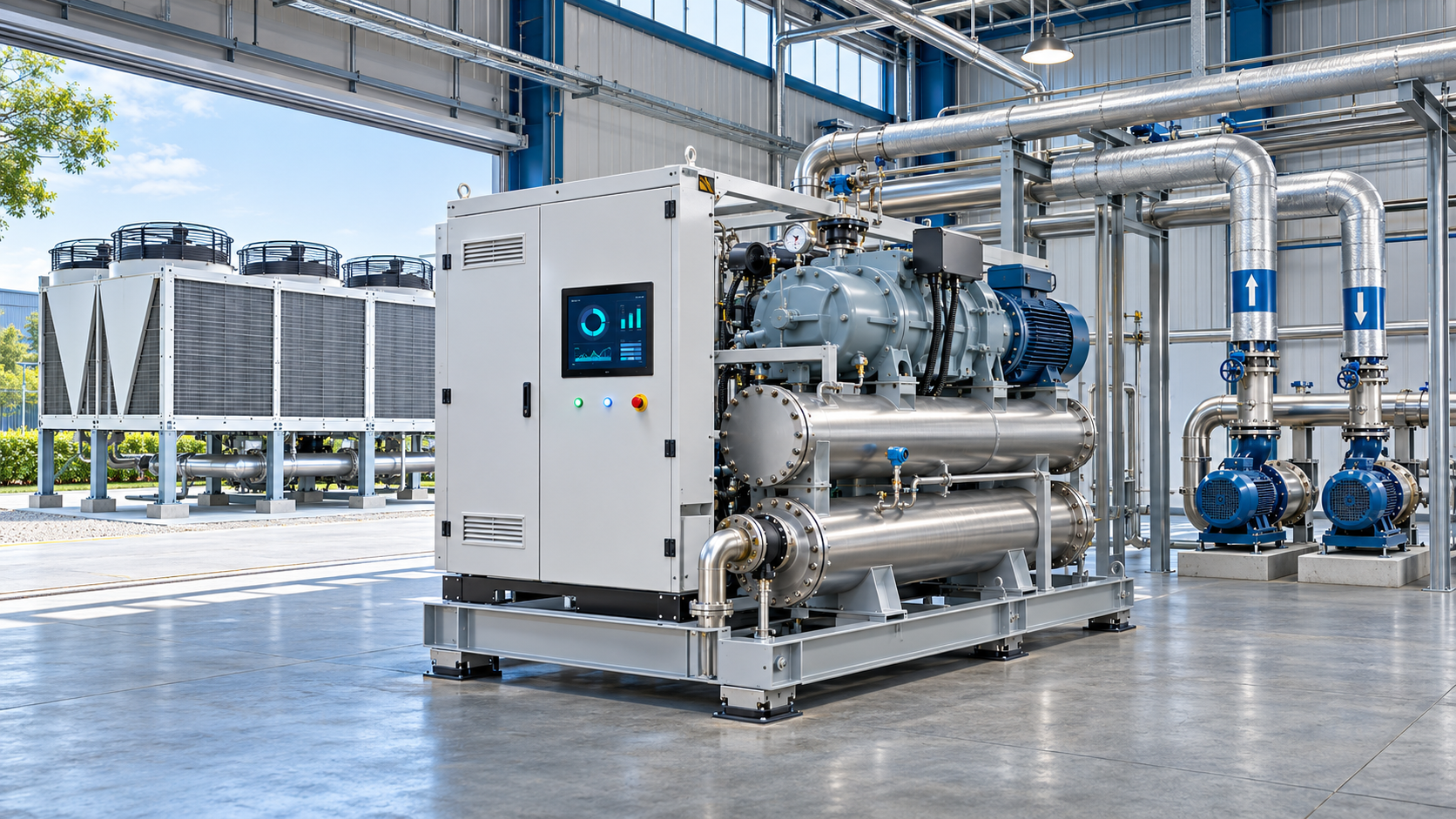
Maintaining the right temperature is essential for modern industrial operations. Whether a factory manufactures plastic components, processes beverages, produces pharmaceuticals, or operates heavy machinery, excess heat can affect productivity, product quality, and equipment reliability. This is why industrial Chillers have become an important part of modern manufacturing infrastructure.
An efficient cooling system does more than reduce temperature. It helps maintain consistent production conditions, protects sensitive equipment, and supports better process control. Understanding different chiller technologies and their applications can help businesses make informed equipment investments.
What Are Industrial Chillers and How Do They Work?
Industrial chillers are refrigeration systems designed to remove heat from liquids and circulate the cooled fluid through industrial processes or equipment. Most systems use water or a water-glycol mixture as the cooling medium.
The refrigeration cycle generally involves four major components: a compressor, condenser, expansion device, and evaporator. The refrigerant absorbs heat in the evaporator and releases it through the condenser. The resulting chilled liquid is circulated to the application where cooling is required.
Depending on the design, industrial cooling systems can operate continuously under different production loads and environmental conditions.
Popular Types of Chillers for Industrial Applications
Different manufacturing processes require different cooling technologies. The following systems are commonly used across industrial and commercial facilities.
1. Air-Cooled Chillers
Air-cooled systems use fans and condenser coils to release heat into the surrounding atmosphere. They are suitable for facilities that want to avoid installing cooling towers. Their relatively straightforward installation makes them useful for many manufacturing and commercial applications.
2. Water-Cooled Chillers
Water-cooled systems transfer heat through a water-cooled condenser, generally connected to a cooling tower. They are commonly considered for larger installations where water infrastructure, maintenance facilities, and suitable operating conditions are available.
3. Screw Chillers
These systems use screw compressors to deliver cooling for demanding industrial applications. They are frequently selected for medium-to-large cooling loads and facilities requiring dependable operation.
4. Scroll Chillers
Scroll chillers use scroll compressors and are available in different capacities and configurations. They are commonly used in smaller industrial facilities, commercial buildings, and specialised process cooling applications.
5. Glycol Chillers
Glycol-based cooling systems circulate a mixture of water and glycol to provide freeze protection and support lower-temperature applications. They are particularly useful in beverage manufacturing, food processing, and specialised industrial operations.
Major Benefits of Installing the Right Industrial Cooling System
Investing in an appropriately designed chiller can offer several operational advantages.
Consistent Temperature Control: Stable cooling helps maintain production conditions and reduces the risk of temperature-related quality variations.
Equipment Protection: Industrial machinery and sensitive components can experience performance issues when exposed to excessive heat. Proper cooling helps maintain suitable operating temperatures.
Improved Production Reliability: A correctly sized cooling system can support continuous manufacturing operations and minimise disruptions caused by inadequate cooling.
Energy Management: Selecting suitable compressor technology, heat exchangers, and control systems can help optimise electricity consumption.
Application Flexibility: Modern systems can be configured for different cooling requirements, including process water, glycol circulation, and commercial HVAC applications.
Industries That Depend on Industrial Chillers
Industrial cooling technology supports a wide range of sectors.
-
Pharmaceutical Manufacturing: Supports temperature management for production equipment and controlled processes.
-
Food Processing: Helps maintain suitable cooling conditions during food preparation and processing.
-
Beverage Production: Supports cooling requirements in beverage manufacturing and storage operations.
-
Plastic Processing: Maintains mould and process temperatures during injection moulding and extrusion.
-
Chemical Manufacturing: Helps control heat generated during industrial processing.
-
Electronics and Laser Applications: Supports temperature regulation for sensitive machinery and specialised equipment.
-
Commercial Buildings: Provides cooling for large HVAC installations and centralised temperature-control systems.
The cooling requirements of each industry vary, so equipment selection should always consider the actual process conditions.
How to Choose the Right Chiller for Your Facility
Selecting an industrial chiller requires technical evaluation rather than simply choosing the highest available capacity.
1. Calculate the Cooling Load: Determine the heat generated by machinery, production processes, and surrounding conditions. Avoid oversizing or undersizing the equipment.
2. Identify Temperature Requirements: Establish the required fluid supply temperature, return temperature, and operating range.
3. Evaluate Environmental Conditions: Ambient temperature, ventilation, water availability, and installation space influence system selection.
4. Compare Energy Performance: Examine efficiency at actual operating loads, including part-load conditions. Consider the performance of compressors, pumps, fans, and heat exchangers.
5. Check Maintenance and Support: Evaluate component accessibility, spare parts availability, technical assistance, and preventive maintenance requirements.
Working with experienced Chiller Manufacturers can simplify this process by helping businesses identify suitable equipment configurations based on their production requirements.
Why Aquatech Plus Is Relevant to Industrial Cooling Requirements
Selecting a cooling system involves more than purchasing refrigeration equipment. Engineering, system configuration, installation, and technical support also influence long-term performance.
Aquatech Plus specialises in designing, manufacturing, and installing industrial cooling systems, including chillers, water purification units, and complete beverage production lines. With more than 15 years of experience, the company focuses on customised, energy-efficient, and reliable solutions for different industrial applications.
Businesses looking for industrial cooling equipment can explore Chillers offered by Aquatech Plus. The company provides solutions designed to address varying industrial temperature-control requirements.
Maintenance Practices for Long-Term Chiller Efficiency
Preventive maintenance helps reduce unexpected breakdowns and supports reliable operation.
-
Clean condenser and evaporator heat-transfer surfaces as recommended.
-
Inspect refrigerant circuits for leaks and abnormal operating conditions.
-
Monitor water flow, temperature differences, and operating pressures.
-
Check compressor performance, electrical connections, pumps, and fans.
-
Maintain appropriate water quality to minimise scaling and corrosion.
-
Follow manufacturer-recommended inspection and servicing schedules.
Regular monitoring also helps identify changes in system performance before they affect production.
Frequently Asked Questions (FAQs)
1. Which type of chiller is suitable for industrial applications?
The right type depends on cooling capacity, operating temperature, environmental conditions, and process requirements. Air-cooled, water-cooled, screw, scroll, and glycol chillers serve different applications.
2. Why is chiller capacity important?
Incorrect capacity selection can result in inadequate cooling, unnecessary energy consumption, and operational difficulties. Capacity should be calculated according to the actual process heat load.
3. Are industrial chillers suitable for continuous operation?
Many industrial chillers are designed for continuous-duty applications. However, operating conditions, equipment specifications, installation quality, and maintenance determine their suitability.
4. What affects industrial chiller efficiency?
Compressor performance, condenser conditions, heat exchanger cleanliness, fluid flow, ambient temperature, and operating load all influence overall system efficiency.
5. How frequently should an industrial chiller be serviced?
Service frequency depends on the equipment design and operating environment. Routine inspections and preventive maintenance should follow the manufacturer's recommendations.
Conclusion
Industrial cooling is essential for maintaining production stability, protecting equipment, and supporting consistent product quality. Understanding chiller technologies, evaluating actual cooling requirements, and following proper maintenance practices can help businesses achieve reliable long-term performance.
By selecting suitable equipment and working with experienced manufacturers, industries can develop cooling systems that meet their operational requirements while managing energy consumption effectively.

 English
 Arabic
 French
 Spanish
 Portuguese
 Turkish
 Dutch
 Italiano
 Russian
 Romaian
 Portuguese (Brazil)
 Greek