


The Complete Diesel Engine Machining Process Explained — Step by Step
If you operate heavy equipment, a marine vessel, a fleet of trucks, or a power generator in South Florida, you already know how critical your diesel engine is to your daily operation. When something goes wrong, the question is never just what broke — it's how deep does the damage go and what needs to be done to fix it properly.
That's where professional diesel engine machining comes in. Unlike a basic repair, machining restores your engine's internal components to factory tolerances. It's the difference between an engine that lasts another 50,000 miles and one that fails again within months. At Motor Service Group LLC, we've been doing this since 1949. Here's exactly what happens when your engine comes through our doors.
Step 1 — Teardown and Cleaning
Before any work begins, the engine is completely disassembled. Every component is separated, cleaned, and laid out for inspection. Oil sludge, carbon deposits, and corrosion can hide cracks and wear that would otherwise go undetected. Industrial cleaning ensures every surface is fully visible before the inspection process starts. Skipping a thorough teardown is one of the most common reasons rebuilt engines fail prematurely.
Step 2 — Crack Detection
Once components are clean, the next step is finding damage the naked eye cannot see. Internal cracks are one of the leading causes of engine failure after a rebuild — and they are completely invisible without the right equipment. For anyone dealing with magnaflux crack detection South Florida needs, this step is non-negotiable. We apply magnetic particle inspection to cylinder heads, engine blocks, crankshafts, and connecting rods to reveal surface and near-surface cracks before any machining begins. If a crack is found at this stage, it can often be repaired. If it's found after reassembly, the costs are significantly higher.
Step 3 — Pressure Testing
Alongside crack detection, pressure testing verifies the integrity of internal cooling passages and combustion chambers. The component is sealed and tested under controlled pressure to identify any leaks. A cylinder head or block that fails pressure testing has a breach somewhere — whether from a crack, a corroded passage, or a failed seal. These issues must be resolved before machining begins, or the rebuild will fail regardless of how precise the work is.
Step 4 — Cylinder Head Rebuilding
The cylinder head endures extreme heat cycles and takes the full force of combustion thousands of times per minute. A proper rebuild involves resurfacing the head deck to restore a flat mating surface, grinding valves and cutting seats for a precise seal, and replacing injector tubes where corrosion or damage is present. Businesses and operators looking for reliable cylinder head repair South Florida can trust that each head goes through a final pressure test before it is approved for reassembly. Poor valve seating and uneven deck surfaces are among the top causes of blown head gaskets and overheating — both of which are entirely preventable with proper machining.
Step 5 — Engine Block Machining
The engine block is the core structure of your diesel engine. If it is not machined to exact specifications, nothing else will perform correctly no matter how well it was rebuilt. The process includes boring the cylinder bores to a precise oversize, honing the walls to the correct surface finish for proper ring seal, decking the top surface flat, and sleeving bores that are damaged beyond acceptable limits. Align boring the main bearing bores is also performed to ensure the crankshaft rotates without binding. For anyone searching for professional engine block repair South Florida, this stage is where the foundation of a reliable rebuild is either established or compromised. Every measurement is verified before the block moves to the next stage.
Step 6 — Crankshaft and Connecting Rod Reconditioning
The crankshaft converts piston motion into rotational power and operates under enormous load. Over time, journals become worn, scored, or out of round, causing oil pressure to drop and engine wear to accelerate. Crankshaft journals are ground to a precise undersize and polished to the correct surface finish, then measured to verify every journal meets required tolerances.
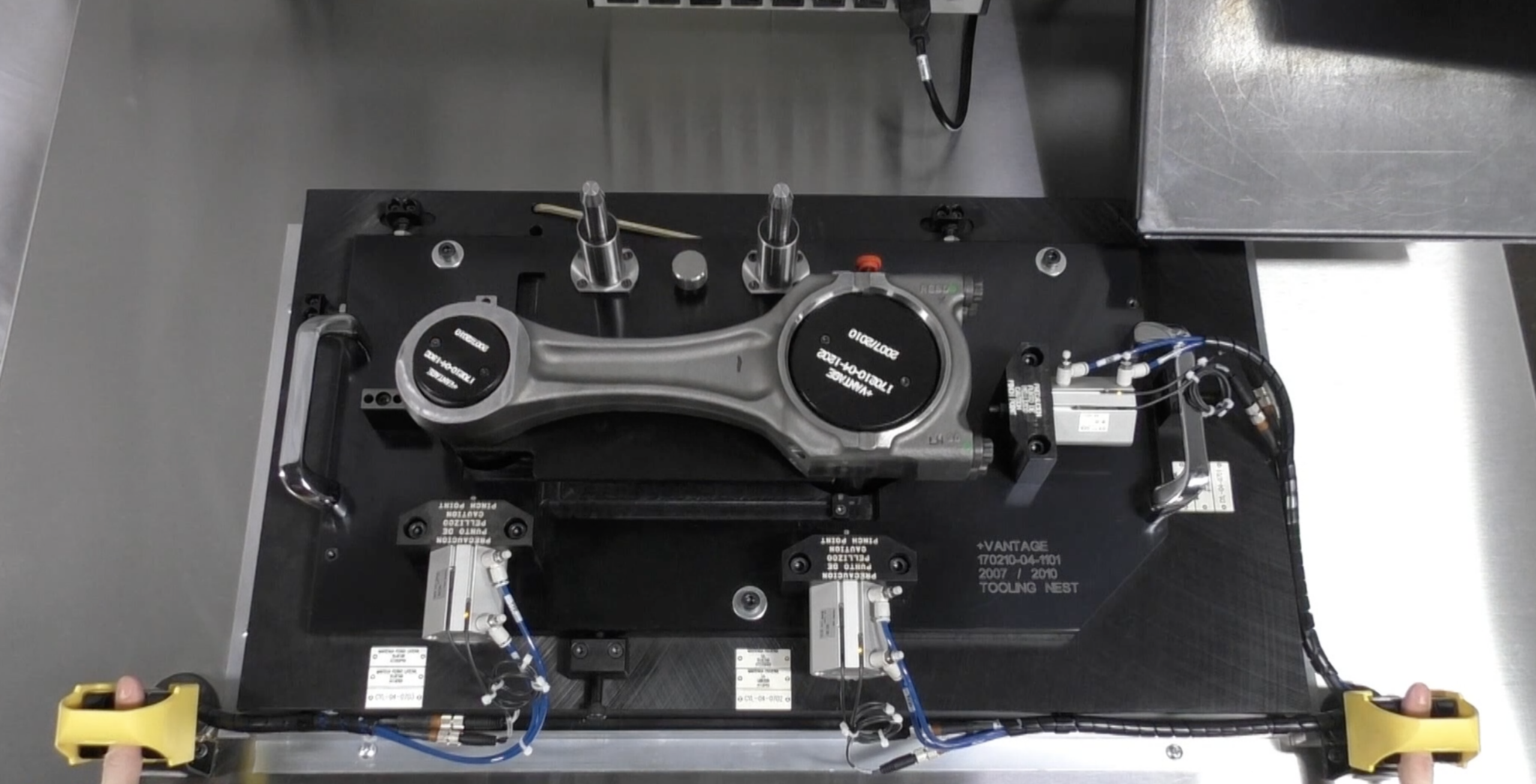
Connecting rods are checked for straightness and twist, the big end bore is resized if necessary, and the small end pin bushing is replaced where worn. Any rod that cannot be brought within factory specification is replaced — there is no acceptable middle ground when it comes to connecting rod integrity.
Step 7 — Final Verification and Assembly Preparation
Once every component has been machined and tested, all critical clearances are measured one final time — bearing clearances, piston-to-wall clearances, end play, and deck height — before assembly begins. This is where experience matters most. Understanding what complete diesel engine repair South Florida involves means recognising that final verification is not a formality — it is the last line of defence against a comeback. Every engine that leaves our shop has passed this complete verification process.
The Right Way to Rebuild a Diesel Engine
Diesel engine machining is a system where every step depends on the one before it. A block bored without align honing will wear crankshaft bearings unevenly. A cylinder head resurfaced without pressure testing may fail within months. The only way to get a rebuild that lasts is to complete every step correctly, with the right equipment, and in the right order.
Motor Service Group LLC has been delivering precision diesel engine machining in Miami since 1949, serving marine, heavy equipment, fleet, and power generation customers across South Florida. Call us today at 1(305) 592-2440 to discuss your engine or request a free estimate.

 English
 Arabic
 French
 Spanish
 Deutsch
 Turkish
 Dutch
Dutch
 Italiano
 Russian
 Romaian
 Portuguese (Brazil)
 Greek
Greek