


Microscope Eyepieces & Objective Lenses: Essential Components for Clear and Accurate Imaging
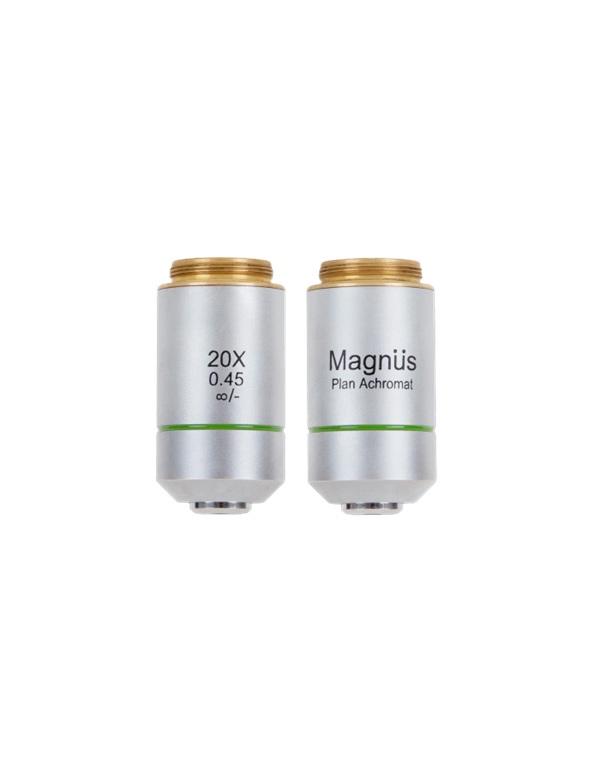
Microscopes are powerful tools that allow us to explore the microscopic world with precision. However, the quality of what we see largely depends on two critical components: microscope eyepieces and objective lenses. These optical elements work together to magnify and clarify the image of a specimen, making them essential for laboratories, research, and education.
Understanding how these components function and how to choose the right ones can significantly improve your microscopy experience.
What Are Microscope Eyepieces?
Microscope eyepieces, also known as ocular lenses, are the lenses you look through to observe a magnified image. They are positioned at the top of the microscope and play a key role in determining the final magnification.
Common Eyepiece Magnifications:
- 5x
- 10x (most common)
- 15x
- 20x
The total magnification of a microscope is calculated by multiplying the eyepiece magnification with the objective lens magnification.
What Are Objective Lenses?
Objective lenses are located close to the specimen and are responsible for the primary magnification. These lenses determine the resolution and clarity of the image.
Common Objective Lens Magnifications:
- 4x (Scanning)
- 10x (Low Power)
- 40x (High Power)
- 100x (Oil Immersion)
High-quality objective lenses provide better resolution, reduced distortion, and improved image clarity.
How Eyepieces and Objective Lenses Work Together
The combination of eyepieces and objective lenses determines the overall magnification and image quality. For example:
- 10x eyepiece × 40x objective = 400x total magnification
- 10x eyepiece × 100x objective = 1000x total magnification
This synergy allows users to observe specimens at different levels of detail depending on their needs.
Types of Microscope Eyepieces
1. Widefield Eyepieces
Provide a larger field of view, making it easier to observe specimens.
2. High Eyepoint Eyepieces
Designed for comfort, especially for users who wear glasses.
3. Measuring Eyepieces
Include scales for measuring specimen size.
Types of Objective Lenses
1. Achromatic Lenses
Correct basic color distortions and are suitable for general use.
2. Plan Objectives
Provide a flat field of view, ensuring clarity across the entire image.
3. Fluorite Lenses
Offer improved resolution and brightness.
4. Apochromatic Lenses
Deliver the highest level of correction and image quality, ideal for advanced research.
Key Features to Consider
When choosing microscope eyepieces and objective lenses, consider:
1. Optical Quality
High-quality glass and coatings ensure better image clarity.
2. Compatibility
Ensure the lenses are compatible with your microscope model.
3. Magnification Needs
Choose magnification levels based on your application.
4. Field of View
Widefield eyepieces provide a broader viewing area.
5. Durability
Look for lenses that are resistant to wear and environmental conditions.
Applications of Eyepieces & Objective Lenses
These components are used in various fields:
- Medical Diagnostics: Analyzing blood and tissue samples
- Biological Research: Studying cells and microorganisms
- Educational Labs: Teaching microscopy concepts
- Industrial Inspection: Examining materials and components
- Pharmaceutical Research: Drug testing and analysis
Their versatility makes them essential in any microscopy setup.
Benefits of High-Quality Optical Components
1. Improved Image Clarity
Better lenses provide sharper and more detailed images.
2. Enhanced Accuracy
High-quality optics reduce errors in observation and measurement.
3. Greater Efficiency
Clear imaging speeds up analysis and decision-making.
4. Long-Term Reliability
Durable components ensure consistent performance over time.
Tips for Maintenance
- Clean lenses regularly with proper cleaning solutions
- Avoid touching lenses with bare hands
- Store in a dust-free environment
- Handle with care to prevent scratches
- Perform periodic inspections
Proper maintenance ensures long-lasting performance and accuracy.
Choosing the Right Manufacturer
Selecting a trusted manufacturer is crucial for quality and reliability. Companies like Magnus Opto Systems offer high-precision microscope eyepieces and objective lenses designed for professional use.
Conclusion
Microscope eyepieces and objective lenses are the backbone of any microscope. Their quality directly impacts the clarity, accuracy, and effectiveness of your observations. Whether you are a student, researcher, or professional, investing in high-quality optical components is essential for achieving the best results.
By understanding their functions and selecting the right combination, you can significantly enhance your microscopy experience.
FAQs
1. What is the role of an eyepiece in a microscope?
The eyepiece magnifies the image formed by the objective lens for viewing.
2. What does an objective lens do?
It provides the primary magnification and determines image resolution.
3. How is total magnification calculated?
Multiply the eyepiece magnification by the objective lens magnification.
4. Which objective lens is used for highest magnification?
The 100x oil immersion lens provides the highest magnification.
5. Why are high-quality lenses important?
They ensure better clarity, accuracy, and reliable results in microscopy.

 Arabic
 French
 Spanish
 Portuguese
 Deutsch
 Turkish
 Dutch
Dutch
 Italiano
 Russian
 Romaian
 Portuguese (Brazil)
 Greek
Greek