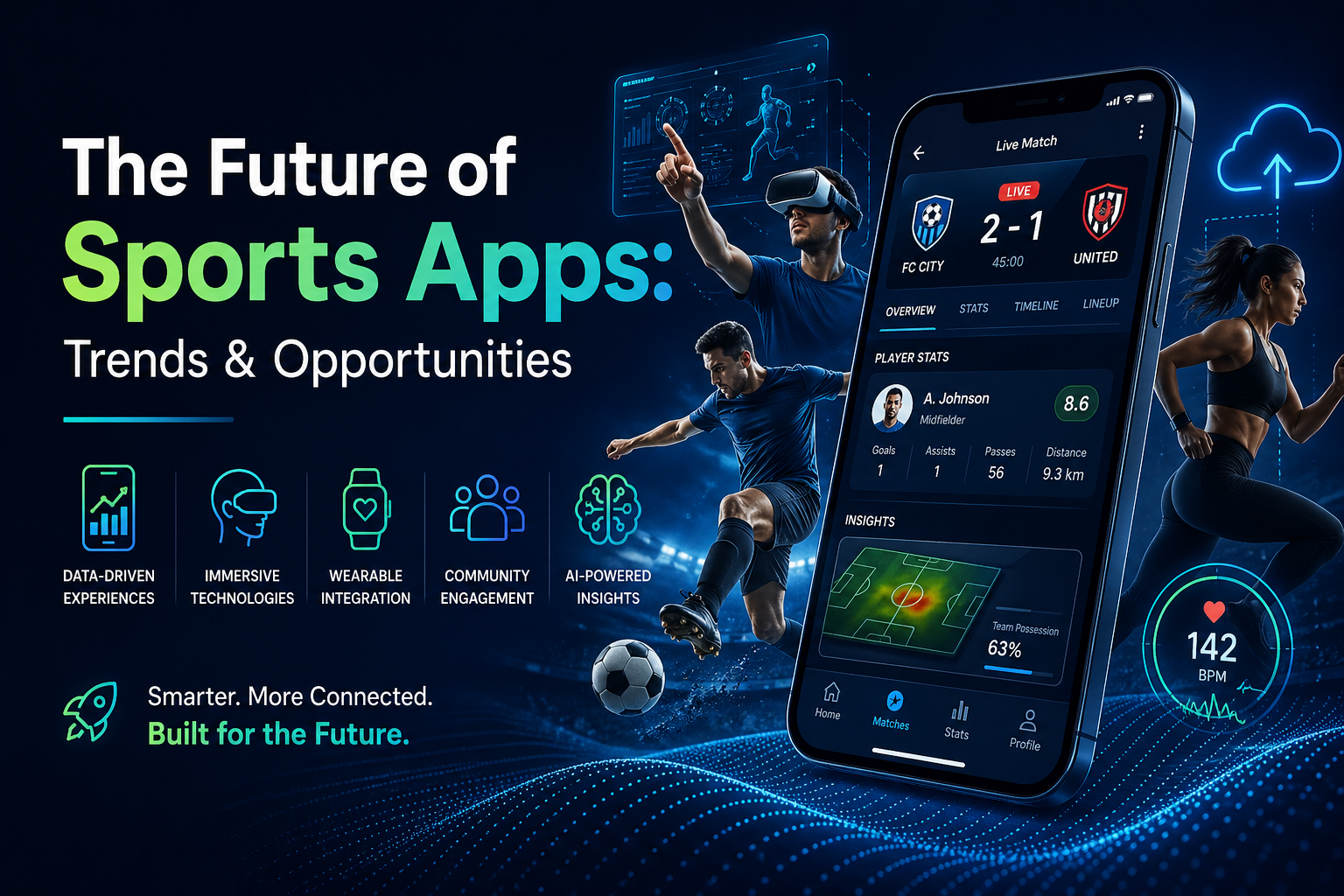
The sports industry is undergoing a rapid digital transformation, and mobile applications are at the center of this evolution. What began as simple platforms for checking scores and schedules has now become a sophisticated ecosystem of real-time engagement, immersive experiences, and data-driven insights. In 2026 and beyond, sports apps are poised to become even more intelligent, interactive, and indispensable.
The future of sports apps lies in their ability to seamlessly integrate advanced technologies such as artificial intelligence (AI), augmented reality (AR), blockchain, and IoT while delivering hyper-personalized user experiences. These apps are not only transforming how fans engage with sports but also redefining how businesses generate revenue and operate efficiently.
In this blog, we explore the future of sports apps, key trends shaping their development, and the opportunities they present for businesses and startups.
The Evolution of Sports Apps
From Basic Tools to Intelligent Platforms
Sports apps have evolved significantly over the past decade. Initially designed to provide basic information, they now offer:
- Live streaming and real-time updates
- Fantasy sports and gamification
- Social interaction and community features
- Advanced analytics and insights
This transformation reflects changing user expectations and the increasing role of technology in sports.
The Rise of Mobile-First Experiences
With smartphones becoming the primary medium for content consumption, sports apps are designed with a mobile-first approach. This ensures seamless performance, intuitive interfaces, and accessibility across devices.
Key Trends Shaping the Future of Sports Apps
1. AI-Driven Hyper-Personalization
Artificial Intelligence is revolutionizing how sports apps deliver content. Future apps will provide:
- Tailored content feeds
- Personalized notifications
- Predictive recommendations
AI will analyze user behavior to create unique experiences for each individual, increasing engagement and retention.
2. Immersive Experiences with AR and VR
Augmented Reality and Virtual Reality are set to redefine fan engagement. Future applications will include:
- Virtual stadium experiences
- AR overlays with real-time stats
- Interactive viewing modes
These technologies will bridge the gap between physical and digital experiences.
3. Real-Time Data and Advanced Analytics
The demand for instant information will continue to grow. Future sports apps will leverage:
- Low-latency data streaming
- Predictive analytics
- AI-powered insights
This will enable users to access detailed performance metrics and make informed decisions.
4. Integration with Wearables and IoT
Wearable devices will play a crucial role in the future of sports apps. Integration will allow:
- Real-time health monitoring
- Performance tracking
- Personalized fitness insights
This trend will expand the reach of sports apps beyond fans to athletes and fitness enthusiasts.
5. Blockchain and Digital Ownership
Blockchain technology will enhance transparency and security while enabling new opportunities such as:
- NFTs and digital collectibles
- Secure transactions
- Decentralized sports platforms
Fans will be able to own and trade unique digital assets related to their favorite teams and players.
6. Social and Community Engagement
Future sports apps will focus on building strong communities through:
- Live chats and fan forums
- Social media integration
- User-generated content
These features will foster deeper connections among users.
7. Expansion of Esports and Hybrid Platforms
Esports continues to grow rapidly, and future sports apps will integrate traditional sports with esports, creating hybrid platforms that cater to diverse audiences.
8. Voice and Conversational Interfaces
Voice assistants and chatbots will enhance accessibility, allowing users to interact with apps using natural language.
9. Cloud-Native and Scalable Architectures
Future sports apps will rely on cloud-native technologies to ensure:
- High scalability
- Reliability during peak traffic
- Cost efficiency
Microservices and serverless architectures will become standard.
10. Enhanced Monetization Models
New revenue streams will emerge, including:
- Subscription-based services
- Microtransactions
- Personalized advertising
- Digital asset sales
These models will enable businesses to maximize profitability.
Opportunities for Businesses
Expanding Global Reach
Sports apps break geographical barriers, allowing businesses to reach audiences worldwide.
Diversifying Revenue Streams
Multiple monetization options provide opportunities for sustainable growth.
Leveraging Data for Insights
Data analytics enables businesses to understand user behavior and optimize strategies.
Building Brand Loyalty
Engaging and personalized experiences foster long-term relationships with users.
Technical Considerations for Future Sports Apps
Scalable Infrastructure
Cloud-based solutions are essential for handling large volumes of data and traffic.
Data Security and Privacy
Implementing robust security measures is critical to protect user data.
Integration Capabilities
Seamless integration with APIs, wearables, and third-party services is necessary.
Performance Optimization
Ensuring fast load times and smooth interactions is crucial for user satisfaction.
Challenges in the Future Landscape
High Development Costs
Advanced technologies require significant investment.
Rapid Technological Changes
Keeping up with evolving trends can be challenging.
User Retention
Maintaining engagement requires continuous innovation.
Regulatory Compliance
Adhering to data protection and industry regulations is essential.
What Businesses Should Do Next
Invest in Innovation
Adopt emerging technologies to stay competitive.
Focus on User Experience
Prioritize intuitive design and seamless functionality.
Build Scalable Solutions
Ensure infrastructure can handle growth.
Collaborate with Experts
Partnering with experienced developers can accelerate success.
How JPLoft Helps Build Future-Ready Sports Apps
In a rapidly evolving digital landscape, choosing the right technology partner is crucial for success. JPLoft has established itself as a trusted provider of mobile app development services, particularly in the sports industry.
They specialize in building innovative, scalable, and high-performance sports applications tailored to business needs. Their expertise includes AI-driven personalization, real-time data integration, cloud-native architecture, and intuitive UI/UX design.
JPLoft offers end-to-end development services, covering everything from ideation and design to deployment and ongoing maintenance. They focus on delivering solutions that align with business objectives while ensuring exceptional user experiences.
By partnering with JPLoft, businesses can:
- Accelerate development timelines
- Build scalable and secure applications
- Enhance user engagement
- Leverage cutting-edge technologies
They utilize modern tools and frameworks such as machine learning, blockchain, and advanced analytics to create future-ready sports apps. Their collaborative approach ensures that clients receive customized solutions that drive growth and innovation.
Future Outlook
The future of sports apps is filled with possibilities. As technology continues to evolve, these applications will become more intelligent, immersive, and user-centric. The integration of AI, AR/VR, blockchain, and IoT will unlock new dimensions of engagement and monetization.
Businesses that embrace these trends and invest in advanced solutions will be well-positioned to lead the market. The key lies in innovation, adaptability, and a strong focus on user needs.
Conclusion
Sports apps have come a long way from their humble beginnings, and their future is even more promising. They are transforming how fans engage with sports, how athletes track performance, and how businesses operate.
By understanding the trends and opportunities outlined in this blog, businesses can make informed decisions and stay ahead of the competition. Investing in the right technologies, focusing on user experience, and partnering with experienced sports app developers like JPLoft will be critical to success.
As the sports industry continues to evolve, one thing is clear: sports apps will remain at the forefront of innovation, shaping the future of sports for years to come.




 English
 Arabic
 French
 Spanish
 Portuguese
 Deutsch
 Turkish
 Dutch
Dutch
 Russian
 Romaian
 Portuguese (Brazil)
 Greek
Greek