


Why Choosing the Right DME Billing Service Matters for Healthcare Providers
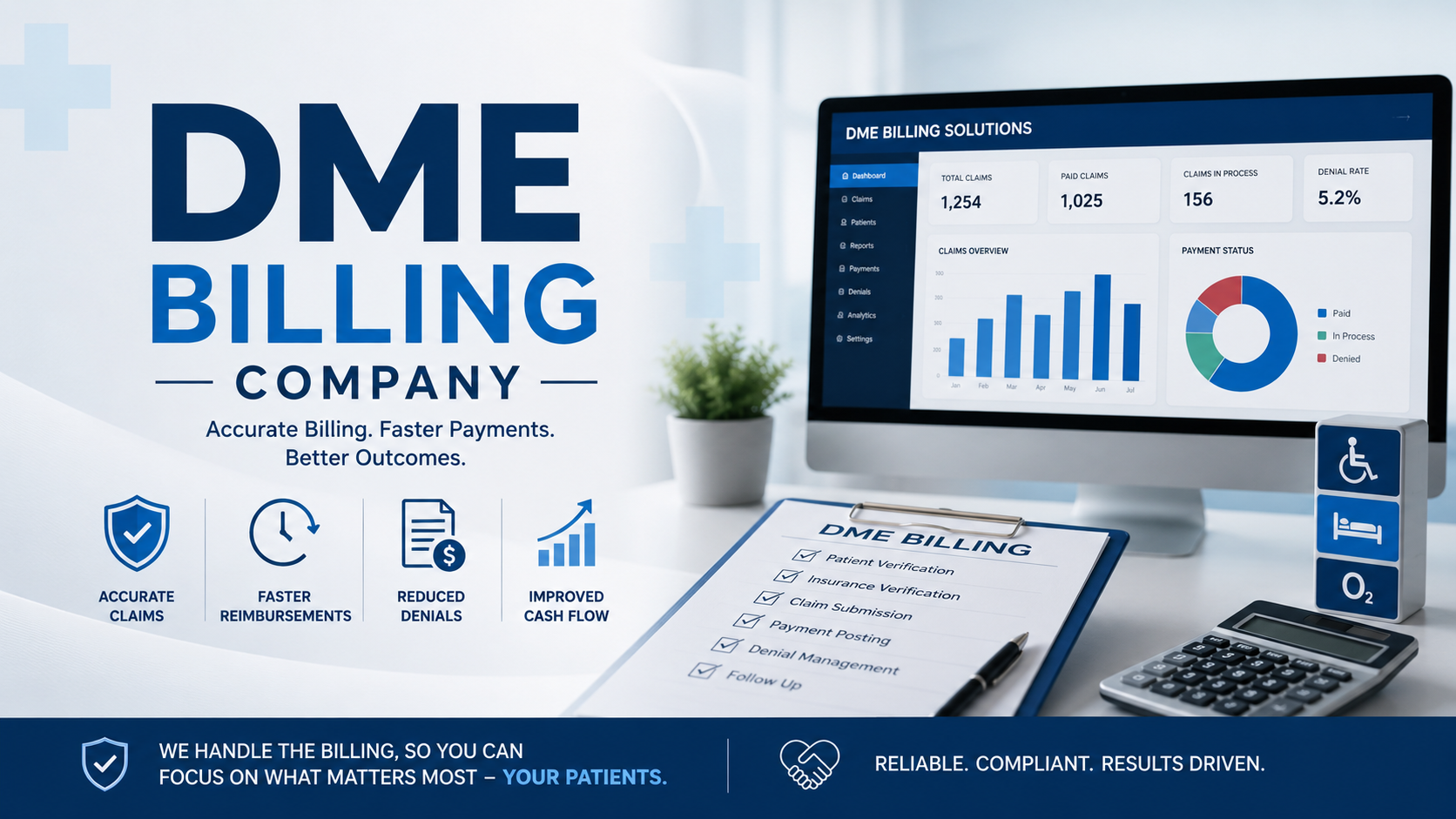
Durable Medical Equipment (DME) plays a critical role in patient care. From wheelchairs and oxygen equipment to CPAP machines and walkers, these medical supplies help patients recover, manage chronic conditions, and improve their quality of life. However, behind every successful DME provider is a strong billing process that keeps reimbursements flowing smoothly.
Managing claims, insurance verification, coding, documentation, and compliance can quickly become overwhelming. That is why many providers rely on a professional dme billing service to streamline operations and reduce claim denials.
In this blog, we’ll explore what DME billing involves, the common challenges providers face, and how outsourcing billing services can improve efficiency and revenue.
Understanding DME Billing and Its Importance
DME billing refers to the process of submitting claims for durable medical equipment to insurance companies, Medicare, and Medicaid. Unlike standard medical billing, DME claims often require additional documentation, prior authorizations, and strict compliance with payer guidelines.
Durable medical equipment includes items such as:
- Wheelchairs
- Hospital beds
- Oxygen supplies
- CPAP and BiPAP machines
- Prosthetics and orthotics
- Diabetic testing supplies
- Walkers and crutches
Because these products are expensive and highly regulated, insurance providers carefully review claims before approving reimbursements. Even a small coding or documentation error can lead to delayed payments or denials.
A reliable dme billing service ensures that claims are submitted accurately and in compliance with industry regulations. This helps healthcare providers avoid revenue loss and focus more on patient care.
Common Challenges in DME Billing
DME billing is more complicated than many healthcare providers expect. Providers often face multiple obstacles that affect cash flow and operational efficiency.
Frequent Claim Denials
One of the biggest issues in DME billing is claim rejection. Insurance companies may deny claims due to:
- Incorrect HCPCS coding
- Missing physician documentation
- Lack of medical necessity
- Expired authorizations
- Incomplete patient information
Repeated denials can create delays in reimbursements and increase administrative workload.
Constantly Changing Regulations
Medicare and private insurers frequently update billing rules and compliance standards. Staying current with these changes requires ongoing training and monitoring.
Without a knowledgeable billing team, providers risk non-compliance penalties and reduced reimbursements.
Complex Authorization Requirements
Many DME products require prior authorization before claims can be approved. Missing even one document can result in payment delays.
Managing authorizations manually often consumes valuable staff time and slows down operations.
High Administrative Burden
In-house billing teams are responsible for:
- Insurance verification
- Claim submission
- Payment posting
- Appeals management
- Patient billing
- Reporting and compliance
Handling all these tasks internally can overwhelm staff and increase operational costs.
Benefits of Outsourcing a DME Billing Service
Outsourcing billing operations to experts offers several advantages for healthcare providers and DME suppliers.
Improved Claim Accuracy
Professional billing specialists understand payer-specific guidelines and coding requirements. They carefully review claims before submission, reducing errors and minimizing denials.
Accurate claims lead to faster reimbursements and healthier cash flow.
Faster Payment Processing
An experienced dme billing service follows up on pending claims, tracks reimbursements, and resolves issues quickly. This shortens the payment cycle and improves revenue collection.
Providers no longer have to spend weeks chasing unpaid claims.
Better Compliance Management
Compliance is critical in DME billing. Billing companies stay updated with Medicare regulations, HIPAA standards, and insurance policy changes.
This reduces the risk of audits, penalties, and rejected claims.
Reduced Operational Costs
Hiring and training an in-house billing team can be expensive. Outsourcing eliminates costs related to:
- Employee salaries
- Training programs
- Billing software
- Administrative overhead
Healthcare providers can access experienced billing professionals without increasing internal expenses.
More Time for Patient Care
Administrative tasks often distract providers from patient-focused responsibilities. Outsourcing billing allows medical staff to concentrate on improving patient outcomes instead of managing paperwork.
Key Features to Look for in a DME Billing Service
Not all billing companies offer the same level of expertise. Choosing the right partner can significantly impact your practice’s financial performance.
Here are some important features to consider:
Industry Experience
Look for a company with proven experience in DME billing. They should understand HCPCS coding, Medicare guidelines, and payer-specific requirements.
Experienced billing professionals can identify issues before they become costly problems.
End-to-End Revenue Cycle Management
A complete billing solution should include:
- Insurance eligibility verification
- Prior authorization support
- Accurate coding
- Claim submission
- Denial management
- Accounts receivable follow-up
- Reporting and analytics
Comprehensive services improve billing efficiency and reduce revenue leakage.
Transparent Reporting
Reliable billing providers offer detailed financial reports that help practices monitor performance and track reimbursements.
Clear reporting improves decision-making and revenue planning.
Strong Communication
Consistent communication is essential for resolving billing concerns quickly. Choose a billing company that provides dedicated account managers and responsive support.
Technology and Automation
Modern billing systems use automation to reduce manual errors and speed up claim processing. Advanced software also improves tracking and reporting accuracy.
How a DME Billing Service Improves Revenue Cycle Management
Revenue cycle management is the backbone of financial stability in healthcare. Poor billing processes can create cash flow issues that impact overall operations.
A professional dme billing service strengthens every stage of the revenue cycle.
Accurate Eligibility Verification
Before equipment is provided, billing specialists verify insurance coverage and patient eligibility. This reduces the risk of denied claims later.
Proper Documentation Collection
Billing experts ensure all required physician notes, prescriptions, and medical necessity documents are collected before claim submission.
Efficient Claims Submission
Timely claim submission reduces delays and increases the likelihood of faster reimbursement.
Denial Management and Appeals
When claims are denied, experienced billing teams analyze the reason, correct errors, and submit appeals promptly.
Continuous Performance Monitoring
Billing companies monitor key performance indicators such as:
- Clean claim rate
- Days in accounts receivable
- Denial rates
- Collection percentages
This helps providers identify opportunities for financial improvement.
Why Specialized DME Billing Expertise Matters
DME billing differs from traditional medical billing in several ways. Insurance companies apply stricter documentation standards because durable medical equipment is often high-cost and long-term.
Specialized billing experts understand:
- HCPCS Level II coding
- Medicare supplier standards
- Rental vs. purchase billing
- CMN and DIF requirements
- Authorization protocols
- Audit preparation
Without this specialized knowledge, providers may struggle with claim denials and delayed reimbursements.
Working with a dedicated dme billing service ensures billing processes remain accurate, compliant, and efficient.
Frequently Asked Questions
What is a DME billing service?
A DME billing service handles claim submission, coding, reimbursement tracking, and compliance management for durable medical equipment providers.
Why is DME billing different from regular medical billing?
DME billing involves additional documentation, authorization requirements, and specialized HCPCS coding that make the process more complex than standard medical billing.
How can outsourcing DME billing help my practice?
Outsourcing can reduce claim denials, improve cash flow, lower administrative costs, and allow healthcare providers to focus more on patient care.
What equipment falls under DME billing?
Items such as wheelchairs, oxygen equipment, CPAP machines, walkers, hospital beds, and diabetic supplies are commonly billed under DME services.
How do billing companies reduce claim denials?
Professional billing teams verify patient eligibility, ensure accurate coding, collect required documentation, and follow payer guidelines carefully before submitting claims.
Conclusion
Managing DME billing requires accuracy, compliance, and constant attention to changing insurance regulations. Even small billing mistakes can lead to delayed reimbursements and lost revenue.
A professional dme billing service helps healthcare providers simplify billing operations, reduce administrative stress, and improve financial performance. From accurate claim submission to denial management and compliance support, outsourcing billing services creates a more efficient revenue cycle.
For providers looking to improve reimbursements and streamline billing operations, 247 Medical Billing Services offers reliable support tailored to the unique needs of DME providers. Their expertise can help healthcare organizations maintain smoother workflows while focusing on delivering quality patient care.

 English
 Arabic
 Spanish
 Portuguese
 Deutsch
 Turkish
 Dutch
Dutch
 Italiano
 Russian
 Romaian
 Portuguese (Brazil)
 Greek
Greek