


How Meeting Pods Are Transforming Modern Office Design
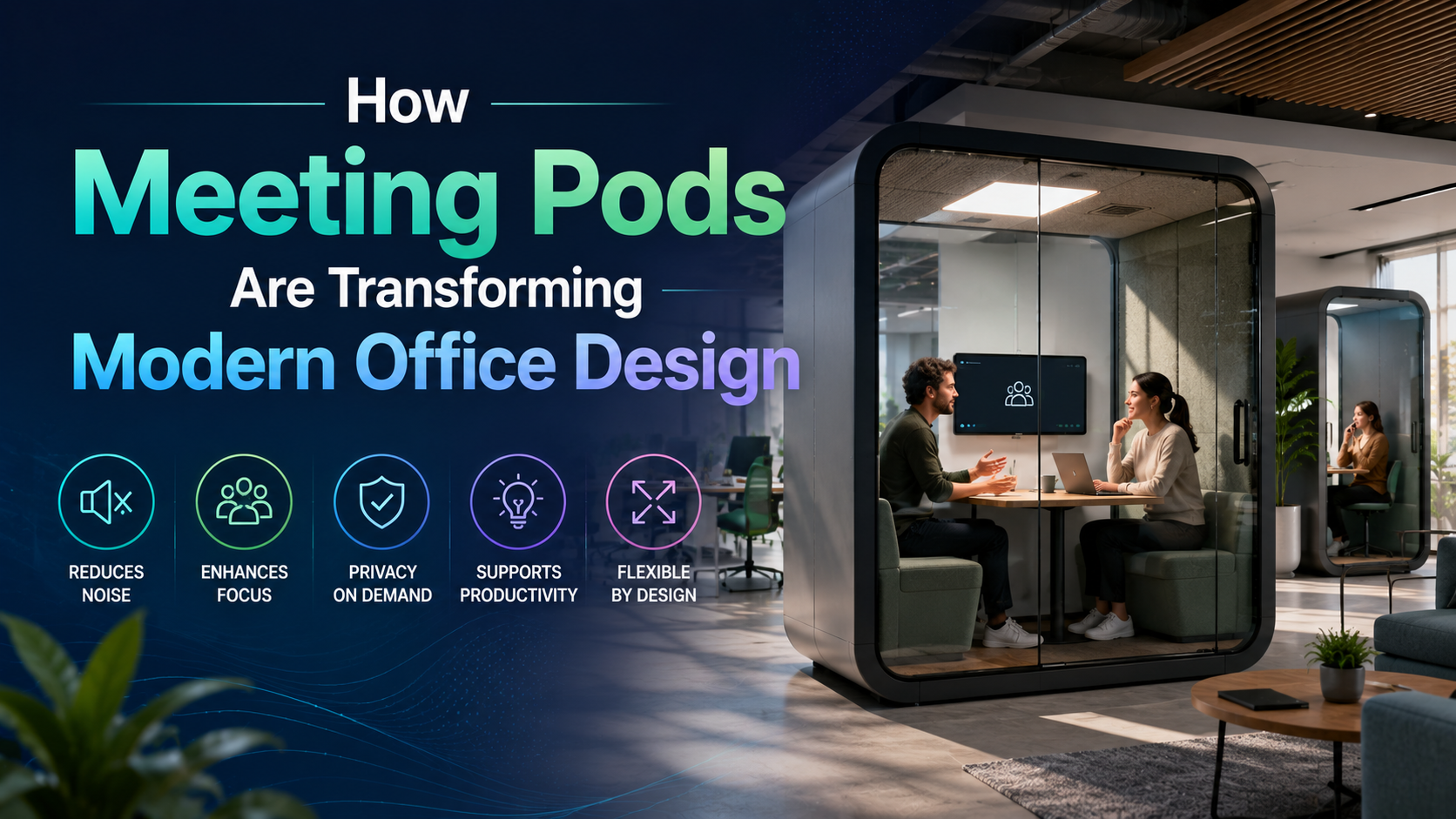
Modern workplaces are evolving rapidly as organizations rethink how employees collaborate, communicate, and focus within shared environments. Open office layouts, while designed to encourage interaction, have also created challenges related to noise, distractions, and privacy. As hybrid work models continue to reshape workplace expectations, companies are increasingly adopting flexible infrastructure that supports both collaboration and concentration.
One of the emerging solutions addressing these workplace challenges is the growing adoption of meeting pods. These enclosed, modular spaces are being integrated into offices to provide private environments for virtual meetings, focused work, brainstorming sessions, and confidential discussions. According to the meeting pods industry analysis, the sector is projected to witness notable growth during the forecast period, supported by rising demand for adaptable office solutions and employee-centric workspace designs.
The Shift Toward Flexible Workplace Infrastructure
Organizations across industries are prioritizing workplace flexibility as employee expectations continue to change. Businesses are increasingly investing in office environments that balance collaboration with privacy, particularly as video conferencing and hybrid schedules become standard practice.
Meeting pods offer a practical solution by creating compact, sound-insulated spaces without the need for permanent construction. Their modular nature allows companies to reconfigure office layouts more efficiently compared to traditional meeting rooms. This flexibility is particularly valuable for businesses adapting to fluctuating workforce sizes and evolving operational needs.
Growing workplace flexibility trends have also been supported by broader shifts in office utilization. According to the Gensler Global Workplace Survey 2024, employees increasingly value workplaces that provide both collaboration zones and spaces for focused individual tasks.
Rising Importance of Acoustic Privacy in Offices
Noise management has become a major concern in open-plan offices. Frequent virtual meetings, collaborative discussions, and shared workspaces often create distractions that affect productivity and employee well-being. Meeting pods are designed to address this challenge through soundproofing technologies and acoustic insulation.
Many organizations are integrating pods specifically for confidential calls, HR discussions, client meetings, and focused work sessions. As businesses continue to prioritize employee experience, demand for acoustic privacy solutions is expected to rise steadily.
Research published by the National Institute for Occupational Safety and Health (NIOSH) highlights how excessive workplace noise can negatively affect concentration, communication, and stress levels, reinforcing the importance of controlled work environments.
Hybrid Work Culture Is Accelerating Demand
The expansion of hybrid work models has significantly influenced office design strategies worldwide. Employees now divide their time between remote and in-office work, creating demand for spaces that support seamless communication and collaboration when teams gather physically.
Meeting pods have emerged as an efficient addition to hybrid workplaces because they provide dedicated areas for video conferencing without disrupting surrounding teams. Their compact design also allows companies to maximize office space utilization while accommodating varying occupancy patterns.
Businesses are increasingly focusing on workplace technology integration as part of hybrid office transformation. The Microsoft Work Trend Index notes that organizations are redesigning workspaces to support flexible collaboration and digital communication more effectively.
Sustainability and Modular Office Solutions
Sustainability considerations are becoming increasingly important in commercial interior design and office infrastructure planning. Compared to traditional construction methods, modular meeting pods often require fewer materials, generate less waste, and allow easier relocation or reuse.
Many manufacturers are also introducing pods built with recyclable materials, energy-efficient lighting systems, and low-emission components. These developments align with broader corporate sustainability goals and environmental standards adopted by businesses worldwide.
The growing emphasis on sustainable building practices has been reinforced by organizations such as the World Green Building Council, which advocates for environmentally responsible commercial building solutions and resource-efficient workspace development.
Technology Integration Enhancing User Experience
Modern meeting pods are increasingly equipped with integrated technologies designed to improve workplace functionality. Features such as smart lighting, ventilation systems, occupancy sensors, wireless charging, and built-in video conferencing tools are becoming common across premium pod installations.
These smart features help organizations create more efficient and connected work environments while supporting employee comfort and productivity. As digital transformation initiatives expand across industries, demand for technology-enabled office infrastructure is expected to continue growing.
Additionally, advancements in workplace analytics are enabling businesses to optimize pod usage through occupancy tracking and workspace management systems. This supports more data-driven office planning and improves operational efficiency in hybrid environments.
Growing Adoption Across Multiple Industries
Meeting pods are no longer limited to technology companies or co-working spaces. Adoption is expanding across sectors including healthcare, education, finance, consulting, and government offices. Different industries are using pods for confidential consultations, remote learning sessions, focused work, and internal collaboration.
Educational institutions, for instance, are integrating pods into libraries and collaborative learning environments to support both individual study and virtual communication. Healthcare organizations are also exploring their use for telehealth consultations and administrative discussions.
This broadening application range reflects how workplace flexibility and privacy requirements are becoming universal priorities across professional environments.
Future Outlook for Workplace Design
The future of office design is expected to prioritize adaptability, employee well-being, and efficient space utilization. Meeting pods align closely with these priorities by offering scalable solutions that can evolve alongside changing workforce needs.
As businesses continue to balance collaboration with focused productivity, modular workspace solutions are likely to play an increasingly important role in commercial interiors. Continued advancements in acoustic engineering, sustainability, and workplace technology are also expected to further support the long-term adoption of meeting pods across global office environments.
With organizations redefining workplace strategies for a hybrid and digitally connected future, meeting pods are emerging as a practical component of modern office transformation.

 English
 Arabic
 French
 Spanish
 Portuguese
 Deutsch
 Turkish
 Dutch
Dutch
 Italiano
 Russian
 Romaian
 Portuguese (Brazil)