Moving from one home to another is not just a physical task—it is a financial decision that requires planning, comparison, and awareness of hidden expenses.
Many people underestimate how much relocation actually costs until they start adding everything together, from truck rentals to packing supplies and labor.
In most cases, people begin their journey by searching for a basic relocation cost estimate to understand what budget they should prepare.
However, the real cost of moving depends on several factors like distance, home size, service type, and time required.
This guide explains everything in a practical and conversational way so anyone can understand how moving costs actually work in real life and how to make smarter decisions between DIY and professional moving services.
What Relocation Costs Really Mean in Today’s Moving Industry
A relocation cost estimate is simply a calculated idea of how much money a person will spend to move from one place to another. But in reality, this “estimate” is made up of multiple components that many people forget to include.
In the United States, the average moving cost ranges widely:
- Local DIY move: $300 to $2,500
- Local professional move: $1,200 to $5,000
- Long-distance DIY move: $1,000 to $3,500
- Long-distance professional move: $2,500 to $7,500
These numbers are not fixed because every move is different. A small apartment move can cost a fraction of a large family home relocation. Fuel prices, labor rates, and distance also change the final price significantly.
When someone understands the real structure of moving costs, they can make better financial decisions instead of relying on guesswork.
DIY Moving Costs Explained in Detail
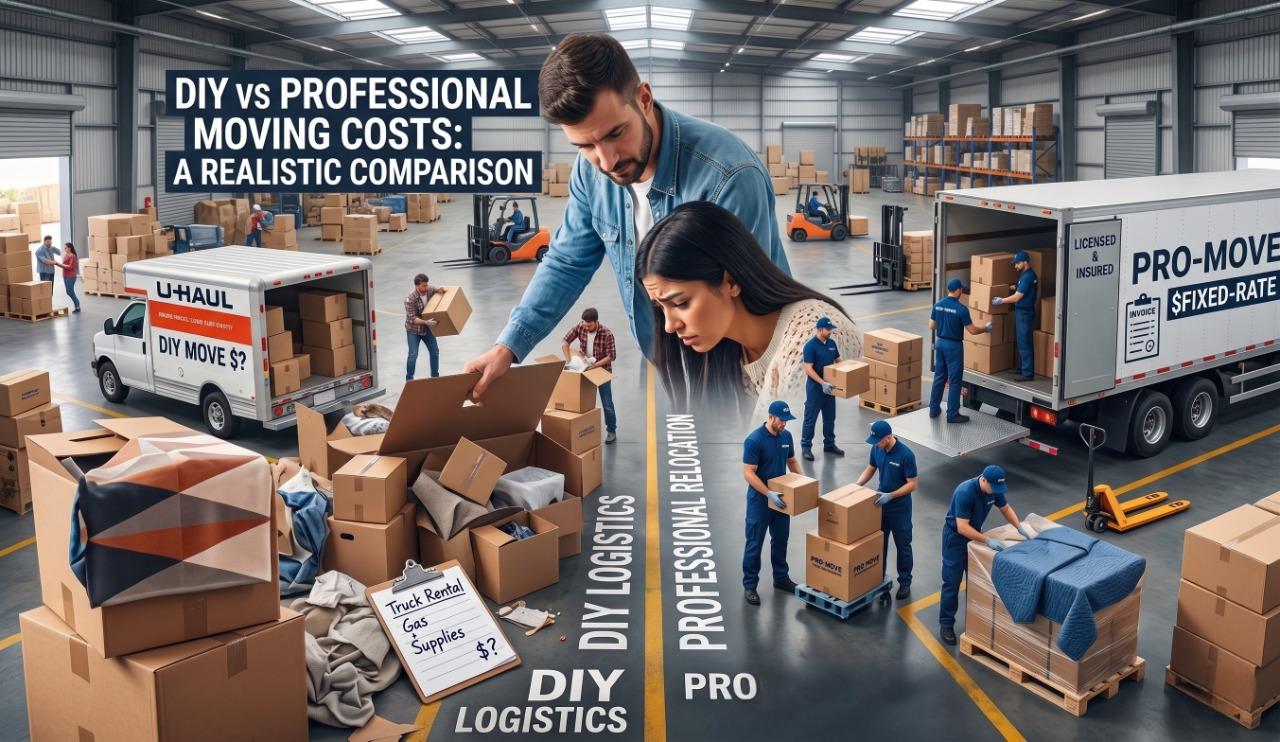
DIY moving is often considered the cheaper option, but only at first glance. Once all expenses are added, the final amount can surprise many people.
Packing Materials and Equipment Costs
Packing is another area where DIY movers underestimate expenses. Boxes, tape, wraps, and protective materials can cost between $100 and $300 for a small home.
Additional equipment may include:
- Dollies and hand trucks
- Furniture blankets
- Straps and lifting tools
These may seem minor individually, but together they increase total moving cost significantly.
Time and Physical Effort
Time is one of the most ignored costs in DIY moving. A 2–3 bedroom home can take:
- 1–2 days for packing
- 1 day for loading
- 1 day for transportation
- 1 day for unloading and arranging
This means 3 to 4 full days of physical work. If a person values their time at even $15 per hour, the indirect cost becomes $360 to $600 or more.
Professional Moving Costs and What They Include
Professional movers offer a completely different experience because they handle everything from packing to transportation.
Average Market Pricing
Professional moving services usually charge:
- Local move: $1,200 to $5,000
- Long-distance move: $2,500 to $7,500
- Full-service packing add-on: $300 to $1,000
Although the upfront cost is higher, it includes labor, transport, equipment, and sometimes insurance.
Services Included in Professional Moving
Professional movers typically provide:
- Loading and unloading
- Transportation and fuel
- Basic insurance coverage
- Furniture disassembly and reassembly
- Packing assistance (optional)
This reduces stress and eliminates most hidden costs that DIY movers face.
Time Efficiency Advantage
A major benefit of professional movers is speed. A task that takes 3–4 days in DIY moving can often be completed in 6–10 hours by professionals.
This is because they use trained teams, specialized tools, and coordinated workflows that improve efficiency.
Factors That Affect Moving Costs
Moving costs are not fixed because several variables influence the final price.
Distance and Route
Long-distance moves increase fuel, labor, and time costs. A 500-mile move can cost 2–3 times more than a local move due to transportation expenses alone.
Home Size and Inventory
More items mean more labor, more truck space, and more packing materials. A 1-bedroom apartment move is significantly cheaper than a 4-bedroom house relocation.
Season and Demand
Moving during peak season (May to September) can increase prices by 20% to 40% due to high demand.
Additional Services
Extra services like packing, storage, and fragile item handling can increase total costs by $300 to $2,000 depending on requirements.
Hidden Costs People Often Ignore
One of the biggest mistakes in moving budgeting is ignoring hidden expenses.
Common Hidden Expenses Include
- Fuel price fluctuations
- Extra truck rental days
- Food and travel during long-distance moves
- Temporary accommodation
- Damaged item replacements
Even small unexpected costs can add $200 to $1,000 to the total budget.
Risk of Damage and Injury
DIY moving carries higher risk of damage and physical injury. Replacing broken furniture or electronics can cost hundreds or even thousands of dollars.
Professional movers reduce this risk with insurance and proper handling techniques.
How to Reduce Moving Costs Effectively
Reducing moving costs is possible with smart planning and timing.
Smart Cost-Saving Strategies
- Declutter before moving to reduce load
- Book movers early to avoid peak pricing
- Compare multiple service providers
- Choose weekday moves instead of weekends
- Use shared or consolidated shipping for long-distance moves
Even small decisions can reduce overall cost by 10% to 30%.
How My Good Movers Helps in Cost Comparison
When people start planning a move, they often struggle to find accurate pricing because every company offers different rates and packages. This is where a structured platform becomes useful.
My Good Movers helps users compare moving services and find better cost transparency in one place. Instead of contacting multiple companies individually, users can evaluate options quickly and make informed decisions.
By using platforms like this, people can:
- Compare multiple moving quotes
- Understand market-average pricing
- Avoid overpaying for services
- Get clearer relocation planning
This makes the entire process easier, especially for people who are planning long-distance or first-time moves.
Role of Relocation Cost Estimation in Planning
A proper relocation cost estimate is not just about numbers—it is about planning ahead and avoiding financial stress. When people calculate their moving budget correctly, they can avoid last-minute surprises.
Online tools like Moving Cost Calculator help users estimate moving expenses based on distance, home size, and services required. This makes budgeting more accurate and practical.
A good estimate always includes:
- Transport cost
- Labor charges
- Packing materials
- Insurance
- Hidden expenses buffer
When all these factors are included, the estimate becomes much more realistic.
Final Thoughts on DIY vs Professional Moving Costs
At the end of the decision-making process, it becomes clear that moving is not just about choosing the cheapest option. It is about understanding value, time, and effort.
DIY moving may look affordable initially, but hidden costs like fuel, time, physical effort, and risk can increase the total significantly. On the other hand, professional movers offer convenience, speed, and safety, but at a higher upfront price.




 English
 Arabic
 French
 Spanish
 Portuguese
 Deutsch
 Turkish
 Dutch
Dutch
 Italiano
 Russian
 Portuguese (Brazil)
 Greek
Greek