


Student Information System: The Future of Educational Data Management
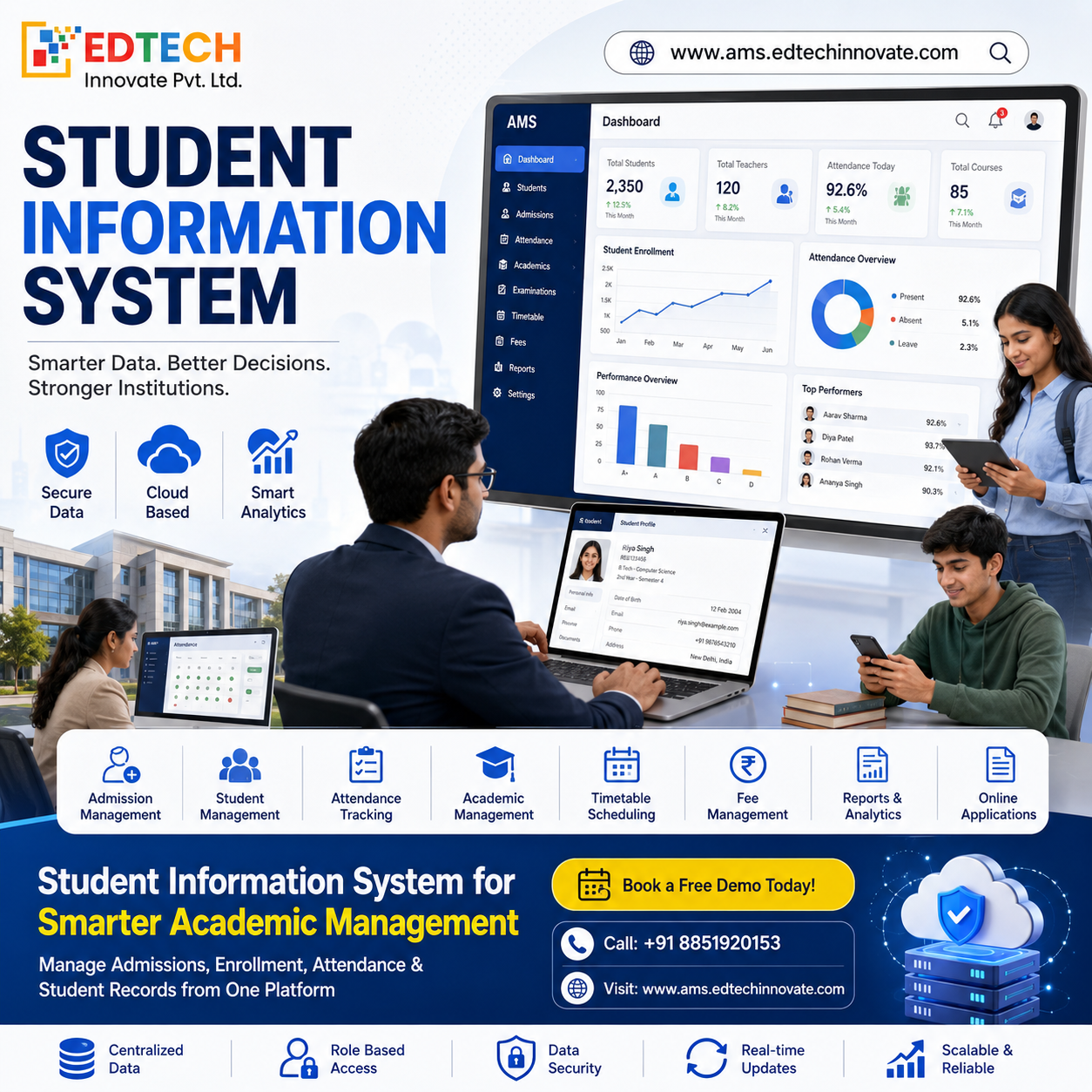
Every school day generates a flood of information. Admissions inquiries, enrollment records, attendance logs, grades, fee details, and parent communications pile up fast. For many institutions, this data still lives in spreadsheets, paper files, and disconnected tools that rarely talk to each other. The result? Lost records, duplicate entries, and hours wasted on manual reporting.
A Student Information System changes that. It brings every piece of student data into one centralized platform, helping schools cut errors, speed up administration, and make smarter decisions. In this guide, you'll learn what an SIS does, how it transforms educational data management, and why forward-thinking institutions are adopting it now.
The Growing Importance of Educational Data Management
Schools today handle more data than ever before. Several pressures make strong data management essential:
-
Increasing student populations mean larger student databases and more records to maintain.
-
Rising administrative responsibilities stretch staff thin across admissions, attendance, and reporting.
-
The need for accurate student records grows as compliance and accreditation demands tighten.
-
Digital transformation in education pushes institutions to modernize or fall behind.
When data is scattered, decisions slow down and mistakes multiply. Reliable educational data management keeps your institution organized, compliant, and ready to grow.
What Is a Student Information System?
A Student Information System (SIS) is a centralized platform that stores, manages, and connects all student-related information. Think of it as the digital backbone of educational administration.
Instead of juggling separate files, your team works from a single source of truth that holds:
-
Student records and personal details
-
Academic data and performance history
-
Admissions information and applicant status
-
Enrollment tracking across terms and programs
-
Communication records with students and parents
By unifying these functions, an SIS removes silos and gives every stakeholder accurate, up-to-date access.
How Educational Data Management Has Evolved
Traditional Data Management
For decades, schools relied on:
-
Paper-based records stored in filing cabinets
-
Manual spreadsheets prone to version errors
-
Isolated databases that couldn't share information
-
Time-consuming reporting done by hand
These methods worked at small scale but break down as institutions grow.
Modern Student Information Systems
Today's platforms offer a different experience:
-
Cloud-based access from any device
-
Real-time updates across departments
-
A centralized student database everyone trusts
-
Automated processes that cut manual work
In short: digital systems deliver speed, accuracy, and accessibility that paper and spreadsheets simply can't match.
Core Functions of a Modern Student Information System
A capable SIS centralizes the information that keeps your school running. Key functions include:
-
Student Records Management – Maintain complete, secure profiles for every learner.
-
Academic Data Tracking – Store grades, transcripts, and course history in one place.
-
Attendance Management – Record and monitor attendance automatically.
-
Grade and Assessment Management – Capture results and generate report cards quickly.
-
Enrollment Tracking – Follow student enrollment across terms and classes.
-
Communication Management – Log messages and updates with families.
-
Reporting and Analytics – Turn raw data into clear, actionable insights.
Together, these tools centralize critical information so staff spend less time searching and more time supporting students.
How Student Information Systems Improve Admissions Management
Admissions sets the tone for the entire student journey. An SIS streamlines every step:
-
Online Application Form Processing – Applicants submit details digitally, removing paperwork.
-
Admission Tracker Functionality – An admission tracker shows where each applicant stands at a glance.
-
Applicant Status Monitoring – Staff follow candidates from inquiry to acceptance.
-
Document Collection – Transcripts and forms upload directly to applicant files.
-
Digital Admissions Management – Manage the full funnel without spreadsheets or email chains.
-
Admission Management System Integration – A connected admission management system links admissions data to enrollment seamlessly.
The payoff is a faster, smoother path from first contact to confirmed student enrollment.
Benefits of Student Information Systems for Schools
An SIS delivers value to administrators, teachers, students, and parents alike:
-
Centralized Student Database – One trusted home for all student data.
-
Improved Data Accuracy – Automated entry reduces duplicate and erroneous records.
-
Enhanced Administrative Efficiency – Staff complete tasks in minutes, not hours.
-
Better Academic Monitoring – Teachers track progress with real-time academic data.
-
Faster Student Enrollment – Streamlined workflows shorten processing time.
-
Reduced Paperwork – Digital files replace bulky physical archives.
-
Improved Collaboration – Departments share information instantly.
-
Data-Driven Decision Making – Leaders act on reliable analytics.
-
Better Student Experience – Quicker responses and clearer communication build trust.
Why Student Information Systems Are the Future of Educational Administration
Modern administration software reflects how institutions actually work today. Schools are adopting an SIS because it supports:
-
Cloud-Based Education Management – Access data anytime, anywhere.
-
Real-Time Data Accessibility – No more waiting for manual updates.
-
Automation of Administrative Tasks – Free staff from repetitive work.
-
Integrated School Operations – Connect admissions, academics, and reporting.
-
Mobile Access for Administrators and Parents – Stay informed on the go.
-
Scalable Educational Management – Grow without outgrowing your tools.
The Role of Automation in Educational Data Management
Automation is where an SIS truly saves time. It handles routine tasks so your team can focus on students:
-
Automated enrollment tracking updates records as students register.
-
Automated attendance updates sync daily without manual logging.
-
Automated communication sends reminders and notices on schedule.
-
Automated report generation produces accurate documents in seconds.
-
Workflow optimization routes tasks to the right people automatically.
The result is less manual workload and far fewer errors.
read more: Top Benefits of Using an Online Admission Portal in 2026
How Student Information Systems Support Better Academic Outcomes
Centralized academic data does more than organize—it improves learning:
-
Academic Progress Monitoring – Spot trends across terms instantly.
-
Early Identification of Student Challenges – Flag at-risk learners before they fall behind.
-
Performance Analytics – Compare cohorts and subjects with clarity.
-
Personalized Student Support – Tailor interventions using real data.
-
Improved Reporting for Teachers and Parents – Share clear, timely updates.
When educators see the full picture, they can act faster and support every student more effectively.
Key Features to Look for in a Student Information System
Use this checklist when evaluating platforms:
-
✓ Student records management
-
✓ Student database
-
✓ Admission tracker
-
✓ Online application form support
-
✓ Enrollment tracking
-
✓ Academic data management
-
✓ Attendance tracking
-
✓ Reporting and analytics
-
✓ Mobile accessibility
-
✓ Cloud-based infrastructure
-
✓ Security and compliance
-
✓ Parent and student portals
Future Trends in Student Information Systems
The next generation of platforms is already taking shape:
-
AI-Powered Student Analytics – Surface insights humans might miss.
-
Predictive Enrollment Management – Forecast demand and plan capacity.
-
Advanced Reporting Dashboards – Visualize performance at a glance.
-
Integrated Digital Admissions Management – Connect the full admissions funnel.
-
Cloud-Native School Administration Platforms – Built for flexibility and scale.
-
Data-Driven Educational Planning – Shape strategy with hard evidence.
These trends position the SIS as the foundation of future-ready institutions.
Why Schools Should Invest in a Student Information System Today
Waiting carries a cost. As administrative complexity and enrollment demands grow, manual systems struggle to keep up. Investing now helps your institution:
-
Manage rising administrative workloads with confidence
-
Handle growing student enrollment smoothly
-
Boost operational efficiency across departments
-
Advance digital transformation goals
-
Build long-term scalability for sustainable growth
Schools that modernize early gain a clear advantage in efficiency and experience.
Conclusion
Educational data management has become too important to leave to spreadsheets and paper files. A Student Information System centralizes student records, academic data, and admissions into one reliable platform, simplifying operations from inquiry to graduation.
Schools that adopt a modern SIS are better prepared to manage growth, improve efficiency, and deliver a superior educational experience.
Ready to Transform Educational Data Management?
Managing student records, admissions, enrollment tracking, and academic data manually can limit efficiency and growth. A modern Student Information System helps schools centralize information, streamline administration, improve reporting, and enhance student experiences.
Discover how EdTech Innovate's Student Information System empowers schools with powerful tools for admissions, enrollment management, student data management, and academic administration.
Visit https://ams.edtechinnovate.com/ and request a free demo today.
Frequently Asked Questions
Q: What is a Student Information System?
A: A Student Information System (SIS) is a centralized platform that stores and manages all student-related information in one place. It holds student records, academic data, attendance, and admissions details, acting as a single source of truth for your institution. Instead of juggling spreadsheets and paper files, your team works from one reliable student database that keeps everyone aligned.
Q: How does a Student Information System improve educational data management?
A: An SIS improves data management by replacing scattered files and manual spreadsheets with one connected system. It updates records in real time, reduces duplicate entries, and automates routine reporting, which cuts errors and saves staff hours. With accurate enrollment tracking and centralized academic data, leaders can make faster, better-informed decisions.
Q: How does an SIS support student enrollment and admissions?
A: An SIS streamlines admissions from first inquiry to confirmed enrollment. Applicants submit details through an online application form, while an admission tracker shows where each candidate stands at a glance. With digital admissions management and a connected admission management system, staff collect documents, monitor applicant status, and move students into enrollment without paperwork or email chains—making student enrollment faster and more accurate.
Q: Why are schools adopting Student Information Systems?
A: Schools are adopting an SIS because administrative complexity and enrollment demands keep rising, and manual systems can't keep up. A modern platform boosts efficiency, supports digital transformation goals, and scales as your institution grows. Schools that modernize early gain a clear advantage in accuracy, collaboration, and student experience. If you're evaluating options, start by mapping your current pain points so you can match them to the right system.

 English
 Arabic
 French
 Portuguese
 Deutsch
 Turkish
 Dutch
Dutch
 Italiano
 Russian
 Romaian
 Portuguese (Brazil)
 Greek
Greek