


Lyme Disease Rash Locations and Early Symptoms Explained
Lyme disease is one of the most commonly reported tick-borne illnesses in the United States. Early recognition of its symptoms can play an important role in seeking timely medical evaluation and treatment. One of the most recognizable signs of Lyme disease is a skin rash, yet many people are unsure how to identify it or where it typically appears on the body.
If you've ever wondered, "What does a Lyme disease rash look like?", you're not alone. This question is frequently searched online because Lyme disease rashes can vary in appearance, size, and location. Understanding the common rash locations and early symptoms may help individuals become more aware of potential warning signs.
What Is a Lyme Disease Rash?
A Lyme disease rash, known medically as erythema migrans, often develops after the bite of an infected black-legged tick. The rash usually appears within 3 to 30 days after the bite, although timing can vary from person to person.
The rash is often one of the earliest visible signs of Lyme disease and may continue to expand over several days.
When asking "What does a Lyme disease rash look like?", it's important to understand that not every rash appears exactly the same. While many people associate Lyme disease with a classic bull's-eye pattern, the rash can take several forms.
What Does a Lyme Disease Rash Look Like?
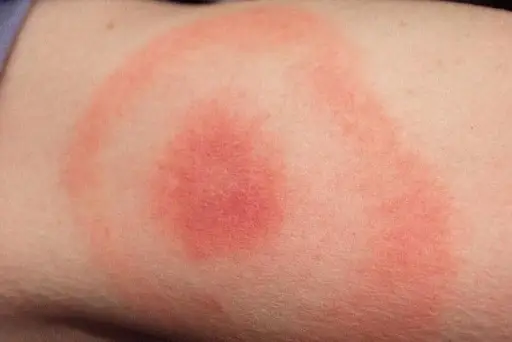
The most commonly recognized Lyme disease rash is circular and gradually expands outward from the bite site.
Common characteristics include:
- Red or pink coloration
- Round or oval shape
- Expanding size over time
- Sometimes a clear center creating a bull's-eye appearance
- Warm to the touch in some cases
- Usually not painful
The rash can grow quite large, sometimes reaching more than 12 inches in diameter if left untreated.
However, not all Lyme disease rashes develop the classic bull's-eye appearance. Some individuals may experience:
- Solid red patches
- Uniformly colored circles
- Oval-shaped rashes
- Multiple smaller lesions
This variation often contributes to delayed recognition and diagnosis.
Common Lyme Disease Rash Locations on the Body
The location of a Lyme disease rash often depends on where the infected tick attached itself.
Ticks tend to favor warm, hidden, and moist areas of the body.
1. Legs and Thighs
The legs are among the most common locations for tick bites and Lyme disease rashes.
Ticks can attach while walking through:
- Tall grass
- Wooded trails
- Leaf-covered areas
Many individuals first notice a rash on:
- Calves
- Knees
- Upper thighs
- Behind the knees
Because some of these areas are not checked regularly, early signs can easily go unnoticed.
2. Groin Area
Ticks often migrate to warm, protected areas after attaching to clothing.
The groin area is a frequent location for bites and subsequent rashes.
Because the rash develops in a private area, some individuals may not notice it immediately.
Regular tick checks after outdoor activities can help improve early detection.
3. Armpits
Armpits provide a warm environment that ticks often prefer.
A Lyme disease rash in this location may be mistaken for:
- Skin irritation
- Heat rash
- Friction-related redness
Careful observation of expanding redness can help distinguish Lyme-related skin changes.
4. Waistline
Ticks commonly attach around areas where clothing fits tightly.
The waistline is another frequent rash location because ticks may become trapped under belts, waistbands, or fitted clothing.
An expanding rash around the waist should be evaluated, particularly if recent outdoor exposure has occurred.
5. Back
The back is a common but easily overlooked location.
Many people do not regularly inspect their backs, which can delay rash discovery.
Family members or mirrors may help identify suspicious skin changes in hard-to-see areas.
6. Scalp and Neck
Ticks can attach to the scalp, especially in children and individuals with longer hair.
Rashes on the scalp may be difficult to recognize because they are hidden beneath hair.
Symptoms such as:
- Scalp tenderness
- Unexplained redness
- Swelling
may warrant closer examination.
The neck is another common attachment area, particularly near the hairline.
7. Arms and Shoulders
Arms and shoulders may become exposed during outdoor activities, increasing the likelihood of tick contact.
A Lyme disease rash in these areas may be easier to spot than rashes located elsewhere on the body.
Can a Lyme Disease Rash Appear Away From the Tick Bite?
Yes.
While the initial rash often develops near the site of the tick bite, Lyme disease can sometimes cause additional skin lesions in other areas.
These secondary rashes may indicate that the infection has spread through the bloodstream.
This is one reason why any unusual expanding rash deserves medical attention.
Does Everyone With Lyme Disease Develop a Rash?
No.
One of the most important facts to understand is that not everyone with Lyme disease develops a noticeable rash.
Some individuals may never see a rash at all.
Others may develop a rash in a hidden location that goes unnoticed.
Because of this, Lyme disease diagnosis should not rely solely on skin symptoms.
Early Symptoms of Lyme Disease
In addition to the rash, several other early symptoms may occur.
Fatigue
Persistent fatigue is one of the most common early complaints.
Individuals often report:
- Low energy
- Difficulty concentrating
- Feeling exhausted despite adequate sleep
Fever and Chills
Many people experience flu-like symptoms during the early stages of Lyme disease.
Common symptoms include:
- Fever
- Chills
- Sweating
- General discomfort
Headaches
Headaches can range from mild to severe.
Some individuals also experience:
- Neck stiffness
- Sensitivity to light
- Pressure sensations
Muscle and Joint Aches
Early Lyme disease may cause:
- Muscle soreness
- Joint discomfort
- Stiffness
- Body aches
These symptoms often resemble a viral illness.
Swollen Lymph Nodes
The body's immune response may cause enlarged lymph nodes, especially around the neck and jaw.
Swollen glands accompanied by a rash or fatigue should not be ignored.
Conditions Commonly Mistaken for a Lyme Disease Rash
People searching "What does a Lyme disease rash look like?" are often trying to distinguish it from other skin conditions.
Common look-alikes include:
Spider Bites
Spider bites can cause redness and swelling but typically do not create the expanding circular pattern associated with Lyme disease.
Ringworm
Ringworm often forms a circular rash but is caused by a fungal infection rather than a tick-borne illness.
Allergic Reactions
Contact dermatitis and allergic skin reactions can produce redness and itching that may resemble a Lyme disease rash.
Cellulitis
This bacterial skin infection may cause redness and warmth but usually presents differently than erythema migrans.
When Should You Seek Medical Attention?
Consult a healthcare professional if you notice:
- An expanding red rash
- A bull's-eye-shaped lesion
- Flu-like symptoms after outdoor exposure
- Persistent fatigue
- Joint pain
- Unexplained fever
Early evaluation allows healthcare providers to determine the appropriate next steps.
How to Reduce Your Risk of Lyme Disease
Prevention remains one of the best strategies.
Consider these precautions:
- Wear long sleeves and pants outdoors
- Use approved insect repellents
- Stay on marked trails
- Avoid tall grass when possible
- Perform full-body tick checks
- Check children and pets after outdoor activities
- Shower soon after spending time outdoors
Awareness and prevention can significantly reduce exposure risk.
Frequently Asked Questions
What does a Lyme disease rash look like?
A Lyme disease rash often appears as an expanding red or pink circle. Some develop a classic bull's-eye appearance, while others remain uniformly red.
Where does a Lyme disease rash usually appear?
Common locations include the legs, thighs, waistline, groin, armpits, scalp, neck, back, and arms.
Is a Lyme disease rash itchy?
Many Lyme disease rashes are not particularly itchy or painful, although experiences vary.
How soon does a Lyme disease rash appear?
The rash typically develops within 3 to 30 days after a tick bite.
Can Lyme disease occur without a rash?
Yes. Some individuals never develop a noticeable rash, making awareness of other symptoms especially important.
Final Thoughts
Understanding what does a Lyme disease rash look like can help individuals recognize one of the earliest signs of Lyme disease. While the classic bull's-eye pattern is widely known, Lyme disease rashes can vary significantly in appearance and location. Common areas include the legs, waistline, groin, armpits, scalp, neck, back, and arms.
Because not everyone develops a rash, paying attention to other early symptoms such as fatigue, fever, headaches, and muscle aches is equally important. By staying informed and taking preventive measures, individuals can better protect themselves and their families from tick-borne illnesses.
At Holistic Therapy Tribe, we believe that education and awareness are valuable tools for supporting overall wellness. Understanding early warning signs empowers individuals to make informed healthcare decisions and prioritize their well-being.

 English
 Arabic
 French
 Spanish
 Portuguese
 Deutsch
 Turkish
 Dutch
Dutch
 Italiano
 Russian
 Romaian
 Greek
Greek