


Why Quartz Countertops Have Become a Leading Choice for Modern Kitchens
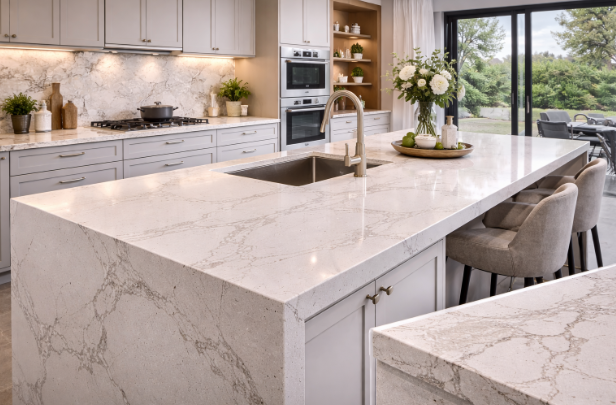
Kitchen design has evolved significantly over the years, with homeowners placing greater emphasis on durability, functionality, and visual appeal. Among the many decisions involved in creating a practical and attractive kitchen, selecting the right countertop material is one of the most important. Countertops not only influence the overall appearance of a kitchen but also affect daily usability, maintenance requirements, and long-term value.
As a result, quartz countertops for kitchens have become increasingly popular among homeowners, designers, and builders. Their combination of durability, low maintenance, and versatile aesthetics has positioned quartz as one of the most sought-after countertop materials in modern kitchen design.
Understanding Quartz Countertops
Quartz countertops are engineered stone surfaces created using natural quartz crystals combined with resins and pigments. This manufacturing process produces a highly durable and non-porous material suitable for a wide range of residential and commercial applications.
Unlike some natural stone materials, quartz surfaces are designed to provide consistent patterns and colors while maintaining excellent structural integrity. Industry sources estimate that quartz is one of the hardest minerals on Earth, contributing to the strength and durability of engineered quartz surfaces.
The growing demand for quartz countertops for kitchens reflects the desire for surfaces that balance practicality with sophisticated design.
Key Benefits of Quartz Countertops
Several factors contribute to the popularity of quartz in kitchen environments.
Exceptional Durability
Kitchen countertops must withstand daily use, including food preparation, cookware placement, and general household activity. Quartz surfaces are highly resistant to scratches, chips, and normal wear.
Their engineered composition provides a level of durability that makes them suitable for busy households and high-traffic kitchen spaces.
Low Maintenance Requirements
One of the most significant advantages of quartz is its non-porous surface.
Unlike some natural stone materials, quartz does not typically require regular sealing. This characteristic helps simplify routine maintenance and reduces long-term upkeep responsibilities.
Most quartz surfaces can be cleaned using mild soap and water, making them convenient for everyday use.
Stain Resistance
Because quartz is non-porous, it offers strong resistance to many common household stains. Spills from coffee, wine, juice, and other liquids are less likely to penetrate the surface when cleaned promptly.
This practical benefit is one reason many homeowners choose quartz countertops for kitchens where food preparation and entertaining frequently occur.
Aesthetic Versatility
Modern kitchen design emphasizes personalization and flexibility. Quartz countertops are available in a wide variety of colors, patterns, and finishes, allowing homeowners to achieve diverse design goals.
Contemporary Designs
Minimalist kitchens often incorporate quartz surfaces featuring clean lines and subtle patterns.
Traditional Styles
Quartz can also mimic the appearance of natural stone while providing enhanced consistency and easier maintenance.
Bold Statement Pieces
Some quartz designs feature dramatic veining and striking visual effects that create a focal point within the kitchen.
This design versatility enables quartz to complement virtually any cabinetry, flooring, or interior design scheme.
Comparing Quartz to Other Countertop Materials
When selecting a countertop material, homeowners often compare quartz with alternatives such as granite, marble, laminate, and solid surface products.
Quartz vs. Granite
Granite is a natural stone known for its unique patterns and durability. However, granite may require periodic sealing due to its porous nature.
Quartz provides a more consistent appearance and generally requires less maintenance while still offering excellent durability.
Quartz vs. Marble
Marble is prized for its elegance but can be more susceptible to scratching and staining.
Quartz offers a similar upscale appearance while providing greater resistance to everyday wear.
Quartz vs. Laminate
Laminate surfaces are often more affordable but may not offer the same longevity or durability as quartz.
Many homeowners view quartz as a long-term investment due to its performance and aesthetic appeal.
These comparisons help explain why quartz countertops for kitchens continue to gain popularity across a wide range of residential projects.
Supporting Modern Lifestyle Needs
Today's kitchens often serve multiple functions beyond cooking. They may function as gathering spaces, workstations, entertainment areas, and family hubs.
As a result, countertop materials must accommodate a variety of activities while maintaining their appearance over time.
Quartz supports modern lifestyle needs through:
-
Durable performance
-
Easy cleaning
-
Attractive design options
-
Long-lasting value
-
Reliable functionality
These characteristics make quartz particularly well-suited for contemporary living environments.
Design Trends Influencing Quartz Popularity
Several current design trends have contributed to increased interest in quartz surfaces.
Neutral Color Palettes
Soft whites, grays, and earth tones remain popular choices in kitchen design, and quartz manufacturers offer numerous options within these color families.
Waterfall Countertops
Waterfall-edge installations showcase the visual appeal of quartz while creating a modern architectural statement.
Large Kitchen Islands
Quartz surfaces are frequently used for oversized islands that serve as both functional workspaces and social gathering areas.
As these trends continue to shape residential design, quartz remains a preferred material for achieving both aesthetic and practical objectives.
Long-Term Value Considerations
Homeowners often consider durability and maintenance when evaluating kitchen upgrades. A countertop material that retains its appearance and functionality over time can contribute to overall property value and satisfaction.
Because quartz offers a balance of durability, visual appeal, and ease of maintenance, many homeowners view it as a worthwhile long-term investment.
Its ability to perform well under everyday conditions while maintaining a refined appearance supports its continued popularity in residential construction and renovation projects.
The increasing demand for quartz countertops for kitchens demonstrates the growing importance of combining style with practical performance.
Conclusion
Quartz countertops have become a leading choice for modern kitchens because they offer an effective combination of durability, low maintenance, stain resistance, and design flexibility. Whether incorporated into contemporary, transitional, or traditional interiors, quartz surfaces provide reliable performance while enhancing the overall appearance of the kitchen. While many homeowners also explore natural stone alternatives such as the Giallo Ornamento Granite Worktop, quartz continues to stand out for its consistency, practicality, and long-term value in today's kitchen environments. As homeowners continue seeking materials that support both functionality and aesthetics, quartz countertops for kitchens remain a highly attractive option for renovation and new construction projects alike.

 English
 Arabic
 French
 Spanish
 Portuguese
 Deutsch
 Turkish
 Dutch
Dutch
 Russian
 Romaian
 Portuguese (Brazil)
 Greek
Greek