


How Much Does It Cost to Create a Crypto Token in 2026?
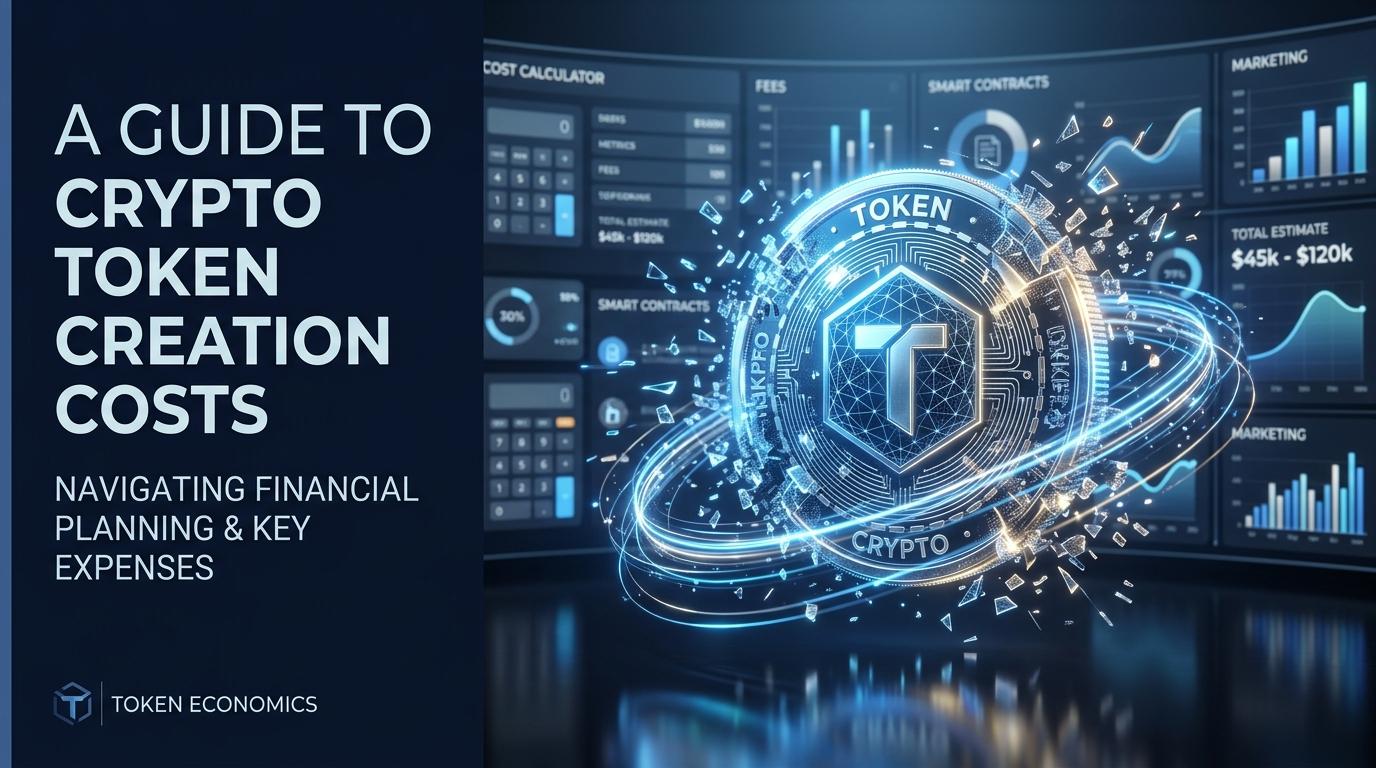
Creating a crypto token has become significantly more accessible in 2026 than it was during the early boom cycles of blockchain innovation. However, “accessible” does not necessarily mean “cheap” or “simple.” The cost of launching a digital asset depends on a wide range of technical, strategic, and regulatory factors that can push budgets anywhere from a few hundred dollars for a basic token to well over six figures for a fully compliant, enterprise-grade ecosystem.
Understanding these costs requires more than just looking at development fees. It involves examining blockchain selection, smart contract complexity, security requirements, legal compliance, exchange listing strategies, and long-term maintenance. In today’s mature Web3 environment, token creation has evolved into a structured engineering and financial exercise rather than a simple coding task.
This article provides a comprehensive breakdown of how much it costs to create a crypto token in 2026, what drives those costs, and how founders can plan realistic budgets based on their goals.
The Evolution of Token Creation in 2026
In the early days of blockchain, launching a token could be as simple as copying an open-source smart contract and deploying it on Ethereum. Today, however, the ecosystem has matured into a competitive and regulated space where projects are expected to demonstrate security, utility, and sustainability.
Modern crypto tokens often serve complex roles—governance mechanisms, payment instruments, asset representations, or utility layers within decentralized applications. This shift has transformed Token Development into a multidisciplinary process involving blockchain engineering, cryptography, legal structuring, and tokenomics design.
As a result, costs are no longer limited to coding alone. Instead, they reflect the entire lifecycle of creating a viable digital asset, from ideation to post-launch support.
Core Factors That Influence Token Creation Costs
The total cost of launching a token in 2026 is shaped by several interconnected factors. Each one can significantly increase or reduce the final budget depending on project requirements.
1. Blockchain Selection
The choice of blockchain is one of the most critical cost drivers. Ethereum remains the most widely used network for token launches, but it comes with higher gas fees and development overhead. Alternatives like BNB Chain, Polygon, Solana, and Avalanche offer lower transaction costs but may require specialized development expertise.
- Ethereum: Higher fees, maximum compatibility and security
- BNB Chain: Lower cost, faster deployment
- Solana: High performance, more complex development stack
- Polygon: Layer-2 scalability with reduced gas fees
Each ecosystem has its own tooling and deployment standards, which directly influence development time and budget.
2. Smart Contract Complexity
A simple ERC-20 token is relatively inexpensive to create. However, advanced features such as staking mechanisms, deflationary models, governance voting, or vesting schedules increase development complexity.
This is where Token Development costs begin to scale. A basic token contract might require only a few days of work, while a complex ecosystem token can take weeks or even months of engineering and testing.
3. Security Audits
Security is one of the most expensive but essential components of token creation. In 2026, with increasing regulatory scrutiny and billions lost to exploits in previous years, audits are considered mandatory rather than optional.
Professional audits from reputable firms can range from a few thousand dollars for simple contracts to over $50,000 for complex systems. Projects that skip audits face significant reputational and financial risks, making this an unavoidable expense.
4. Legal and Regulatory Compliance
Depending on jurisdiction, tokens may be classified as securities, utility assets, or hybrid financial instruments. Legal consultation is necessary to ensure compliance with regulations such as KYC, AML, and securities laws.
Legal structuring can include:
- Entity formation
- Whitepaper legal review
- Jurisdictional analysis
- Compliance frameworks
These costs vary widely but often represent a substantial portion of the total budget for serious projects.
Breakdown of Token Development Costs in 2026
To better understand pricing, it helps to categorize token creation into three general tiers.
1. Basic Token Launch ($300 – $3,000)
This is the entry-level category, typically used for experimental projects, meme tokens, or educational purposes. It includes:
- Standard ERC-20 or BEP-20 contract
- Basic deployment
- Minimal customization
- No audit or limited audit
- No marketing or ecosystem development
While inexpensive, these tokens often lack long-term sustainability and security assurance.
2. Professional Token Project ($5,000 – $25,000)
This range represents serious startups building real utility. It includes:
- Custom smart contract development
- Basic tokenomics design
- Security audit (partial or full)
- DApp integration support
- Initial legal consultation
At this level, Token Development becomes a structured engineering process with strategic planning and moderate compliance measures.
3. Enterprise-Grade Token Ecosystem ($30,000 – $150,000+)
This category includes high-end blockchain startups, DeFi protocols, and enterprise blockchain applications. It often involves:
- Multi-functional smart contracts
- Cross-chain compatibility
- Advanced governance systems
- Full-scale security audits
- Regulatory compliance frameworks
- Integration with wallets, exchanges, and DeFi platforms
At this stage, Token Development is no longer just a technical task but a full-scale business infrastructure initiative.
Hidden Costs Most Founders Overlook
Many first-time founders underestimate the hidden expenses associated with launching a token. While development and deployment are obvious costs, several additional factors can significantly impact the budget.
Gas Fees and Deployment Costs
Depending on network congestion, deploying contracts can range from a few dollars to several hundred dollars per deployment cycle.
Maintenance and Upgrades
Smart contracts may require upgrades, bug fixes, or optimizations after deployment. This ongoing maintenance adds recurring costs.
Marketing and Community Building
Even the best token will fail without adoption. Community growth strategies—social media campaigns, influencer partnerships, and exchange listings—can cost anywhere from $5,000 to $100,000+.
Liquidity Provision
For tokens listed on decentralized exchanges, liquidity pools must be funded. This is often one of the largest hidden costs, as it requires real capital rather than service fees.
Real-World Cost Scenarios
To understand how these numbers play out in practice, consider a few typical scenarios:
A startup launching a simple utility token on BNB Chain might spend under $2,000 total, including deployment and basic marketing. In contrast, a DeFi protocol launching on Ethereum with staking, governance, and multi-chain functionality could easily exceed $75,000 in combined development, audit, and compliance costs.
Meanwhile, enterprise blockchain solutions integrating tokenized assets for real-world use cases—such as supply chain or financial settlement systems—can surpass $150,000 when factoring in legal structuring and infrastructure integration.
These variations highlight why no single price defines token creation. Instead, costs scale based on ambition, security expectations, and ecosystem complexity.
Why Strategy Matters More Than Cost
A common misconception is that lower-cost tokens are more efficient. In reality, the success of a token depends less on initial development expenses and more on long-term strategic execution.
Poorly designed tokenomics, lack of utility, or insecure contracts often lead to failure regardless of how little was spent initially. On the other hand, well-planned tokens with strong utility and governance structures can succeed even with moderate budgets.
This is why professional Token Development is not just about coding but about designing a sustainable economic and technical model that supports long-term adoption.
Market Trends Shaping Token Costs in 2026
Several macro trends are influencing token creation costs in 2026:
- Increased regulatory oversight globally
- Rise of modular blockchain architectures
- Growth of layer-2 scaling solutions
- Expansion of institutional-grade tokenization
- Higher demand for audited and compliant contracts
These trends are pushing average development costs upward, especially for projects aiming to attract institutional investors or operate in regulated markets.
At the same time, automation tools and AI-assisted smart contract generation are reducing costs for basic tokens, creating a wider gap between simple and advanced projects.
Budgeting Advice for Founders
For entrepreneurs planning to launch a token, the most important step is realistic budgeting. Instead of focusing solely on the cheapest option, founders should allocate funds across four core pillars:
- Development quality
- Security assurance
- Legal compliance
- Market adoption
Balancing these ensures that the token is not only functional but also sustainable and scalable in the long term.
Conclusion
Creating a crypto token in 2026 is a multi-layered investment that extends far beyond simple coding costs. Depending on complexity, security requirements, and ecosystem goals, expenses can range from a few hundred dollars to well over six figures. Success depends on careful planning, strong technical execution, and a clear understanding of long-term utility and compliance needs. In this evolving landscape, Blockchain App Factory provides Token Development

 English
 Arabic
 French
 Spanish
 Portuguese
 Deutsch
 Turkish
 Dutch
Dutch
 Italiano
 Russian
 Romaian
 Portuguese (Brazil)