


Risk of Metabolic Dysfunction-Associated Steatotic Liver Disease and Hepatic Fibrosis
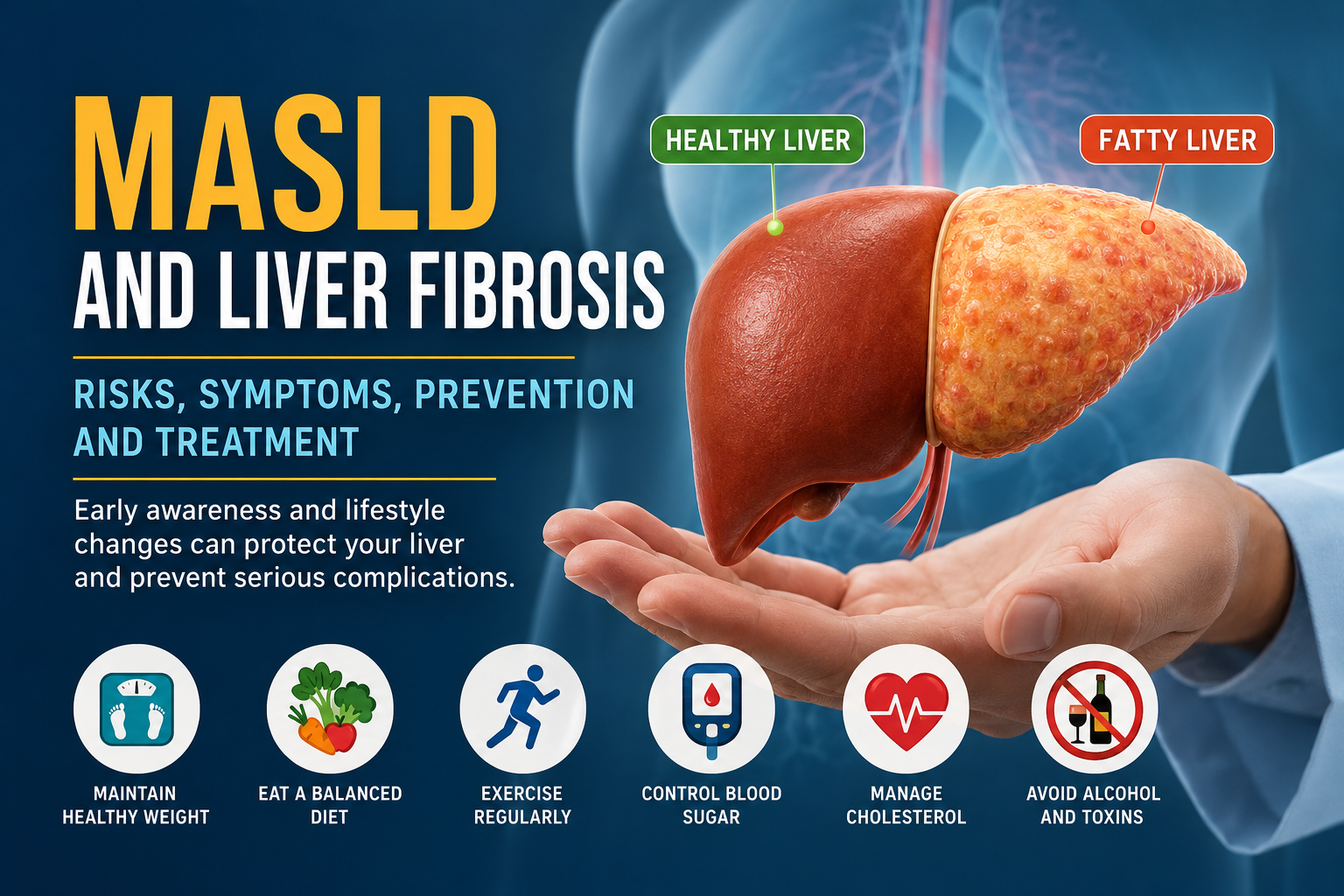
Your liver does a lot of work. Every day, it processes toxins, aids digestion, and stores nutrients, to name a few. There is a limit, though. What happens when the liver becomes overloaded with fat?
Like many things, it begins silently. When enough fat accumulates in the liver, symptoms slowly begin to present.
Fat accumulation in the liver can become especially harmful when it develops into Metabolic Dysfunction-Associated Steatotic Liver Disease (MASLD). This condition is growing in prevalence and is especially concerning because of its association with metabolic conditions like obesity and diabetes.
The good news is, with early lifestyle changes and medical intervention, the progression of MASLD can be halted and sometimes reversed. The first step is understanding this condition.
Understanding MASLD
MASLD occurs when there is excessive fat accumulation in liver cells from metabolic issues and not from alcohol.
This condition was previously termed Non-Alcoholic Fatty Liver Disease. The name change helps emphasize the strong association with metabolic disorders.
There is a healthy and normal amount of fat distributed throughout the body's organs. However, if fat accumulation from any of the organs is greater than 5% of the organ's weight, inflammation and damage of the organ may begin.
The liver can be used to illustrate this: when a clean kitchen sponge begins to soak up grease, it becomes ineffective and even harmful to the cleaning process. Similar to the effects a greasy sponge has, so does a fatty liver.
2. What is Hepatic Fibrosis?
Hepatic fibrosis is scarring of the liver due to repeated damage.
With each damaging event, the liver becomes inflamed. The liver is a fibrotic organ that is capable of healing itself, thus making it a double-edged sword.
As the liver continues to become inflamed, excessive scarring occurs as the body attempts to heal.
Scar tissue is unlike normal, healthy liver tissue, and does not perform the functions of the liver.
In the absence of treatment, hepatic fibrosis reaches several stages, eventually leading to:
- Advanced fibrosis
- Cirrhosis
- Liver failure
- Portal hypertension
- Liver cancer
Timely diagnosis and treatment is crucial since early hepatic fibrosis is reversible.
3. How Fat Damages the Liver
Fat does not always damage the liver.
However, when fat inflames the liver, the real problem starts.
Usually, the condition progresses from:
- A healthy liver
- Accumulation of fat in the liver (MASLD)
- Liver inflammation
- Hepatic fibrosis
- Cirrhosis
- Liver failure
Inflammation leads to death of hepatic cells and are replaced by fibrosis.
This significantly reduces the liver's ability to regenerate over the years.
4. Major Risk Factors
There are several conditions that cause the risk of hepatic fibrosis and hepatic MASLD.
Obesity
Excess body fat is the biggest risk factor.
Those that are abdominally obese are the most at risk.
Type 2 Diabetes
High blood sugar levels inflame and damage the liver and promote hepatic lipidosis.
Almost 50% of those that are diabetic get hepatic lipidosis.
High Cholesterol
Elevated and abnormal cholesterol levels and high triglycerides promote hepatic lipidosis.
Metabolic Syndrome
This includes:
- High blood pressure
- High blood sugar
- High waist circumference
- High triglycerides
- Low HDL cholesterol
This poses the most risk if collectively present.
Sedentary Lifestyle
There is a direct link between increasing levels of inactivity and a decrease in fat metabolism.
Poor Diet
The following can lead to an increase in fat accumulation in the liver.
- Sugar Sweetened Beverages
- Ultra-processed food
- Refined carbs
- Fast food
5. Symptoms That Must Be Recognized
One of the hallmarks of early stage MASLD is a lack of symptoms.
However, in later stages of liver damage, symptoms can include:
- Chronic fatigue
- Weakness
- Right abdominal pain
- Anorexia
- Weight Loss
- Nausea
- Poor focus
Advanced stages of fibrosis or cirrhosis can create:
- Jaundice
- Anasarca
- Increased abdominal size
- etc.
This can also include easy bruising, confusion, and hematemesis.
6. Groups of People That Are More Likely to Develop MASLD
Certain demographics carry more risk of developing MASLD, these are:
- Those aged 40 years and above
- Individuals with a body mass index that is classified as obesity
- Diabetics
- Individuals with PCOS
- Persons with sleep apnea
- Individuals with high blood pressure
- Individuals with hyperlipidemia
- Individuals with a family history of liver illness
The rise in obesity is also leading to the diagnosis of MASLD in children and adolescents.
7. Diagnosing MASLD and Fibrosis
Serious liver damage can be avoided with an early diagnosis of MASLD.
In the diagnosis of MASLD and Fibrosis, doctors order a number of tests, these include blood tests and imaging technologies.
Blood Tests
In a blood test, the following can also be evaluated:
- Liver and Blood Sugar Levels
- Cholesterol levels
- Liver Function
Liver function can be normal, and in that case, blood tests may not be conclusive.
Imaging Studies
The first imaging study is usually an ultrasound.
An ultrasound can evaluate the presence of hepatic steatosis.
A FibroScan is ordered to evaluate liver fibrosis.
MRI is an imaging technique that can evaluate the presence of liver steatosis and provide detailed images of the liver.
Liver Biopsy
For some patients, the only way to see the level of inflammation and fibrosis is through a liver biopsy.
8. Stages of Liver Fibrosis
Fibrosis is classified in stages.
Stage F0
No fibrosis.
Stage F1
Fibrosis and mild scarring.
Stage F2
Fibrosis and moderate scarring.
Stage F3
Fibrosis and severe scarring.
Stage F4
Cirrhosis.
Early detection of fibrosis increases the likelihood of prevention of irreversible damage to the liver.
9. Lifestyle Changes That Protect Your Liver
Liver MASLD is best treated through lifestyle changes above all.
Weight Loss
Reduction of 7–10% of your total body weight can decrease the inflammation and fat build-up in the liver.
Regular Exercise
Aim for at least 150 minutes a week of moderate exercise.
Examples of moderate exercise include:
- Walking
- Cycling
- Swimming
- Resistance training
Healthy Eating
Incorporate more of the following food into your daily eating routine:
- Fruits
- Vegetables
- Whole grains
- Lean meat and other proteins
- Healthy fats
- Olive oil
- Nuts
At the same time, decrease your intake of:
- Sugar
- Soda
- Fast food and food that is fried
- Snacks that are processed
Blood Sugar Management
Part of managing your diabetes should be protecting your cells.
Cholesterol Management
There should be no unnecessary accumulation of fat from healthy cholesterol levels.
10. Medical Treatments Available
Lifestyle changes are the only way to treat MASLD at this time, but many other treatments are aimed at the metabolic problems that underlie:
- Diabetes
- Cholesterol
- Obesity
- Hypertension
New treatments that are aimed at liver inflammation and fibrosis are beginning to be used and evaluated by specialists.
This is important due to increasing the necessity of a specialist for follow-up to monitor the progress of the condition and the response to these new treatments.
11. Can Hepatic Fibrosis Be Reversed?
Yes, many patients with early-stage hepatic fibrosis can have their condition improved with the right treatment.
Success relies on:
- Early diagnosis
- Weight reduction
- Blood sugar regulation
- Consistent activity
- Nutritious diet
- Following abstinence from alcohol advice
- Cholesterol control
Advanced cirrhosis usually cannot be reversed.
This is the reason the best cure is prevention.
12. When a Liver Transplant is Required
Not all patients with MASLD will require a liver transplant.
However, a liver transplant may be indicated if the patient has:
- End stage cirrhosis
- Liver failure
- Liver cancer within the transplant criteria
These patients need a thorough evaluation at a transplant center to formulate the best treatment plan as a team.
For patients with complex liver disease, consulting the best liver transplant surgeon in India will help determine the need for a transplant and provide high-level surgical care with long-term management.
13. Tricks to Avoid MASLD
There are many ways to choose to protect your liver daily.
Be at Your Ideal Weight
Avoid yo-yo diets; losing weight slowly and maintaining the loss is the best method.
Be Active
Try to exercise daily, or almost every day of the week.
Choose Natural Foods
Dine fresher; eat foods with little or no processing.
Be Careful with Sweetened Drinks
Try to drink water, or drinks without sweeteners, instead of soda.
Check Yourself Regularly
Try to get routine examinations of your blood and liver.
Control Your Diseases
Strive to keep your blood pressure, blood sugar, and cholesterol levels within the normal ranges.
Avoid Unapproved Treatments
These can be dangerous and may harm your liver.
14. Final Thoughts
Illicit MSALD and liver fibrosis are on the rise but do not have to be. They can develop insidiously over years but can be caught early with regular health checkups so don't lose awareness. Identifying these problems early gives you the opportunity to reverse damage and avoid complications like liver cirrhosis and hepatocellular carcinoma.
These problems are largely social diseases. They result from sedentary lifestyles, unhealthy diets, and being overweight. Controlling diabetes is also important and can be incredibly impactful. Don't dismiss abnormal liver tests and risk factors. Seek medical advice because, in the end, it is up to you to take control of the situation and afford yourself the opportunity to maintain your liver health. It can be life saving. For advanced liver disease, the best liver transplant surgeon in India and a hepatologist can provide advanced life-saving specialized care.

 English
 Arabic
 French
 Spanish
 Portuguese
 Deutsch
 Turkish
 Dutch
Dutch
 Italiano
 Russian
 Portuguese (Brazil)
 Greek
Greek