


PTSD vs. Bipolar Disorder: Why an Accurate Diagnosis Makes All the Difference
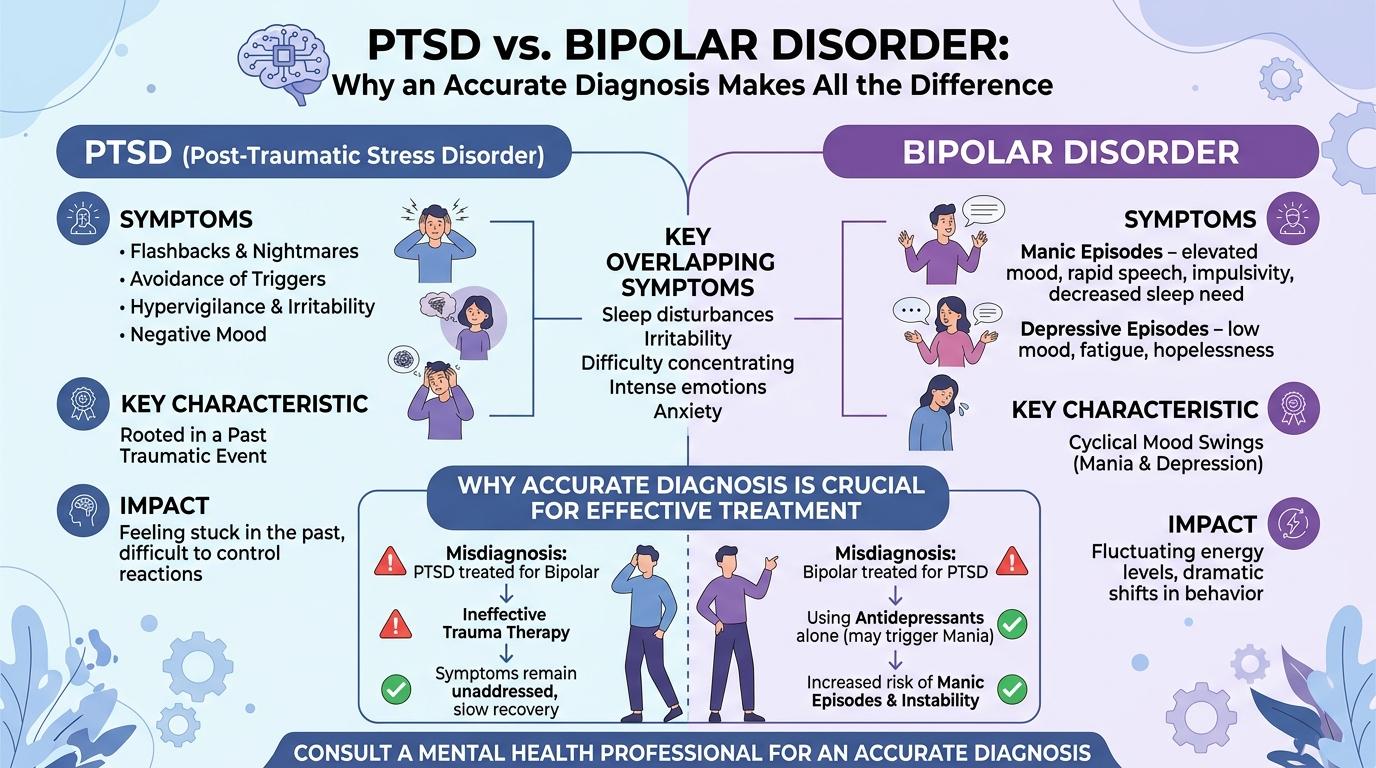
Mental health conditions don't always fit neatly into a single category. Two conditions that are frequently misunderstood are Post-Traumatic Stress Disorder (PTSD) and bipolar disorder. While they can share certain symptoms such as mood changes, sleep disturbances, and difficulty concentrating, they are fundamentally different conditions with different causes and treatment approaches.
Because the symptoms can overlap, some individuals may worry they have one disorder when they actually have the other. In some cases, a person may even be diagnosed with both. Understanding the differences is an important step toward receiving the right support.
What Is PTSD?
PTSD is a trauma-related mental health condition that can develop after someone experiences or witnesses a traumatic event. Trauma may result from military combat, abuse, serious accidents, natural disasters, violence, or other life-threatening situations.
Common symptoms include:
-
Flashbacks or intrusive memories
-
Nightmares related to the traumatic event
-
Avoidance of trauma reminders
-
Hypervigilance
-
Emotional numbness
-
Increased anxiety or irritability
These symptoms are often connected to specific memories or situations that remind a person of the original trauma.
What Is Bipolar Disorder?
Bipolar disorder is a mood disorder characterized by episodes of depression and episodes of mania or hypomania.
During a manic episode, a person may experience:
-
Extremely high energy
-
Reduced need for sleep
-
Racing thoughts
-
Increased confidence
-
Risk-taking behaviors
-
Rapid speech
Depressive episodes may involve persistent sadness, low energy, loss of interest in activities, and difficulty completing everyday tasks.
Unlike PTSD, bipolar disorder is not caused by a traumatic event, although stressful life experiences can sometimes trigger mood episodes in individuals who are already vulnerable.
Why They're Sometimes Confused
Both conditions can involve:
-
Sleep problems
-
Difficulty concentrating
-
Irritability
-
Emotional distress
-
Problems maintaining relationships
Because these symptoms overlap, it can be difficult to distinguish between the two without a comprehensive mental health evaluation.
The biggest difference is the underlying pattern. PTSD symptoms are generally linked to trauma and may worsen when a person encounters reminders of that experience. Bipolar disorder follows recurring mood episodes that are not necessarily connected to trauma triggers.
The Importance of a Professional Assessment
Receiving an accurate diagnosis is essential because treatment plans differ significantly.
Someone with PTSD may benefit from trauma-focused therapies, while bipolar disorder often requires mood-stabilizing medication alongside psychotherapy. Since the conditions can sometimes occur together, mental health professionals carefully evaluate symptom history, duration, triggers, and overall functioning before making a diagnosis.
If you're interested in learning more about the symptoms, similarities, and clinical differences, this detailed guide on PTSD vs. bipolar disorder provides a comprehensive overview to help you better understand both conditions.
Can Someone Have Both Conditions?
Yes. Having PTSD does not prevent someone from also developing bipolar disorder, and vice versa.
When both conditions occur together, diagnosis can become more complicated because certain symptoms may overlap. This is one reason why self-diagnosis based on online information can be misleading.
A licensed mental health professional can determine whether symptoms are related to trauma, mood episodes, or another mental health condition altogether.
Treatment Depends on the Diagnosis
Although every treatment plan is personalized, common approaches include:
For PTSD:
-
Trauma-focused psychotherapy
-
Cognitive Behavioral Therapy (CBT)
-
Eye Movement Desensitization and Reprocessing (EMDR), when appropriate
-
Medication for specific symptoms when recommended
For Bipolar Disorder:
-
Mood stabilizers
-
Medication management
-
Individual psychotherapy
-
Lifestyle strategies that support regular sleep and stress management
Following a treatment plan developed by a qualified healthcare provider often leads to better long-term outcomes than trying to manage symptoms alone.
Conclusion
PTSD and bipolar disorder may appear similar on the surface, but they are distinct mental health conditions with different causes, symptom patterns, and treatment strategies. Understanding these differences helps reduce confusion and encourages people to seek appropriate professional care rather than relying on assumptions or self-diagnosis.
Whether symptoms are related to trauma, mood instability, or another mental health concern, early evaluation and evidence-based treatment can improve quality of life. The first step is reaching out to a qualified mental health professional who can provide an accurate diagnosis and develop a personalized care plan.

 English
 Arabic
 French
 Spanish
 Portuguese
 Deutsch
 Turkish
 Dutch
Dutch
 Russian
 Romaian
 Portuguese (Brazil)
 Greek
Greek