


Migrating from LMS to AI LXP: A Practical Enterprise Guide
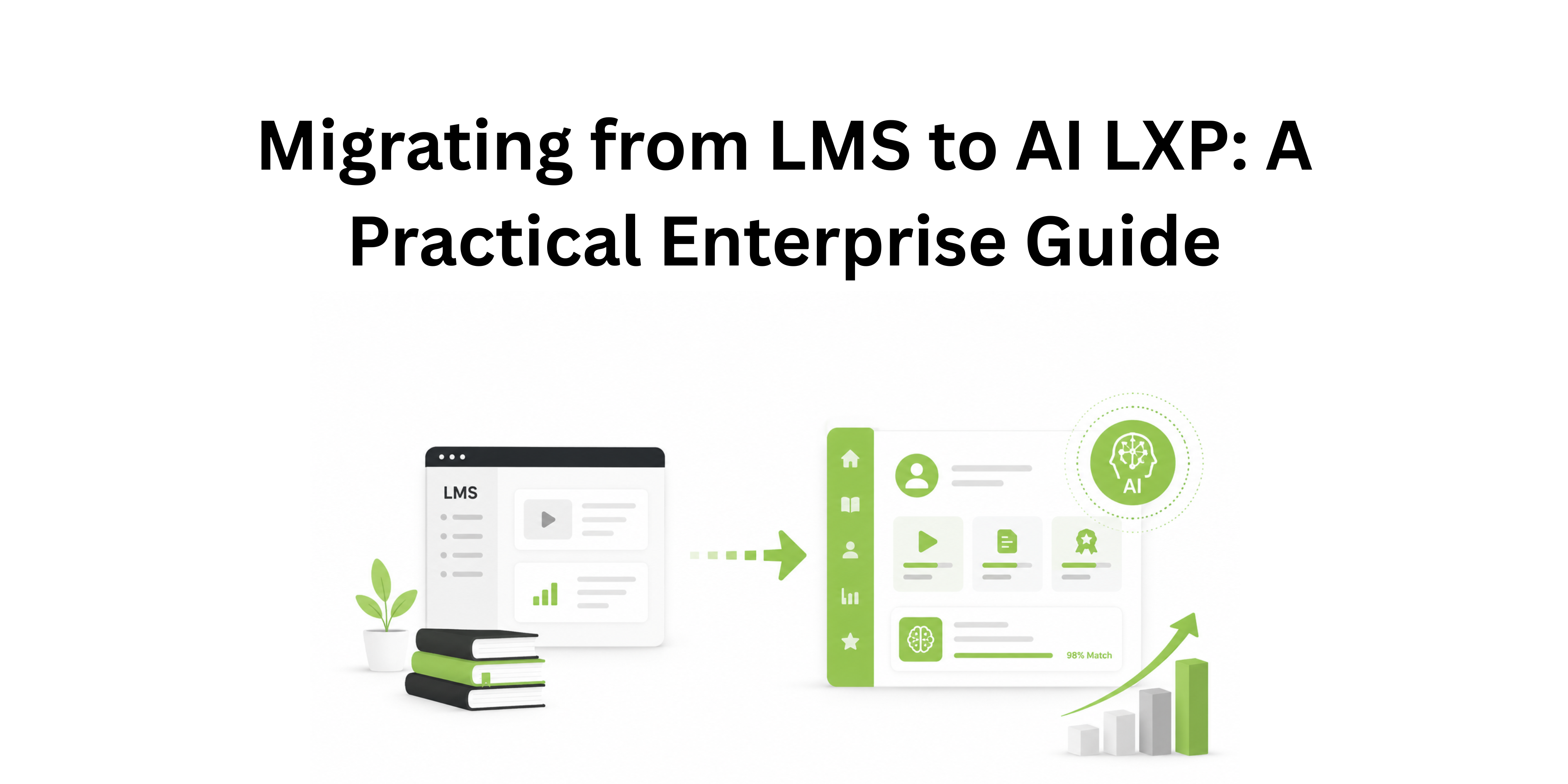
Many businesses are reconsidering their reliance on outdated learning management systems as workforce capabilities change more quickly than traditional training models can keep up. Although LMS platforms are useful for formal training and compliance, they frequently fall short in terms of engagement, personalisation, and quantifiable business effect. For this reason, more businesses are switching to AI-powered learning experience platforms (LXPs), which match learning to actual business requirements.
Moving from LMS to AI LXP is more than simply a technological advancement for CEOs and company executives. The way that learning fosters development, adaptability, and sustained competitiveness has undergone a strategic change.
Why Enterprises Are Moving Beyond Traditional LMS
The main function of traditional LMS platforms is administration. They concentrate on reporting on course completion, tracking, and delivery. This is effective for required training, but it doesn't help with ongoing upskilling or changing job requirements.
By reorienting the emphasis from content management to learner experience and performance impact, an AI LXP overcomes these constraints. Personalised learning pathways, real-time skill analytics, and intelligent content recommendations that adjust to shifting corporate goals are all made possible by it.
Understanding What Changes with an AI LXP
The organization's entire learning process is altered by switching to an AI LXP. The platform gathers pertinent learning information based on individual jobs, skill gaps, and learning behaviour rather than promoting standardised courses.
Static reporting is replaced by AI-driven analytics. Leaders get insight into learning ROI, new skill shortages, and workforce preparedness. Instead of functioning independently, this enables learning programs to be more closely aligned with strategic business goals.
Key Steps in Migrating from LMS to AI LXP
Clarity is the first step towards a successful relocation. Businesses must first evaluate the current LMS's strengths and weaknesses. This entails assessing reporting constraints, engagement levels, and the relevance of the content.
Establishing precise business goals for the AI LXP is the next stage. Platform selection and execution should be guided by these goals, regardless of the objective: faster onboarding, leadership development, or digital transformation.
Migration of content should be done strategically. Not every piece of LMS content has to be transferred. Instead of lengthy, static courses, an AI LXP thrives on excellent, modular, and skill-based learning resources.
Managing Change Across the Organization
Success is not assured by technology alone. Strong change management is necessary when moving to an AI LXP. Managers must receive training on how to use the insights produced by AI-driven analytics, and employees must comprehend how the new platform helps them grow.
Sponsorship is essential for leadership teams. Adoption rates rise, and learning gets ingrained in daily operations when CEOs and senior executives actively support the shift.
Data, Integration, and Governance Considerations
Businesses also need to deal with data governance and integration. To provide precise recommendations, an AI LXP frequently integrates with HR systems, performance tools, and collaboration platforms.
Data security and responsible AI use are crucial from an EEAT standpoint. Companies should make sure the AI LXP supplier safeguards employee data, adheres to strict compliance guidelines, and provides transparency in the process of generating suggestions.
Measuring Success After Migration
Beyond course completion rates, post-migration success should be evaluated. Organisations can monitor talent development, performance enhancement, and business impact using an AI LXP.
This makes learning quantifiable and strategic for CEOs. The platform makes it easier to see how workforce development supports long-term resilience, productivity, and creativity.
Conclusion
Transitioning from LMS to AI, for businesses prepared to modernise education, LXP is a sensible and forward-thinking step. It makes training a strategic competence rather than just a support role.
An AI LXP offers the knowledge, flexibility, and insight required to develop a workforce prepared for the future for companies managing continuous transformation.

 English
 Arabic
 French
 Spanish
 Portuguese
 Deutsch
 Turkish
 Dutch
 Italiano
 Romaian
 Portuguese (Brazil)
 Greek