


Why Africa's Patients Are Choosing India Over Europe for Cancer & Transplant Care
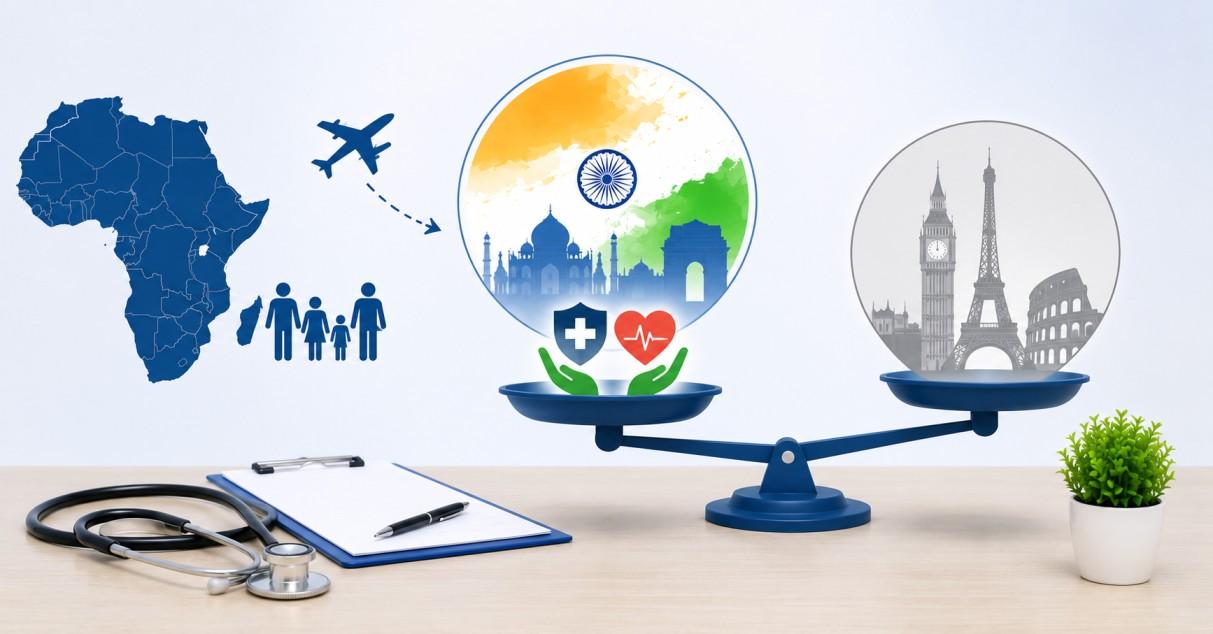
For decades, patients across Nigeria, Kenya, Ethiopia, Tanzania, and other African nations who needed advanced cancer care or organ transplantation looked toward Europe — the UK, Germany, or France — as the default destination. That's changing fast. Today, India has become the preferred choice for a growing number of African patients, and the reasons go far beyond price alone.
If you're weighing your options as a patient or a family member researching treatment abroad, here's an honest look at why so many are now choosing India, working through a trusted medical tourism company in India, over the traditional European route.
The Real Cost Difference
Cancer treatment and transplant surgery in Europe often costs 4 to 6 times more than the same procedure in India — and that gap widens further once you factor in the cost of extended hospital stays, follow-up visits, and accommodation for family members. A bone marrow transplant that might cost upwards of £150,000–£200,000 in the UK can often be completed in India for a fraction of that, without any compromise on surgical technique or technology.
This isn't a case of "cheaper equals lower quality." Many Indian hospitals use the same imported equipment, follow the same international treatment protocols, and are staffed by doctors trained or fellowship-certified in the US, UK, or Europe.
Faster Access to Treatment
One of the most underrated advantages is speed. In many European public healthcare systems, cancer patients face waiting lists — sometimes weeks to months — for specialist consultations, imaging, and surgery slots. For a disease where early intervention often determines the outcome, that delay can be costly.
Indian hospitals structured for international patients, such as Apollo Hospitals and Max Hospitals, are built to fast-track diagnostics and treatment planning for patients traveling from abroad — often compressing a process that would take months elsewhere into a matter of days.
Specialized Expertise Across Complex Cases
India has emerged as a genuine hub for complex oncology and transplant care. Patients researching options for cancer treatment in India or specialized brain tumor treatment in India will find some of the same advanced technologies used globally — CyberKnife, robotic surgery systems, and PET-CT imaging — paired with high surgical volumes that translate into deep clinical experience.
According to the World Health Organization's cancer data, the global cancer burden continues to rise sharply, with lower- and middle-income countries facing the steepest gaps in access to timely, quality treatment — a gap India's hospital networks have actively worked to fill for the region.
Visa Accessibility and Language Support
Compared to the sometimes lengthy and document-heavy Schengen or UK visa process, India's dedicated Medical Visa (M-Visa) system is specifically designed for patients from African nations and processes relatively quickly when supported by proper hospital documentation. Many hospitals also provide interpreter services, dedicated international patient lounges, and case managers who understand the cultural and logistical needs of patients traveling long distances.
Family-Friendly, Extended-Stay Support
Cancer and transplant treatment isn't a one-visit affair — it often requires weeks or months of monitoring, chemotherapy cycles, or post-transplant recovery. India's medical tourism ecosystem has built infrastructure specifically around this reality: extended-stay guesthouses near hospitals, affordable local transport, and support staff who help coordinate everything from meals to follow-up scans.
Real Outcomes, Not Just Lower Prices
It's worth being clear-eyed here: choosing where to get treated for a serious illness shouldn't come down to cost alone. What makes India a genuine alternative to Europe is that patients are getting comparable — and in many cases, equally accredited — clinical outcomes, backed by internationally trained specialists, at a cost and timeline that's realistic for families without unlimited resources.
How LifeRx Healthcare Supports African Patients
Navigating a foreign healthcare system while managing a serious diagnosis is overwhelming — which is why patients increasingly turn to an established medical tourism company in India rather than trying to coordinate everything independently. At LifeRx Healthcare, we work directly with patients across African nations to arrange hospital admissions, second opinions from specialists, visa documentation, accommodation, and full case coordination from diagnosis through recovery — all before you even step on a plane.
Frequently Asked Questions
Is the quality of cancer care in India comparable to Europe? Many Indian hospitals hold international accreditations and use the same treatment protocols and equipment standards followed in Europe and the US, often with shorter waiting times.
How long does transplant treatment typically require in India? This varies by procedure, but most transplant patients should plan for an initial stay of 3–6 weeks, followed by periodic remote or in-person follow-up.
Can family members stay with the patient during treatment? Yes, most hospitals accommodate attendants, and dedicated visa categories exist for family members accompanying patients.
Final Thoughts
The shift of African patients toward India for cancer and transplant care isn't a passing trend — it reflects a genuine recalibration of where world-class, accessible healthcare actually exists today. For families weighing options between Europe and India, the deciding factors increasingly come down to speed, cost transparency, and the level of hands-on support available throughout the journey.

 English
 Arabic
 French
 Spanish
 Portuguese
 Deutsch
 Turkish
 Dutch
Dutch
 Italiano
 Russian
 Portuguese (Brazil)
 Greek
Greek