


Managed SOC Providers: Stronger Cyber Defense for India's Healthcare Industry
Why Hospitals Need Continuous Cybersecurity Monitoring More Than Ever
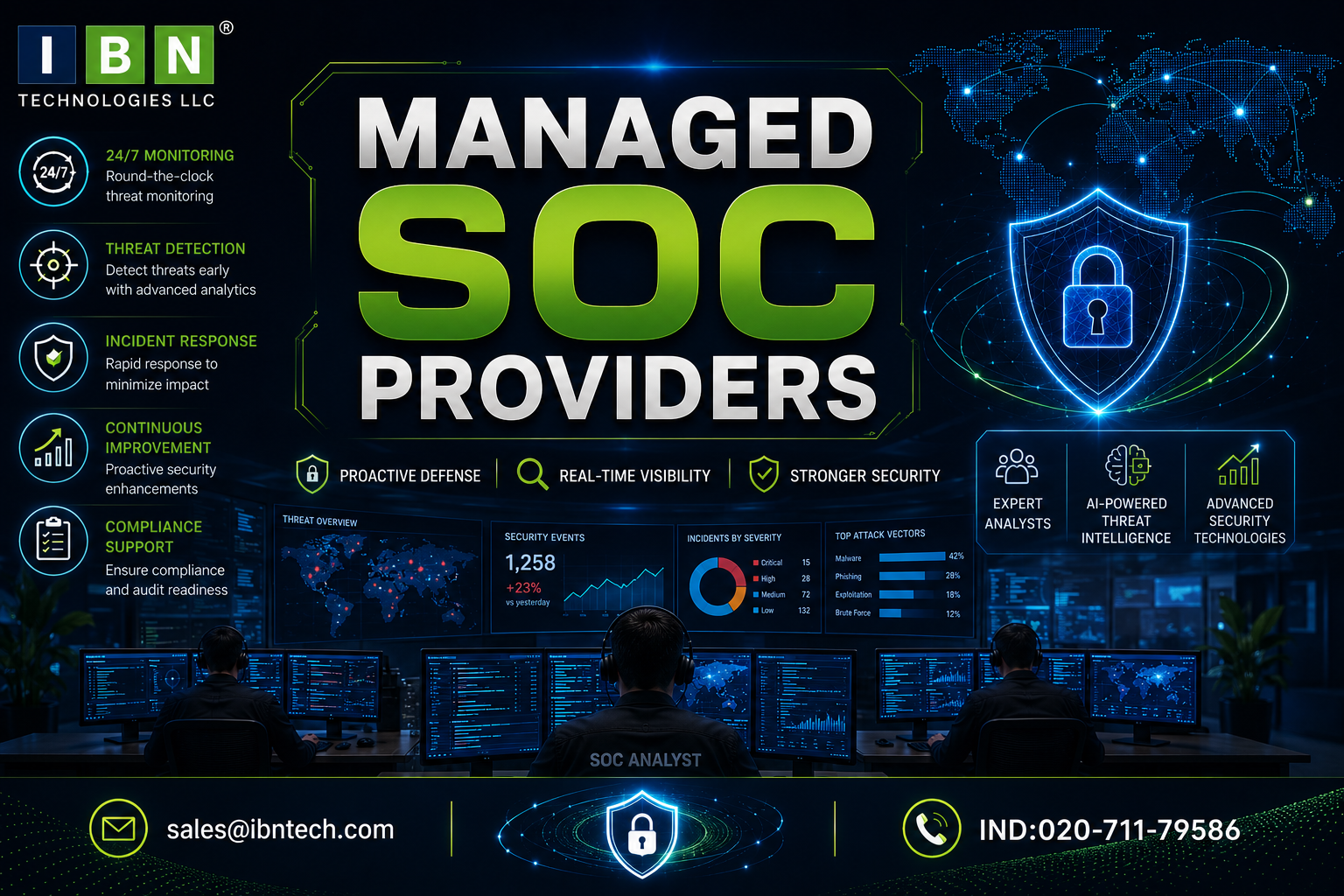
A hospital never truly closes. Emergency departments, diagnostic laboratories, telemedicine platforms, pharmacy systems, and patient management applications operate around the clock. That constant availability also creates a larger attack surface for cybercriminals. Managed soc providers are helping healthcare organizations in India strengthen their cyber defenses by delivering continuous monitoring, faster threat detection, and centralized security visibility across critical healthcare systems.
As hospitals continue investing in digital transformation, protecting patient information has become just as important as delivering quality healthcare. A single security incident can interrupt clinical workflows, delay treatment, and affect trust among patients and healthcare partners.
The Expanding Cyber Risk in Healthcare
Healthcare organizations now depend on a highly connected digital ecosystem that includes:
- Electronic Health Records (EHR)
- Hospital Information Systems (HIS)
- Laboratory Management Systems
- Radiology platforms
- Telemedicine applications
- Cloud-based healthcare software
- Connected medical devices
Every connected application generates valuable operational data—but it also creates additional opportunities for cyber threats.
Unlike many industries, hospitals cannot simply pause operations while resolving a security incident. Clinical services must remain available at all times.
Why Healthcare Organizations Are Frequently Targeted
Healthcare data contains valuable personal and financial information, making it an attractive target for attackers.
CommonMany security challenges include:
Ransomware Attacks
Cybercriminals often attempt to encrypt hospital systems, disrupting patient care and critical operations.
Unauthorized Access
Weak identity controls or compromised user accounts can expose confidential patient records.
Connected Medical Devices
Many healthcare devices communicate over hospital networks, increasing the need for continuous monitoring.
Third-Party Risks
Hospitals rely on multiple vendors for software, diagnostics, billing, and cloud services, expanding the overall security landscape.
Traditional security tools alone may not provide the visibility needed to identify these risks early.
How Managed SOC Providers Protect Healthcare Environments
A managed Security Operations Center continuously monitors security events generated across healthcare infrastructure.
Instead of reviewing isolated alerts from multiple tools, security analysts investigate events using a centralized monitoring approach.
Typical monitoring includes:
- Network activity
- User authentication
- Endpoint security events
- Cloud workloads
- Server logs
- Medical application activity
- Firewall events
This helps healthcare organizations detect unusual behavior before it affects patient services.
The Role of Healthcare Cybersecurity Services
Healthcare cybersecurity services extend beyond monitoring security alerts.
They help organizations improve visibility by:
- Collecting logs from multiple systems
- Correlating security events
- Identifying abnormal activity
- Supporting incident investigations
- Providing operational reporting
This structured approach allows hospital IT teams to focus on supporting clinical operations while maintaining stronger cybersecurity oversight.
Security Challenges and SOC Response
|
Healthcare Challenge |
Managed SOC Response |
|
Ransomware Detection |
Continuous monitoring of suspicious activity |
|
User Account Misuse |
Authentication monitoring and alert investigation |
|
Medical Device Visibility |
Monitoring connected device communications |
|
Cloud Security Events |
Centralized cloud log monitoring |
|
Security Reporting |
Operational dashboards and incident records |
|
Multi-Location Hospitals |
Unified monitoring across facilities |
A centralized monitoring model improves visibility across complex healthcare environments.
Benefits for Hospitals and Healthcare Providers
Continuous security monitoring supports both operational resilience and patient trust.
Improved Threat Detection
Security analysts investigate suspicious events before they escalate into major disruptions.
Better Visibility Across Hospital Systems
A centralized view of security events helps IT teams monitor multiple facilities from one operational finds it difficult to review security events generated from numerous applications and framework.
Reduced Alert Fatigue
Event correlation minimizes unnecessary alerts, allowing security teams to focus on higher-priority incidents.
Operational Continuity
Continuous monitoring helps organizations identify issues without interrupting essential healthcare services.
Scalable Security Operations
As hospitals adopt new digital health platforms, security monitoring can expand alongside their infrastructure.
Healthcare Use Case
A multi-specialty hospital group operates several hospitals, diagnostic laboratories, and telemedicine centers across different cities.
Its IT environment includes cloud-hosted patient management systems, connected diagnostic equipment, and remote access for healthcare professionals.
The internal IT team finds it difficult to review security events generated from numerous applications and devices every day.
By partnering with a managed SOC provider, the hospital centralizes security monitoring across all facilities.
Security analysts continuously review alerts, investigate suspicious activities, and provide timely notifications whenever unusual behavior requires attention.
This allows the hospital's technology team to concentrate on maintaining healthcare services while improving visibility into potential cyber risks.
Best Practices for Strengthening Hospital Cybersecurity
Healthcare organizations can improve their security posture by following these practices:
Healthcare Cybersecurity Checklist
- Monitor hospital systems continuously
- Centralize security logs
- Protect remote access accounts
- Review user privileges regularly
- Secure connected medical devices
- Update critical healthcare applications
- Train healthcare staff on cyber awareness
- Document security incidents
- Conduct regular risk assessments
- Integrate security monitoring with existing IT operations
These practices help create a more resilient healthcare environment while supporting uninterrupted patient care.
Compliance Considerations in Healthcare
Healthcare organizations must maintain strong governance over sensitive patient information and critical clinical systems.
Continuous security monitoring supports compliance initiatives by improving:
- Security event documentation
- Centralized log management
- Incident tracking
- Operational reporting
- Audit preparedness
As healthcare organizations continue embracing digital innovation, cybersecurity must evolve alongside patient care. Continuous monitoring, centralized visibility, and structured incident management enable hospitals to reduce operational risk while protecting critical healthcare services. By working with managed SOC providers, healthcare organizations in India can strengthen their cyber resilience, support compliance objectives, and create a safer digital environment for patients, clinicians, and healthcare administrators.

 English
 French
 Spanish
 Portuguese
 Deutsch
 Turkish
 Dutch
Dutch
 Italiano
 Russian
 Romaian
 Portuguese (Brazil)
 Greek
Greek