


Complete Guide to Paternity Testing for Families
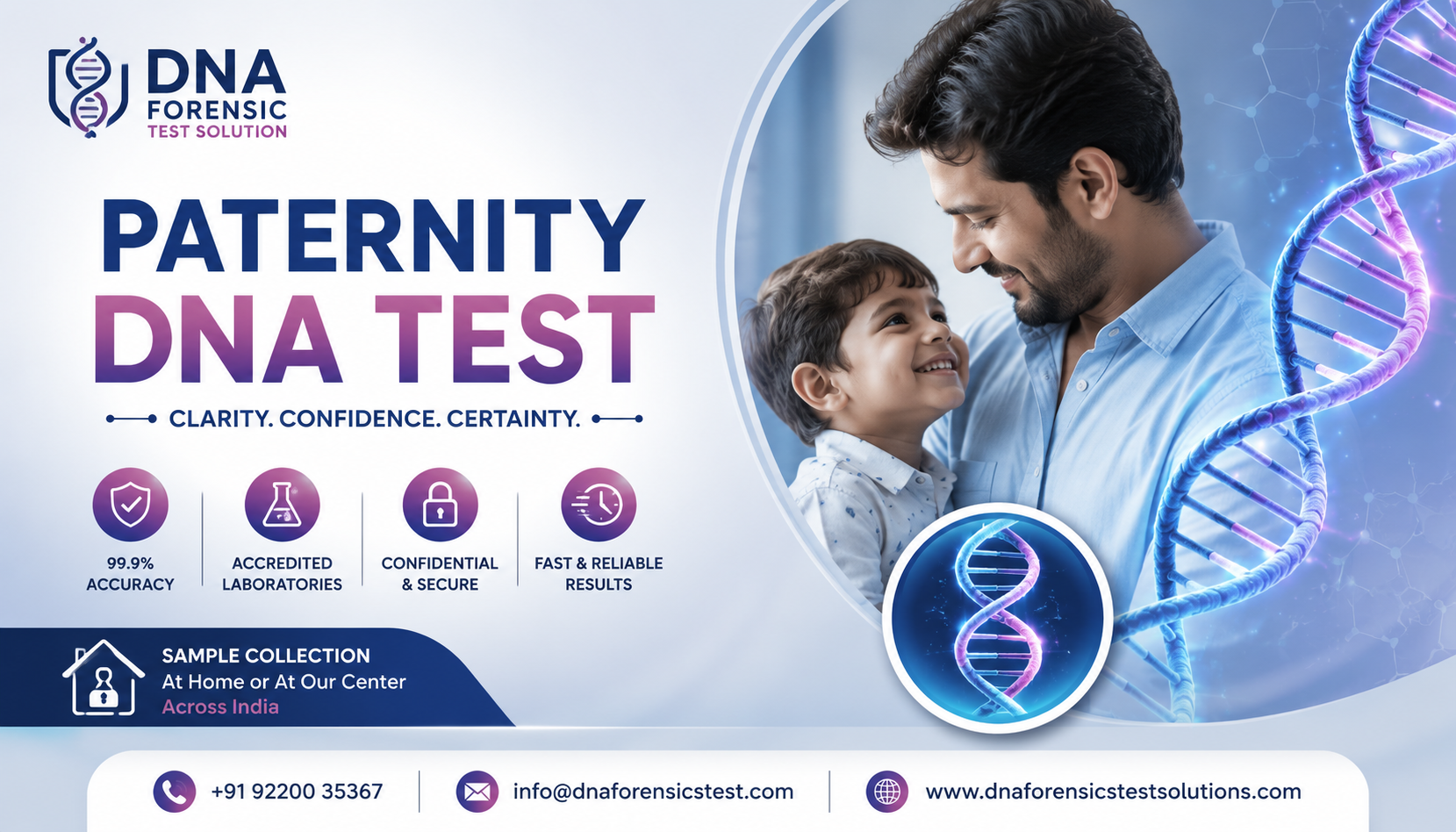
Families often face moments when they need certainty rather than assumptions. Questions about biological relationships can arise because of legal matters, personal concerns, inheritance, immigration, or simply the desire to know the truth. While relatives may say, "He has his father's smile," science looks much deeper than appearances.
A paternity test provides a reliable way to establish whether a man is the biological father of a child through DNA analysis. Today's testing methods are simple, accurate, and non-invasive, making them accessible for families of all ages.
If you're exploring a Paternity Test in Chennai or want to understand how family DNA testing works, this guide covers the essentials in a clear and practical way.
Why Families Choose Paternity Testing
Every family has a unique story, and the reasons for DNA testing vary from one situation to another. Some people seek clarity before making important life decisions, while others require scientifically verified results for legal or administrative purposes.
Common reasons include:
-
Confirming biological fatherhood
-
Resolving family disagreements
-
Child custody proceedings
-
Inheritance and succession matters
-
Immigration applications
-
Updating legal documents
-
Personal peace of mind
Whatever the reason, DNA testing replaces uncertainty with evidence based on genetics rather than opinion.
How DNA Makes Paternity Testing Possible
Every person inherits half of their genetic material from their mother and half from their biological father. This inherited DNA creates a unique genetic profile.
During testing, laboratory experts compare multiple DNA markers shared between the child and the alleged father. If these markers match according to established scientific standards, the laboratory can confirm the biological relationship with a very high level of confidence.
Unlike physical features, which can be influenced by many genes, DNA comparison provides direct biological evidence.
What Happens Before the Test?
Many people imagine complicated paperwork or lengthy medical appointments. In reality, preparing for a paternity test is usually straightforward.
Before sample collection, the laboratory will:
-
Understand the purpose of testing
-
Explain the available testing options
-
Verify participant identities when required
-
Complete consent documentation
-
Schedule the collection process
Knowing these steps beforehand helps families feel more comfortable throughout the journey.
Inside the Testing Process
Modern DNA testing follows a structured workflow designed to maintain both accuracy and confidentiality.
Step 1: Sample Collection
Most laboratories collect DNA using sterile cheek swabs. The swab gently gathers cells from inside the mouth without causing pain or discomfort.
The process takes only a few minutes.
Step 2: Laboratory Examination
Scientists extract DNA from the collected samples and compare carefully selected genetic markers using validated laboratory methods.
Each marker adds another layer of confidence to the final result.
Step 3: Quality Review
Before issuing any report, laboratory professionals verify that every stage of the analysis meets quality standards.
Step 4: Report Preparation
After completing the analysis, the laboratory prepares a detailed report explaining the findings in clear language.
Understanding the Difference Between Personal and Legal Testing
Not every DNA test serves the same purpose.
Personal DNA Testing
Families often choose personal testing to satisfy their own questions about biological relationships. These reports are generally intended for private use.
Legal DNA Testing
Legal testing follows documented identification procedures and a secure chain of custody. Courts and government authorities may require this process when DNA evidence supports legal proceedings.
Choosing the correct option at the beginning saves both time and unnecessary complications.
How to Select the Right Laboratory
A reliable laboratory does more than produce accurate results.
Look for a laboratory that offers:
-
Professional consultation
-
Transparent testing procedures
-
Confidential handling of samples
-
Secure documentation
-
Experienced laboratory staff
-
Clear explanation of report timelines
Good communication often reflects good laboratory practices.
Choosing a Paternity Test in Chennai
Families looking for a Paternity Test in Chennai benefit from convenient access to consultation, sample collection, and follow-up support.
Local testing centres also make it easier to complete identity verification and document submission when legal testing is required.
Before booking a Paternity Test in Chennai, ask whether the laboratory offers both personal and legal testing options. Understanding the difference helps ensure the report matches your specific needs.
Myths That Often Create Confusion
Several misconceptions still surround paternity testing. Let's separate fact from fiction.
Myth: Children Always Look Like Their Biological Father
Family resemblance can be interesting, but appearance alone cannot confirm biological relationships.
Myth: DNA Testing Requires Blood Samples
Modern paternity testing commonly uses cheek swabs, making the process quick and comfortable.
Myth: Results Depend on Age
DNA remains consistent throughout life. Whether the participant is a newborn or an adult, the genetic comparison follows the same scientific principles.
Myth: Testing Is Complicated
For most families, the actual sample collection takes less time than finishing a cup of coffee.
Privacy Matters at Every Stage
Because DNA testing involves sensitive information, confidentiality remains a top priority.
Professional laboratories typically implement procedures that include:
-
Secure participant records
-
Controlled sample storage
-
Limited report access
-
Identity verification before releasing results
Protecting personal information is just as important as producing accurate scientific findings.
Questions Worth Asking Before Booking
Before choosing a DNA laboratory, consider asking:
-
What type of DNA samples are collected?
-
How are participant identities verified?
-
What documents should I bring?
-
How is confidentiality maintained?
-
Is the report suitable for my intended purpose?
Clear answers to these questions help families feel confident before testing begins.
When Should Families Consider Testing?
Timing depends on individual circumstances.
Some parents seek confirmation shortly after birth. Others pursue testing years later because of inheritance matters, legal proceedings, or immigration requirements.
Families considering a Paternity Test in Chennai often appreciate the convenience of nearby appointments, easier document verification, and accessible customer support throughout the testing process.
Benefits of Choosing Professional DNA Testing
Working with an experienced laboratory offers several advantages.
These include:
-
Reliable scientific analysis
-
Professional sample handling
-
Clear testing procedures
-
Secure confidentiality
-
Detailed reporting
-
Guidance throughout the process
Reliable laboratories understand that families need both accurate answers and compassionate communication.
Frequently Asked Questions
Is a paternity test painful?
No. Most laboratories collect DNA using painless cheek swabs that take only a few minutes.
Can children of any age undergo testing?
Yes. DNA testing is suitable for newborns, children, and adults using appropriate collection methods.
How long does the testing process usually take?
The exact timeline depends on the laboratory, but many complete analysis within several working days after receiving suitable samples.
Is a Paternity Test in Chennai available for court-related cases?
Yes. Many laboratories offering a Paternity Test in Chennai provide legally documented DNA testing when participants complete the required identification and collection procedures.
Can personal information remain confidential?
Yes. Reputable laboratories protect participant information and release reports only to authorised individuals according to their established procedures.

 Arabic
 French
 Spanish
 Portuguese
 Deutsch
 Turkish
 Dutch
Dutch
 Italiano
 Russian
 Romaian
 Portuguese (Brazil)
 Greek
Greek