


5 Common Wedding Dress Stains and How to Remove Them
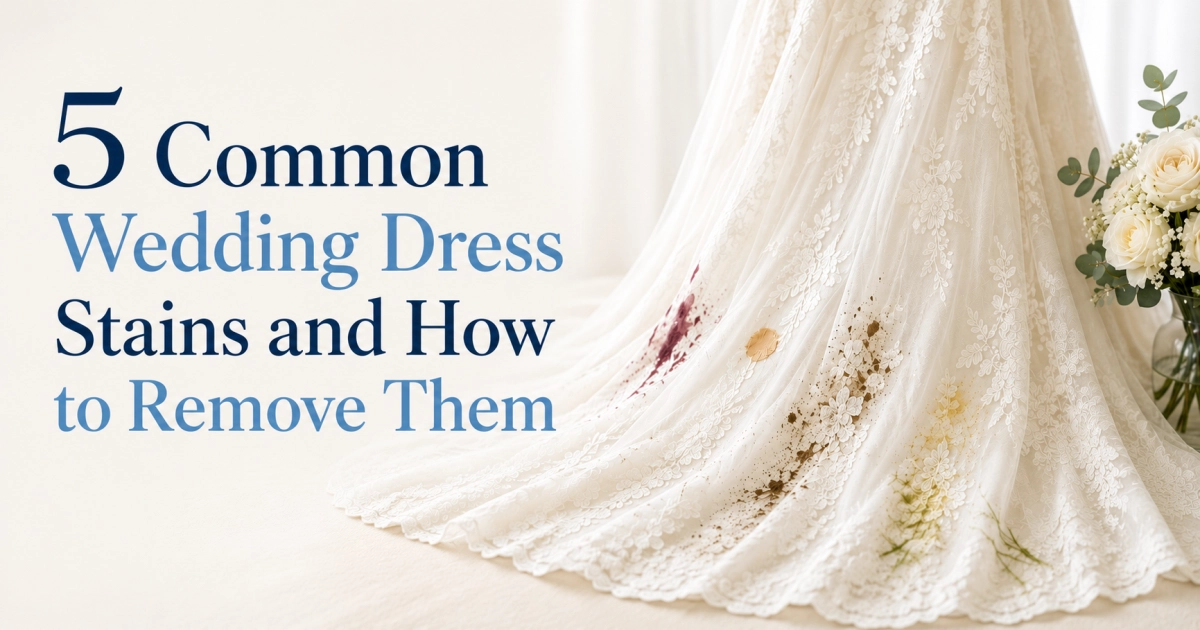
Your wedding dress is one of the most meaningful outfits you will ever own. However, after a long wedding day, it may have makeup, food, drinks, dirt, or sweat stains. Proper wedding dress cleaning can help remove these common marks, protect the gown, and keep it looking beautiful for years to come.
Wedding dresses are often made from delicate fabrics such as silk, satin, chiffon, lace, tulle, and organza. Many gowns also include embroidery, pearls, sequins, beads, or other intricate details. Because of this, cleaning a wedding dress requires more care than cleaning everyday clothing. Here are five common wedding dress stains and important considerations for dealing with them.
1. Makeup and Foundation Stains
Makeup stains are among the most common marks found on wedding dresses. Foundation, lipstick, concealer, mascara, and other cosmetics can transfer onto the neckline, sleeves, bodice, or shoulder areas throughout the wedding day.
It may be tempting to rub the stain immediately, but this can make matters worse. Rubbing can spread makeup across the fabric and push it deeper into the fibres. Some cosmetics also contain oils or pigments that require specialised treatment.
If you notice a makeup stain, avoid applying random household cleaning products. Instead, gently remove any excess product without rubbing the fabric and arrange suitable professional cleaning.
This is particularly important for gowns featuring lace, beading, embroidery, or delicate decorative details.
2. Wine and Champagne Stains
Wedding celebrations often involve champagne, wine, cocktails, and other beverages. A small spill can quickly become a noticeable stain, especially on a white or light-coloured wedding gown.
The first step is to avoid vigorous rubbing. Gently blot excess liquid using a clean, absorbent cloth. Rubbing can spread the liquid and potentially damage delicate fibres.
It is also best to avoid household bleach or strong stain removers. Different wedding dress fabrics have different cleaning requirements, and an unsuitable product could cause discolouration or permanent damage.
Professional wedding dress cleaning can provide a safer approach by allowing the gown and stain to be assessed before an appropriate cleaning method is selected.
3. Cake and Frosting Stains
Wedding cake is another common source of stains. Frosting, cream, chocolate, fruit fillings, and other desserts can leave sticky, oily, or coloured marks on a wedding gown.
If cake or frosting gets onto the dress, carefully remove any excess solid material without scraping the fabric. Avoid immediately applying water or detergent, particularly if you are unsure how the fabric will react.
Some food stains contain oils that can become more difficult to treat if they are left for too long. Other ingredients may contain strong colours that can affect a light-coloured gown.
Instead of experimenting with DIY cleaning methods, consider having the dress assessed by experienced cleaners who understand the requirements of different bridal fabrics.
4. Grass and Dirt Stains
Outdoor wedding ceremonies and photographs can leave dirt, soil, and grass stains around the bottom of a wedding dress. The hemline is particularly vulnerable because it can come into contact with grass, pathways, floors, and outdoor surfaces.
Although scrubbing may seem like the easiest solution, vigorous treatment can damage delicate fibres or affect the appearance of the fabric. This is especially important for dresses with lace, tulle, embroidery, or decorative trims.
If your gown has significant dirt or grass marks, avoid aggressively brushing or scrubbing the affected area. Experienced professional wedding dress cleaners can assess the material and determine an appropriate treatment based on the fabric, construction, and type of stain.
5. Sweat and Deodorant Marks
Wedding days can be long and physically demanding. Spending hours taking photographs, greeting guests, dancing, and moving between locations can result in sweat and deodorant marks around the underarms, neckline, back, and other areas of the gown.
These marks may not always be obvious immediately after the wedding. However, leaving body oils, perspiration, and other residues untreated for an extended period can make them more difficult to address later.
For this reason, wedding dress cleaning should not necessarily be postponed for months or years. Having the gown professionally assessed after the wedding can help identify areas requiring attention before the dress is stored.
Why DIY Wedding Dress Cleaning Can Be Risky
Many brides consider cleaning their wedding dress at home to save time or money. However, wedding gowns are not always suitable for standard washing machines or ordinary household detergents.
A gown may combine several different materials, including delicate fabric, lining, lace, embellishments, adhesives, embroidery, and decorative elements. Water, heat, agitation, or unsuitable cleaning chemicals may affect these components differently.
For example, excessive moisture could affect certain embellishments, while strong chemicals may cause colour changes or fabric damage. Even ironing or drying at the wrong temperature can create problems.
Before attempting any DIY treatment, check the care label and consider the construction of the gown. When in doubt, professional assessment is generally a safer option.
When Should You Clean Your Wedding Dress?
It is a good idea to consider cleaning your wedding dress soon after the wedding rather than leaving stains untreated for an extended period.
The longer certain substances remain on fabric, the more challenging they may become to treat. Makeup, food, beverages, perspiration, and outdoor dirt can all leave residues that should be addressed appropriately.
Prompt cleaning is especially important if you plan to preserve or store the gown for many years. A clean dress is generally a better starting point for long-term storage than a gown containing untreated stains.
How to Choose Professional Wedding Dress Cleaners
Choosing the right cleaner is important because wedding dresses require specialised handling. When comparing services, consider their experience with bridal gowns, knowledge of delicate fabrics, cleaning methods, and approach to intricate embellishments.
Look for a service that can assess the dress before cleaning rather than applying the same process to every gown. It is also worth asking how they handle specific materials such as lace, silk, satin, beading, sequins, and embroidery.
If you are searching for wedding dress dry cleaning in Perth, choosing a local professional with experience in bridal garments can provide greater confidence that your gown will receive appropriate care.
Cleaning vs. Wedding Dress Preservation
Wedding dress cleaning and preservation are related but different services. Cleaning focuses primarily on removing stains, dirt, oils, and other residues from the gown. Preservation focuses on protecting the cleaned dress for long-term storage.
If you want to keep your gown as a keepsake, cleaning may be an important first step before preservation. A professional can help determine whether your dress requires cleaning, preservation, or both based on its condition and your long-term plans.
Final Thoughts
Your wedding dress represents memories that can last a lifetime, so proper care should not be overlooked once the wedding celebrations are finished. From foundation and champagne to cake, grass, and perspiration, common wedding-day stains can affect the appearance and condition of your gown.
Avoid aggressive DIY stain removal and household cleaning products when you are unsure how they may affect delicate fabrics or embellishments. Instead, consider professional wedding dress cleaning to ensure the gown is assessed and treated appropriately.
For brides in Perth, working with experienced professional cleaners can also make it easier to prepare the gown for storage or preservation. With the right care after your wedding day, your dress can remain a beautiful reminder of your special celebration for many years to come.

 English
 Arabic
 Spanish
 Portuguese
 Deutsch
 Turkish
 Dutch
Dutch
 Italiano
 Russian
 Romaian
 Portuguese (Brazil)
 Greek
Greek