


How 3D Product Configurators Are Redefining Product Discovery
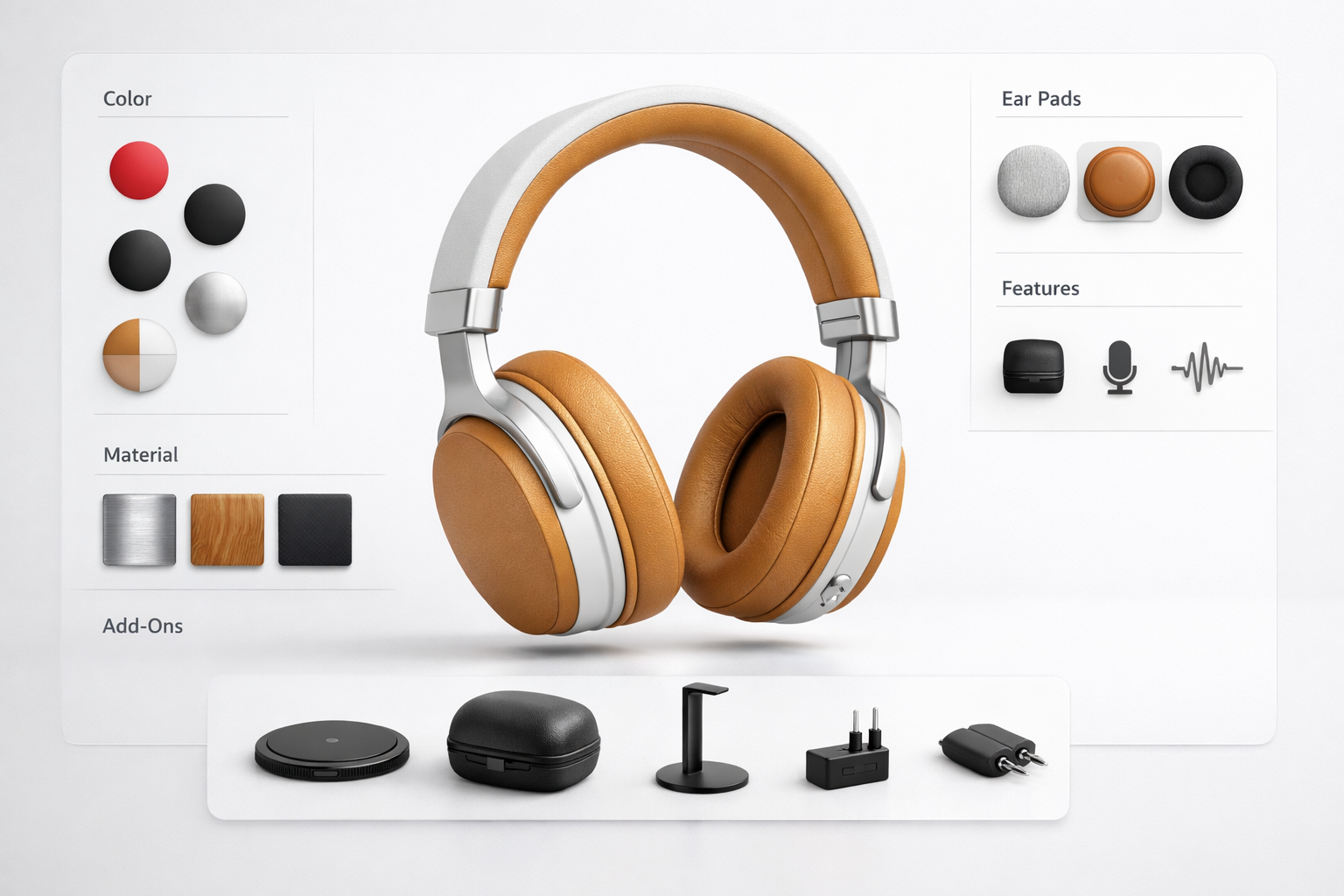
Product discovery in digital commerce has long followed a predictable pattern: customers search using keywords, filter through results, examine individual product pages with static images, and either purchase or continue searching. This linear process, inherited from catalog shopping and adapted minimally for online environments, treats products as fixed entities waiting to be found through increasingly refined search queries. 3D product configurators are fundamentally redefining this paradigm by transforming discovery from finding predetermined products into creating personalized solutions, from text-based search into visual exploration, and from passive browsing into active experimentation. This redefinition addresses longstanding discovery limitations while establishing new models where customers discover both products and their own preferences simultaneously through interactive engagement.
From Search to Exploration
Traditional product discovery begins with search, where customers enter keywords describing desired products and receive matching results. This approach assumes customers can articulate what they want using terminology matching product listings, yet this assumption frequently fails. Customers often lack vocabulary to describe aesthetic preferences, may not know technical specifications, or cannot translate vague desires into precise search terms. The result is frustrating discovery processes that either return overwhelming results requiring extensive filtering or miss relevant products because descriptions don't match the search language.
3D product configurators redefine discovery by replacing keyword search with visual exploration. Rather than describing desired features verbally, customers manipulate visual parameters directly selecting colors from palettes, choosing materials from rendered samples, and adjusting dimensions through interactive controls. This visual language proves more intuitive than verbal descriptions, enabling customers to communicate preferences they struggle to articulate while discovering options they wouldn't know to search for explicitly.
The exploratory nature creates a serendipitous discovery impossible through directed search. Customers experimenting with configurations often stumble upon unexpected combinations that perfectly match unarticulated preferences. Someone might not think to search for specific color pairings, but discovers them while playing with options, realizing they capture exactly the aesthetic vision previously undefined. This discovery through experimentation engages creative faculties that text-based search cannot access, making the process both more effective and genuinely enjoyable.
Discovering Preferences Through Interaction
Traditional discovery models assume customers arrive with clear preferences and seek products matching them. This assumption proves problematic because preferences often remain unclear until customers interact with concrete options. People struggle to predict which features matter most or which aesthetics appeal until experiencing tangible alternatives rather than abstract possibilities.
3D product configurators enable preference discovery through interaction itself. As customers configure products selecting options, observing results through photorealistic rendering, refining their choice, as they learn about their own preferences through revealed reactions. Initial assumptions frequently prove incorrect as visualized configurations show that anticipated preferences don't actually appeal when made concrete. A customer assuming they prefer traditional styling might discover through configuration that contemporary designs actually resonate more strongly when properly visualized.
This preference construction through interaction represents fundamentally different discovery, where the process reveals desires rather than merely matching pre-existing ones. The immediate visual feedback provides rapid preference learning customers discover whether choices satisfy through realistic visualization rather than requiring actual product ownership. This compressed learning cycle allows preference discovery through dozens of configurations in single sessions, accelerating understanding that would otherwise require years of trial and error through actual purchases.
Expanding Beyond Inventory Constraints
Traditional online discovery remains constrained by inventory; customers discover only what businesses physically stock. This limitation severely restricts discovery possibilities, forcing customers to select from available variations regardless of potential interest in other configurations. If a retailer stocks fifteen sofa variations, those fifteen constitute the entire universe that customers can discover.
3D product configurators expand discovery by presenting manufacturing capabilities rather than stocked inventory. A single configurable product might offer thousands of combinations through material, size, feature, and styling options. Discovery encompasses everything technically producible rather than merely what's currently warehoused. This expansion transforms discovery from a scarce resource into an abundant exploration where customers confidently investigate vast possibility spaces, knowing desired configurations likely exist within them.
The made-to-order production enabled by configurators also eliminates the frustration of discovering perfect products only to learn they're unavailable. When customers discover ideal configurations, those specifications become immediately manufacturable regardless of stock status. This availability certainty fundamentally changes discovery psychology,y rather than hoping desired products exist among limited options, customers specify exactly what they want with confidence that it can be produced.
Personalized Discovery Pathways
Generic discovery treats all customers identically, presenting the same options regardless of individual circumstances, preferences, or needs. This uniform approach makes discovery inefficient, as customers wade through irrelevant options while potentially missing personally relevant ones buried in overwhelming catalogs.
3D product configurators enable personalized discovery that adapts to individual contexts through intelligent observation and recommendation. Machine learning algorithms analyze configuration behavior, which options customers explore, how long they examine features, and what selections they make to understand preferences and personalize subsequent discovery experiences. The configurator learns alongside customers, emphasizing relevant options while maintaining access to complete catalogs for exploratory investigation.
Recommendation systems accelerate discovery by suggesting options based on demonstrated patterns. If customers consistently select contemporary styling, configurators recommend complementary modern features they might not discover independently. These intelligent suggestions help customers find relevant options efficiently while exposing possibilities that broaden discovery beyond initial assumptions. The balance between personalization and exploration creates optimized discovery that respects individual preferences while encouraging beneficial experimentation.
Discovery Through Creation
Perhaps the most fundamental redefinition involves shifting discovery from finding to creating. Traditional discovery meant searching for products approximating desires among existing options, an inherently compromising process where perfect matches rarely existed. Configurator-enabled discovery means specifying ideal products through customization, transforming customers from seekers into creators.
This shift redefines what discovery means fundamentally. Rather than a comparative evaluation of alternatives to identify the best compromises, discovery becomes a constructive specification of ideals. The mental model changes from "which available option best matches my needs?" to "what combination of attributes creates my perfect product?" This constructive discovery proves simultaneously broader, encompassing all possible configurations, and more precise, enabling exact specification rather than accepting approximations.
The creative agency fundamentally improves discovery psychology. Rather than anxiously hoping that desired products exist among available options, customers confidently specify requirements, knowing that configurators enable precise realization. This certainty transforms discovery from uncertain searching into assured creation, making the process feel empowering rather than frustrating while increasing the likelihood of discovering genuinely satisfying solutions.
Seamless Multi-Channel Discovery
Modern discovery spans multiple devices and contexts, customers research on smartphones during commutes, explore on tablets at home, and finalize on desktop computers. Traditional commerce featured disconnected discovery, requiring customers to restart processes when switching devices or channels.
3D product configurators enable seamless multi-channel discovery through saved configurations that persist across contexts. Customers beginning discovery on one device continue on others without losing progress or context. This continuity respects that discovery occurs episodically across situations rather than in single continuous sessions, accommodating actual customer behavior rather than forcing conformity to idealized linear processes.
Social sharing extends discovery beyond individual exploration into community curation. Customers discovering appealing configurations share via social media, introducing peers to possibilities through authentic recommendations. This social discovery carries credibility that algorithmic suggestions cannot match, expanding discovery reach through trusted networks while making the process socially enjoyable rather than isolated.
Conclusion
3D product configurators fundamentally redefine product discovery by transforming it from keyword search into visual exploration, from finding predetermined products into creating personalized solutions, from assuming clear preferences into enabling preference discovery through interaction, from inventory-constrained browsing into unlimited possibility exploration, from generic presentation into personalized pathways, from passive searching into active creation, and from isolated processes into multi-channel social experiences. These redefinitions address longstanding discovery frustrations, ineffective search, unclear preferences, limited options, and irrelevant results, while creating genuinely superior experiences that empower customers to discover not just products but their own desires through engaging, efficient, and ultimately more satisfying processes. As configurator technology continues advancing, product discovery will evolve further toward truly individualized, creative, and socially-informed exploration that permanently elevates standards for what digital commerce discovery should be.

 English
 Arabic
 French
 Spanish
 Portuguese
 Deutsch
 Turkish
 Dutch
Dutch
 Italiano
 Romaian
 Portuguese (Brazil)
 Greek
Greek