


The Cycle of Market Emotions Explained | Stock Market Cycles
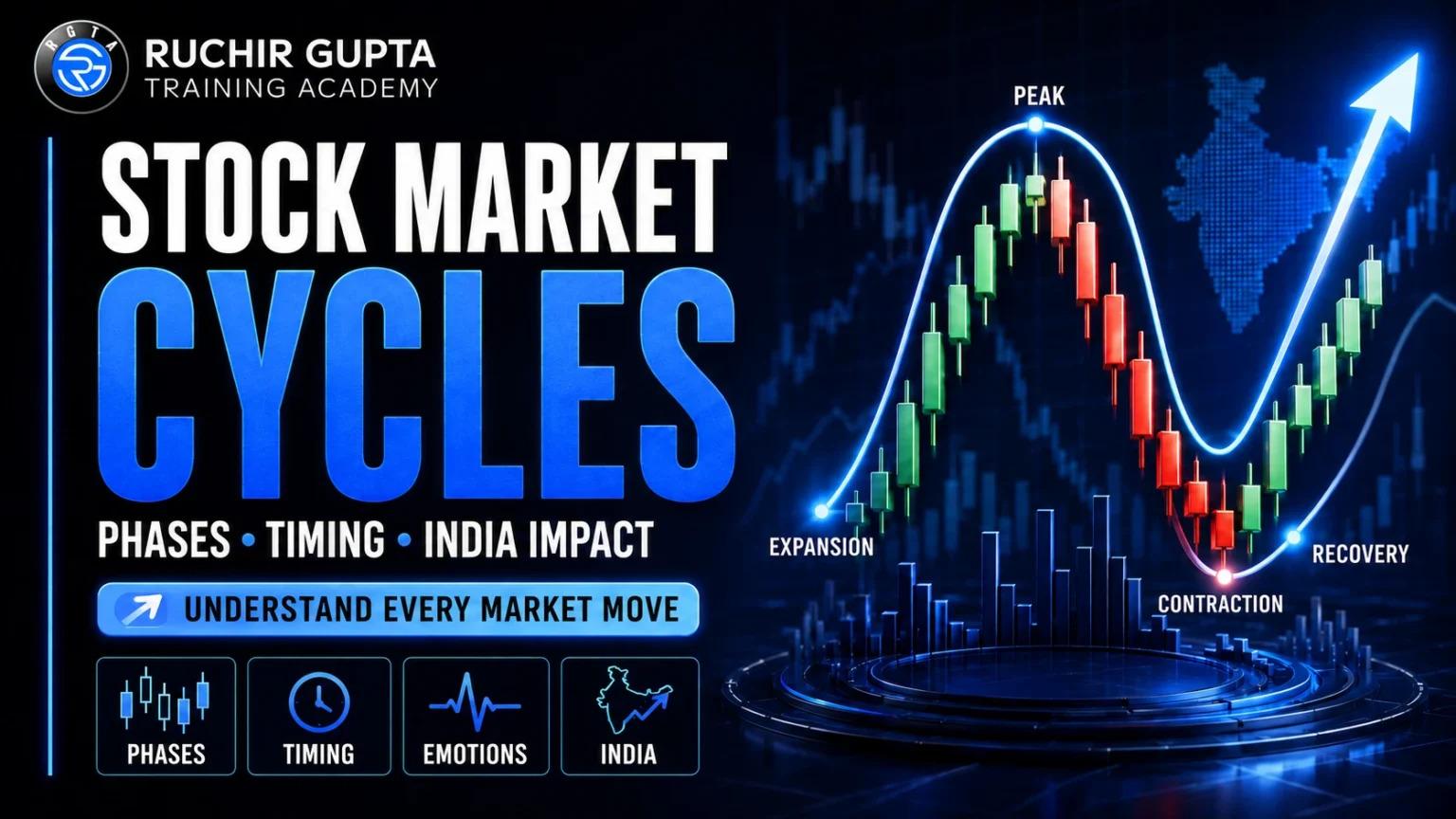
The Cycle of Market Emotions: Understanding Stock Market Cycles and Investor Psychology | Ruchir Gupta
Introduction
Have you ever wondered why investors rush to buy stocks when prices are already high and panic when prices fall? If you've experienced excitement during a bull market or fear during a market crash, you're not alone. Every investor, whether a beginner or an expert, goes through emotional highs and lows. These emotions influence buying and selling decisions more than most people realize.
This repeating pattern is known as the cycle of market emotions. It plays a major role in shaping stock market cycles, affecting how markets rise, peak, fall, and recover. Understanding these emotional patterns can help you make better investment decisions instead of reacting impulsively.
Think of the market like the changing seasons. Spring represents optimism, summer symbolizes confidence, autumn brings uncertainty, and winter reflects fear. Just as seasons change naturally, emotions in the stock market also move in predictable cycles.
If you're serious about becoming a successful investor, learning these emotional stages is just as important as learning technical or fundamental analysis. Many investors today strengthen their knowledge by enrolling in an online stock market class, where they learn how to control emotions while making informed decisions.
Learn stock market cycles, the cycle of market emotions, stages market, and improve investing skills with an online stock market class.
Understanding Stock Market Cycles
The financial markets never move in a straight line. Instead, they follow repeating stock market cycles that consist of periods of growth, correction, recovery, and expansion. While economic conditions, company earnings, and global events influence prices, investor psychology often accelerates these movements.
Every cycle starts with uncertainty. As confidence grows, investors begin buying stocks. This increased demand pushes prices higher, attracting even more investors. Eventually, optimism turns into overconfidence, causing prices to rise beyond their true value.
Sooner or later, reality catches up. Negative news, slowing growth, or profit booking triggers selling. Fear spreads quickly, leading to sharp declines before the cycle eventually starts all over again.
Understanding these cycles helps investors avoid emotional mistakes and focus on long-term wealth creation.
What Is the Cycle of Market Emotions?
The cycle of market emotions describes how investors typically feel during different phases of the market. These emotions repeat again and again regardless of whether it's the Indian stock market, the US stock market, or any global exchange.
The emotional cycle generally follows this order:
-
Optimism
-
Excitement
-
Thrill
-
Euphoria
-
Anxiety
-
Denial
-
Fear
-
Panic
-
Capitulation
-
Despair
-
Depression
-
Hope
-
Relief
-
Optimism Again
Notice how the cycle forms a circle rather than a straight line. History doesn't repeat exactly, but investor emotions often do.
Recognizing these emotional stages can help investors stay calm while others overreact.
Why Emotions Control Investment Decisions
Most people believe investing is based purely on numbers. In reality, emotions often outweigh logic.
Imagine seeing your portfolio rise by 40% in just a few months. You might feel confident enough to invest even more money because you believe prices will continue climbing.
Now imagine the opposite.
Your investments suddenly lose 30%. Instead of thinking rationally, you may panic and sell everything—even though the companies you invested in remain fundamentally strong.
This emotional decision-making is one of the biggest reasons investors struggle to outperform the market.
Common emotional investing mistakes include:
-
Buying because everyone else is buying
-
Selling after large price declines
-
Ignoring risk during bull markets
-
Holding losing investments hoping they'll recover
-
Missing recovery rallies due to fear
Learning to recognize these habits is the first step toward becoming a disciplined investor.
The First Stage: Optimism
Every market recovery begins with optimism.
After a difficult period, positive economic news starts appearing. Interest rates may stabilize, company profits improve, and investor confidence slowly returns.
Initially, only experienced investors notice these opportunities. Most people remain skeptical because recent losses are still fresh in their minds.
During this stage:
Key Characteristics
-
Stock prices begin rising slowly.
-
Trading volumes increase gradually.
-
Economic indicators improve.
-
Long-term investors accumulate quality stocks.
Optimism creates the foundation for the next phase of the market cycle.
The biggest challenge?
Most investors don't believe the recovery is real until prices have already moved significantly higher.
The Growth Stage: Excitement and Thrill
As stock prices continue climbing, optimism transforms into excitement.
Media headlines become increasingly positive.
Friends begin discussing investments.
Social media fills with success stories.
New investors enter the market hoping to earn quick profits.
This stage often creates the feeling that investing is easy.
Signs of Excitement
-
Increasing retail participation.
-
Rising trading activity.
-
More IPO interest.
-
Strong market momentum.
-
Positive financial news everywhere.
Soon, excitement develops into thrill.
People begin checking stock prices several times a day. Every small gain creates confidence that the market will continue moving upward.
Unfortunately, this is where emotional investing often begins replacing rational investing.
Confidence, Belief, and Euphoria
This is perhaps the most dangerous phase in the cycle of market emotions.
After experiencing consistent profits, investors become highly confident.
Confidence turns into belief that markets can only move higher.
Eventually, belief becomes euphoria.
During euphoria, almost everyone appears optimistic.
People begin saying things like:
-
"This time is different."
-
"Markets never fall anymore."
-
"Every stock is a good investment."
These statements often signal excessive optimism rather than genuine opportunity.
Characteristics of Euphoria
-
Investors ignore risks.
-
Expensive stocks become even more expensive.
-
Leverage increases.
-
Beginners believe investing is effortless.
-
Speculation replaces careful research.
History shows that many major market peaks have occurred during periods of extreme euphoria.
Ironically, the greatest financial risk often appears when investors feel the safest.
Recognizing the Market Peak
The top of a market cycle is rarely obvious.
Prices may continue rising even when valuations become stretched.
Experienced investors start reducing exposure gradually, while new investors continue buying aggressively.
This difference in behavior creates the final stage before the market begins correcting.
Warning Signs of a Market Peak
-
Extremely high valuations
-
Unrealistic profit expectations
-
Heavy speculation
-
Record participation from inexperienced investors
-
Media predicting endless market growth
These signals don't necessarily mean an immediate crash will happen, but they often suggest increased caution is needed.
Successful investors understand that preserving capital during overheated markets is just as important as earning profits during bull markets.
Anxiety and Denial
After the market reaches its peak, prices often begin to slow down. Instead of rising every day, stocks start moving sideways or experience small declines. This is where the emotional shift begins.
At first, investors feel anxiety. They notice that the market isn't behaving the way it did during the rally. However, many believe it's just a temporary pause.
Soon, anxiety turns into denial.
Investors convince themselves that the market will recover quickly. They ignore warning signs and continue holding overvalued investments.
Common Thoughts During This Stage
-
"It's just a small correction."
-
"The market always bounces back immediately."
-
"I'll wait a little longer before selling."
Denial is dangerous because it prevents investors from making objective decisions. Instead of analyzing facts, they rely on hope.
Understanding this stage in the cycle of market emotions can help investors avoid holding poor investments simply because they refuse to accept changing market conditions.
Fear, Panic, and Capitulation
As prices continue falling, confidence disappears.
What started as a minor correction now becomes a larger decline. Investors who ignored early warning signs begin to worry.
This is the fear stage.
People constantly check financial news, monitor stock prices, and wonder whether the market will recover.
If selling pressure increases, fear quickly transforms into panic.
Panic causes investors to sell without considering the long-term value of their investments. Instead, they focus only on stopping further losses.
Eventually comes capitulation.
Capitulation is the point where investors completely give up.
Many sell their investments near the market bottom because they can no longer tolerate the emotional stress.
Ironically, this is often when professional investors begin buying quality stocks at discounted prices.
Characteristics of Capitulation
-
Heavy selling volume
-
Sharp market declines
-
Negative news dominates headlines
-
Investors lose confidence completely
-
Long-term opportunities begin appearing
This phase highlights one of the biggest lessons in stock market cycles: emotional decisions often produce poor investment results.
Despair and Depression
Once the panic selling ends, markets usually stabilize.
Unfortunately, investor confidence remains extremely low.
This stage is marked by despair and depression.
People who once celebrated rising markets now avoid discussing investing altogether.
Many promise themselves they will never invest again.
Financial media often publish pessimistic headlines predicting further declines.
During this stage:
Investor Behavior
-
Very little buying activity
-
Low trading volumes
-
Extreme caution
-
Lack of optimism
-
Preference for cash over investments
Interestingly, history has shown that some of the greatest investment opportunities appear during periods of maximum pessimism.
When everyone expects bad news forever, markets often begin preparing for recovery.
Hope and Recovery
Every market downturn eventually ends.
As economic conditions improve, companies report better earnings, and confidence slowly returns.
This begins the hope stage.
Investors cautiously re-enter the market.
Instead of expecting quick profits, they focus on quality businesses and long-term growth.
Gradually, hope develops into relief.
Markets continue rising.
Confidence increases.
Optimism returns.
And before long, the entire cycle of market emotions starts once again.
This repeating nature explains why understanding investor psychology is so important for long-term success.
How to Control Emotions While Investing
Knowing about the cycle of market emotions is only useful if you apply it to your investment decisions.
Here are practical ways to stay disciplined throughout different stages market movements.
1. Create an Investment Plan
Have clear financial goals before investing.
Your plan should include:
-
Investment objectives
-
Risk tolerance
-
Time horizon
-
Portfolio allocation
-
Exit strategy
A written plan helps prevent emotional decisions during volatile markets.
2. Avoid Following the Crowd
When everyone is buying, ask yourself why.
When everyone is selling, ask the same question.
The crowd is often driven by emotions rather than facts.
Successful investors think independently.
3. Diversify Your Portfolio
Never depend on a single stock or sector.
Diversification reduces overall risk and helps investors remain calm during market corrections.
A balanced portfolio is less likely to experience extreme losses.
4. Focus on Long-Term Goals
Daily price movements are normal.
Instead of reacting to every market fluctuation, focus on long-term wealth creation.
History shows that quality investments tend to recover over time.
5. Continue Learning
The more knowledge you gain, the less likely you are to make emotional decisions.
Learning about market psychology, technical analysis, risk management, and investing strategies builds confidence during uncertain periods.
Benefits of Joining an Online Stock Market Class
Many beginners enter the market without understanding investor psychology.
This often leads to emotional investing and unnecessary losses.
Joining an online stock market class provides structured learning that helps investors develop discipline and confidence.
Benefits include:
-
Understanding stock market cycles
-
Learning technical and fundamental analysis
-
Developing risk management skills
-
Recognizing the cycle of market emotions
-
Improving decision-making abilities
-
Building long-term investing habits
-
Learning from experienced market professionals
A quality online stock market class doesn't promise quick riches.
Instead, it teaches investors how to make informed, disciplined decisions regardless of market conditions.
Knowledge becomes one of your greatest investment assets.
Key Takeaways
Let's summarize the most important lessons.
Remember these key points:
-
Stock market cycles repeat throughout history.
-
Investor psychology drives many market movements.
-
The cycle of market emotions includes optimism, excitement, euphoria, anxiety, fear, panic, despair, hope, and recovery.
-
Emotional investing often leads to buying high and selling low.
-
Successful investors remain disciplined during every stages market movement.
-
Continuous learning through an online stock market class improves confidence and decision-making.
-
Long-term investing usually rewards patience more than emotional reactions.
Understanding emotions doesn't eliminate market volatility, but it helps investors respond wisely instead of reacting impulsively.
Conclusion
The financial markets are driven by more than numbers—they are driven by people. Every rise and fall reflects the emotions of millions of investors making decisions based on hope, fear, confidence, and uncertainty.
By understanding the cycle of market emotions, you can recognize where the market may be within broader stock market cycles and avoid common psychological traps. Instead of chasing rising prices or selling during panic, you'll be better prepared to make rational, long-term decisions.
Remember, successful investing is not about predicting every market move. It's about controlling your emotions when others cannot. As Warren Buffett famously suggested, successful investing often requires being disciplined when others are emotional.
Whether you're a beginner or an experienced investor, continuous education is essential. Enrolling in an online stock market class can deepen your understanding of market psychology, improve your strategy, and help you navigate every stages market cycle with greater confidence.
In the end, markets will continue to rise and fall, but investors who master their emotions are far more likely to achieve lasting financial success.
Frequently Asked Questions (FAQs)
1. What is the cycle of market emotions?
The cycle of market emotions is a psychological model that explains how investors experience emotions such as optimism, excitement, euphoria, fear, panic, despair, and hope during different phases of the stock market.
2. Why are stock market cycles important for investors?
Understanding stock market cycles helps investors recognize changing market conditions, manage risk effectively, and avoid making emotional investment decisions.
3. What are the main stages market investors experience?
The common stages market investors experience include optimism, excitement, thrill, euphoria, anxiety, denial, fear, panic, capitulation, despair, depression, hope, relief, and renewed optimism.
4. How can an online stock market class improve investing skills?
An online stock market class teaches investors about market psychology, technical analysis, risk management, trading strategies, and disciplined investing, helping them make informed financial decisions.
5. How can investors avoid emotional decision-making?
Investors can reduce emotional investing by creating a clear investment plan, diversifying their portfolio, focusing on long-term goals, avoiding herd mentality, and continuously improving their knowledge through education and market experience.

 English
 Arabic
 French
 Spanish
 Portuguese
 Deutsch
 Turkish
 Dutch
Dutch
 Russian
 Romaian
 Portuguese (Brazil)
 Greek
Greek