


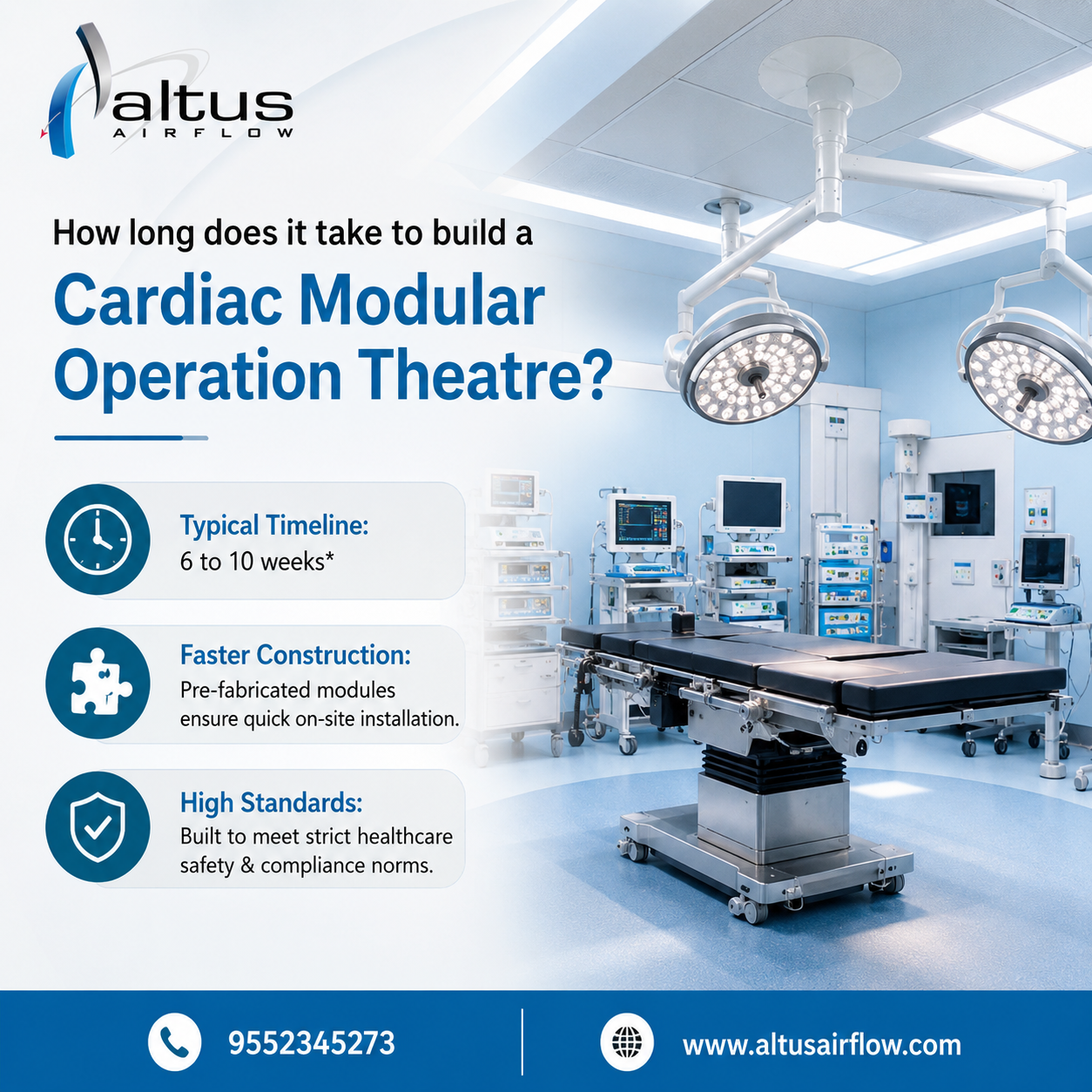
How Long Does It Take to Build a Cardiac Modular Operation Theatre?
Introduction
Building a Cardiac Modular Operation Theatre is a highly specialized process that requires careful planning, precision engineering, and strict adherence to healthcare standards. Unlike conventional operation theatres that are built using traditional construction methods, modular cardiac OTs are assembled using prefabricated components that significantly reduce project timelines while maintaining excellent quality. Hospitals increasingly prefer modular solutions because they minimize disruption, improve efficiency, and create controlled surgical environments suitable for complex cardiac procedures. Companies such as Altus Airflow specialize in delivering advanced modular operation theatre solutions that combine cleanroom engineering, HVAC integration, medical gas systems, and modular construction techniques for modern healthcare facilities.
The time required to complete a modular cardiac operation theatre depends on various factors such as project size, customization requirements, existing hospital infrastructure, regulatory approvals, and equipment integration. Although every project differs, modular construction generally shortens the overall construction schedule compared to traditional methods.
This article explains the complete construction process, the factors that influence project duration, and why modular technology helps hospitals establish advanced cardiac surgical facilities more efficiently.
Why Construction Time Matters?
Hospitals often need new surgical facilities without interrupting existing medical services.
Faster construction offers several advantages:
-
Earlier project completion
-
Reduced operational disruption
-
Improved patient services
-
Better utilization of hospital resources
Modular construction is designed to achieve these objectives.
Understanding a Cardiac Modular Operation Theatre
A Cardiac Modular Operation Theatre is a prefabricated surgical suite built using factory-manufactured components that are assembled on-site.
These components typically include:
-
Modular wall panels
-
Ceiling systems
-
Seamless flooring
-
HVAC infrastructure
-
Medical gas pipeline systems
-
Electrical systems
The modular approach improves both construction quality and speed.
Typical Construction Timeline
The complete project generally includes several stages:
-
Planning
-
Engineering
-
Manufacturing
-
Site preparation
-
Installation
-
Testing
-
Commissioning
Many activities occur simultaneously, reducing the overall timeline.
Initial Project Consultation
Every project begins with understanding hospital requirements.
Consultations focus on:
-
Surgical requirements
-
Available space
-
Existing infrastructure
-
Future expansion plans
Clear planning supports efficient execution.
Site Survey and Assessment
A detailed site survey helps engineers understand the project location.
The survey evaluates:
-
Structural conditions
-
Utility availability
-
Existing services
-
Construction limitations
Accurate assessment reduces future complications.
Design and Engineering Phase
Engineers prepare detailed technical drawings before construction begins.
Design work includes:
-
Room layout
-
HVAC planning
-
Medical gas systems
-
Electrical distribution
-
Workflow optimization
Careful engineering improves project efficiency.
Regulatory Coordination
Hospital construction projects often require coordination with multiple departments.
This may involve:
-
Hospital administration
-
Engineering teams
-
Project consultants
Proper coordination helps avoid unnecessary delays.
Off-Site Manufacturing
One of the biggest advantages of modular construction is off-site manufacturing.
Factory production includes:
-
Wall panels
-
Ceiling systems
-
Doors
-
Utility panels
Manufacturing in controlled facilities improves quality while reducing on-site work.
Site Preparation Activities
While modular components are being manufactured, site preparation begins.
Preparation may include:
-
Civil modifications
-
Utility installation
-
Floor leveling
-
Structural reinforcement
Parallel work shortens project duration.
Wall Panel Installation
Modular wall panels are installed after site preparation.
Their benefits include:
-
Fast assembly
-
Smooth finishes
-
Easy maintenance
Prefabrication significantly reduces installation time.
Ceiling System Installation
The ceiling system supports several critical services.
These include:
-
Air diffusers
-
Surgical lights
-
Utility systems
-
HEPA filters
Proper installation ensures cleanroom performance.
Flooring Installation
Healthcare-grade flooring is installed using seamless construction techniques.
Benefits include:
-
Easy cleaning
-
Chemical resistance
-
Improved hygiene
Floor curing is completed before further work proceeds.
HVAC Installation
HVAC systems are among the most critical parts of the construction process.
Installation includes:
-
Air handling units
-
Ductwork
-
HEPA filtration
-
Laminar airflow systems
These systems help maintain controlled environmental conditions.
Medical Gas Pipeline Installation
Medical gas systems are carefully integrated into the operation theatre.
Typical services include:
-
Oxygen
-
Medical air
-
Vacuum
-
Nitrous oxide (where required)
Testing is performed after installation.
Electrical Infrastructure
Electrical systems support all critical equipment.
Installation includes:
-
Power distribution
-
Backup systems
-
Lighting
-
Equipment connections
Reliable electrical infrastructure is essential for cardiac surgery.
Equipment Installation
Major surgical equipment is installed after infrastructure completion.
Examples include:
-
Operating tables
-
Surgical lights
-
Pendants
-
Patient monitoring systems
Proper coordination prevents installation conflicts.
Cleanroom Validation
Environmental performance is verified before commissioning.
Testing includes:
-
Air cleanliness
-
Air pressure
-
Temperature
-
Humidity
Validation ensures that the operating theatre meets healthcare requirements.
System Performance Testing
Every integrated system undergoes detailed testing.
These include:
-
HVAC performance
-
Medical gas pipelines
-
Electrical systems
-
Emergency systems
Performance verification confirms operational readiness.
Final Inspection
A comprehensive inspection is performed before project handover.
Inspectors verify:
-
Installation quality
-
Safety standards
-
System functionality
-
Documentation
Final approval allows the theatre to become operational.
Factors That Influence Construction Time
Several variables affect the project schedule.
Common factors include:
-
Theatre size
-
Degree of customization
-
Existing infrastructure
-
Equipment availability
-
Hospital approvals
Good planning helps minimize delays.
Advantages of Modular Construction
Modular technology provides several time-saving benefits.
These include:
-
Faster project completion
-
Factory-controlled quality
-
Reduced on-site labor
-
Better installation accuracy
These advantages improve project efficiency.
Importance of Project Management
Professional project management coordinates every activity.
Responsibilities include:
-
Material scheduling
-
Construction supervision
-
Engineering coordination
-
Quality control
Strong management helps maintain project timelines.
Future Expansion Planning
Many modular operation theatres are designed for future upgrades.
Planning may include:
-
Equipment expansion
-
Additional utility capacity
-
Infrastructure flexibility
Scalable designs improve long-term value.
Why Specialized Expertise Matters
Developing a Cardiac Modular Operation Theatre requires expertise in modular construction, cleanroom engineering, HVAC systems, medical gas infrastructure, electrical integration, and healthcare compliance. Specialized engineering teams ensure that every stage is completed efficiently while maintaining the high standards required for cardiac surgical environments.
Conclusion
The time required to build a cardiac modular operation theatre depends on project complexity, customization, hospital infrastructure, and engineering requirements. However, modular construction significantly reduces project duration by using prefabricated components, parallel workflows, and efficient installation methods. With careful planning, quality manufacturing, and professional execution, hospitals can establish advanced cardiac surgical facilities in considerably less time than conventional construction methods.
Altus Airflow delivers complete modular operation theatre solutions through advanced engineering, cleanroom technologies, HVAC integration, and healthcare infrastructure expertise. By combining innovative modular construction with precise project execution, Altus Airflow helps hospitals develop reliable, efficient, and future-ready cardiac operation theatres that support world-class surgical care.
FAQs
1. How long does it take to build a Cardiac Modular Operation Theatre?
A Cardiac Modular Operation Theatre is typically built through stages such as planning, engineering, off-site manufacturing, site preparation, modular installation, HVAC integration, medical gas installation, testing, and commissioning. The overall duration depends on project size, customization, existing infrastructure, and hospital requirements.
2. Why is modular construction faster than conventional construction?
Because most components are manufactured off-site and assembled quickly on-site.
3. Does HVAC installation affect the project timeline?
Yes. HVAC installation is a major phase that requires careful coordination with other systems.
4. Are medical gas systems included during construction?
Yes. Medical gas pipeline systems are installed and tested as part of the project.
5. Is environmental testing required before handover?
Yes. Air quality, pressure, temperature, and humidity are validated before commissioning.
Read Our Previous Blog --------------->How long does it take to install a Modular Cardiac Operation Theatre?

 English
 Arabic
 French
 Spanish
 Portuguese
 Deutsch
 Turkish
 Italiano
 Russian
 Romaian
 Portuguese (Brazil)
 Greek
Greek