


The SEO Audit Tool Mistakes Most Website Owners Never Notice
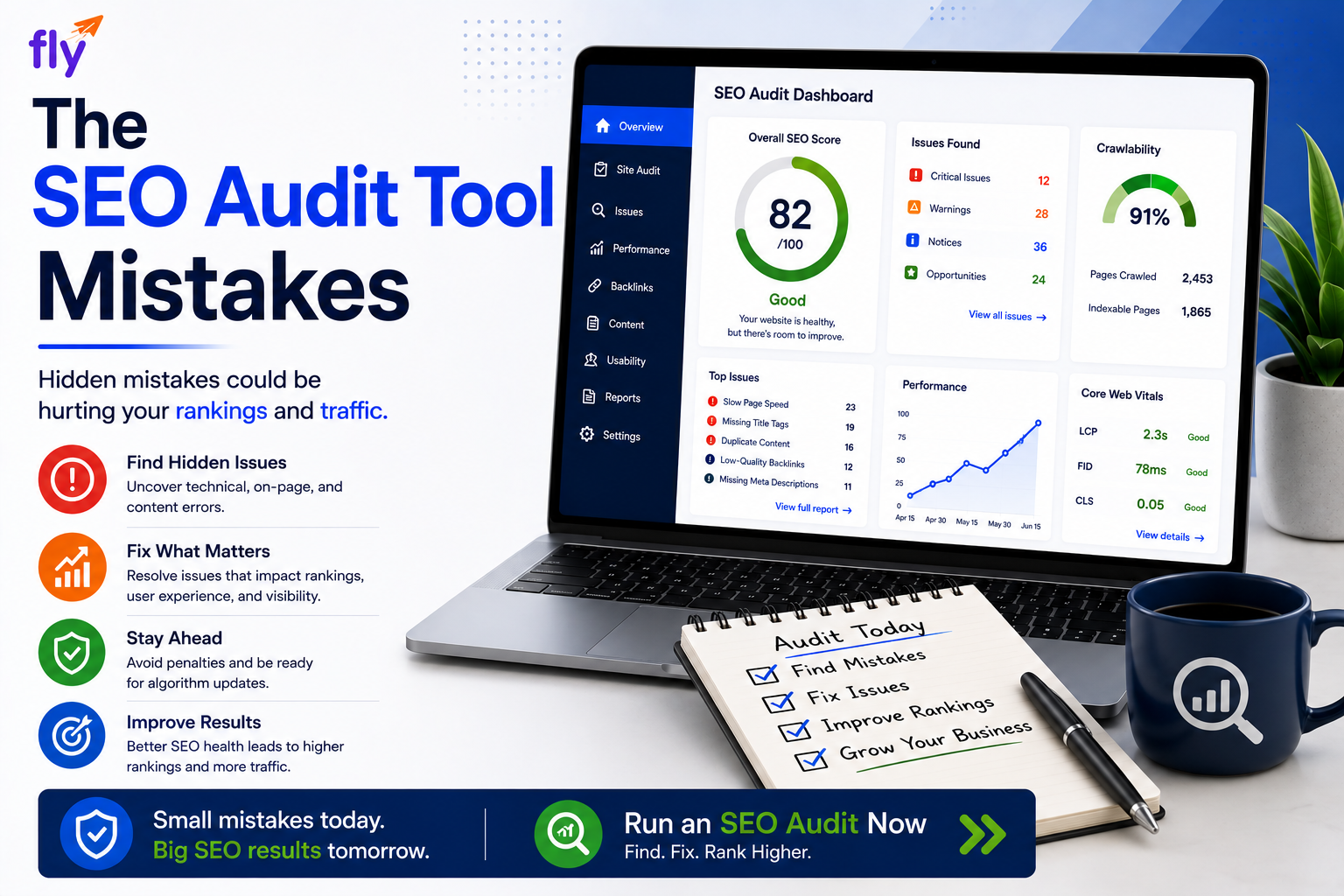
When business owners think about SEO, they usually focus on keywords, blog posts, or backlinks. While these are important, many websites struggle to improve their rankings because of issues that have nothing to do with content creation. Hidden technical errors, poor website structure, and overlooked optimisation gaps can quietly limit a website's performance without showing any obvious signs.
The challenge is that these mistakes often go unnoticed. A website may appear to work perfectly for visitors, yet search engines could be facing problems crawling pages, understanding content, or indexing important URLs. Over time, these hidden issues can reduce visibility in search results and make it harder for potential customers to discover your business online.
This is why regular website audits are so important. An SEO Audit Tool helps uncover the technical and on-page issues that many website owners never notice. It provides valuable insights into your website's overall health, allowing you to fix problems early and build a stronger foundation for long-term organic growth. While an audit doesn't guarantee higher rankings, it helps you make informed decisions that support better SEO performance.
Why Hidden SEO Mistakes Matter
Many SEO problems develop gradually as a website grows. Every new page, plugin update, redesign, or content change can introduce issues that affect search performance.
Unlike broken images or missing pages, technical SEO problems usually don't generate visible warnings. As a result, they often remain undetected for months.
Some common reasons hidden issues appear include:
- Website redesigns
- CMS or plugin updates
- New service or product pages
- URL changes
- Content restructuring
- Theme modifications
Without regular monitoring, these small issues can accumulate and begin affecting your website's ability to perform well in search results.
Mistake 1: Ignoring Technical SEO Problems
Technical SEO is one of the most overlooked aspects of website optimisation because most visitors never see it.
A Technical SEO Audit helps identify problems such as:
- Crawl errors
- Broken redirects
- Redirect chains
- XML sitemap issues
- Robots.txt configuration errors
- Canonical tag conflicts
- HTTPS implementation issues
- Duplicate URLs
These issues can prevent search engines from crawling and indexing your website efficiently, reducing the visibility of important pages.
Mistake 2: Missing or Duplicate Metadata
Page titles and meta descriptions play an important role in helping search engines understand your content.
However, many websites contain:
- Missing title tags
- Duplicate titles
- Missing meta descriptions
- Repeated descriptions
- Overly long metadata
A Website SEO Audit highlights these issues and helps ensure every important page has unique, relevant metadata.
Mistake 3: Weak Heading Structure
Headings improve both readability and content organisation.
Common problems include:
- Multiple H1 tags
- Missing H1 headings
- Skipping heading levels
- Poor heading hierarchy
A well-structured page makes it easier for users to scan content and helps search engines understand the page's main topics.
Mistake 4: Broken Internal Links
Internal links guide visitors through your website while helping search engines discover related content.
Unfortunately, broken links often appear after:
- Page deletions
- URL changes
- Website redesigns
- Navigation updates
An SEO audit identifies:
- Broken internal links
- Orphan pages
- Weak page connections
- Missing contextual links
Strengthening your internal linking structure improves both user experience and crawl efficiency.
Mistake 5: Slow Website Performance
Website speed influences how users interact with your pages.
An SEO Website Audit reviews:
- Page loading speed
- Core Web Vitals
- Image optimisation
- JavaScript efficiency
- CSS performance
- Server response time
Even small performance improvements can contribute to a smoother browsing experience and better technical SEO.
Mistake 6: Assuming Every Page Is Indexed
Publishing a page doesn't guarantee it appears in Google Search.
Many websites unknowingly contain:
- Noindex pages
- Crawl restrictions
- Blocked resources
- Canonical conflicts
- Duplicate URLs
Regular audits help ensure your most valuable pages remain accessible to search engines.
Mistake 7: Neglecting Existing Content
Businesses often prioritise publishing new articles while forgetting older pages that still have value.
A regular audit may recommend:
- Updating outdated information
- Improving title tags
- Refreshing meta descriptions
- Optimising headings
- Adding internal links
- Improving image optimisation
Refreshing existing content can often provide better long-term value than replacing it completely.
Mistake 8: Forgetting Mobile Optimisation
With most searches now happening on mobile devices, a poor mobile experience can reduce engagement and limit your website's effectiveness.
An SEO audit reviews:
- Mobile responsiveness
- Navigation usability
- Readability
- Touch-friendly design
- Mobile loading speed
A well-optimised mobile experience supports both users and search engines.
Mistake 9: Never Reviewing Website Changes
Every website evolves over time.
Businesses regularly:
- Publish blogs
- Add services
- Install plugins
- Update navigation
- Redesign layouts
Each change introduces the possibility of new SEO issues.
Routine audits help identify these changes before they become larger problems.
Mistake 10: Relying on Guesswork Instead of Data
Many businesses spend time trying to identify SEO problems manually.
An SEO audit replaces assumptions with measurable insights by answering questions such as:
- Which pages need optimisation?
- Are technical issues affecting visibility?
- Is metadata complete?
- Which pages are not indexed?
- What improvements should be prioritised?
This data helps businesses focus on changes that can deliver the greatest long-term value.
Why Regular Audits Make a Difference
Successful websites rarely stay successful by accident.
Businesses that perform regular SEO audits can:
- Detect issues early
- Monitor website health
- Improve technical SEO
- Maintain website performance
- Discover new optimisation opportunities
Continuous improvement is often more effective than waiting until rankings begin to decline.
Professional SEO Audits Provide More Than Reports
Automated tools quickly identify website issues, but understanding which actions deserve priority requires additional expertise.
Professional SEO audits provide:
- Comprehensive website analysis
- Clear technical explanations
- Prioritised recommendations
- Practical implementation guidance
- Long-term optimisation planning
This structured approach helps businesses improve their websites more efficiently.
Strengthen Your SEO with Fly Social
Hidden SEO issues can quietly affect your website's visibility for months without obvious warning signs. Identifying these problems early allows you to improve your website before they begin impacting search performance.
At Fly Social, we help businesses improve technical SEO, optimise website performance, strengthen on-page SEO, and build sustainable SEO strategies that support long-term growth.
Learn more about our SEO solutions:
Discover Hidden SEO Issues with Fly Social's SEO Site Audit
If you're unsure whether your website has hidden technical or optimisation issues, a comprehensive audit is the best place to begin.
The Fly Social SEO Site Audit crawls your website, analyses technical SEO, reviews on-page optimisation, checks crawl and indexing issues, identifies errors and warnings, and provides a prioritised action plan that helps you understand exactly where improvements are needed.
Start your SEO Site Audit today:
https://www.fly-social.com/tools/seo-site-audit
Conclusion
The biggest SEO challenges are often the ones you can't see. Hidden technical issues, duplicate metadata, indexing problems, broken internal links, and outdated optimisation can quietly limit your website's ability to compete in search results.
An SEO Audit Tool helps uncover these overlooked problems before they become larger obstacles. While it won't guarantee higher rankings, it provides the insights needed to improve your website's technical health, user experience, and overall SEO strategy.
Rather than waiting for traffic to decline, make regular SEO audits part of your website maintenance routine. The sooner hidden issues are identified, the easier they are to resolve—and the stronger your website will be over the long term.
Frequently Asked Questions
1. What hidden issues can an SEO Audit Tool identify?
An SEO Audit Tool can detect crawl errors, broken links, duplicate metadata, indexing issues, redirect problems, slow-loading pages, missing alt text, and other technical or on-page SEO issues that may affect your website's performance.
2. What does a Website SEO Audit include?
A Website SEO Audit reviews title tags, meta descriptions, heading hierarchy, URL structure, internal linking, image optimisation, keyword relevance, and other important on-page SEO elements.
3. Why is a Technical SEO Audit important?
A Technical SEO Audit evaluates crawlability, indexing, XML sitemaps, robots.txt configuration, redirects, canonical tags, HTTPS implementation, Core Web Vitals, and other backend factors that help search engines access and understand your website.
4. How often should I perform an SEO Website Audit?
Most businesses should perform a comprehensive SEO Website Audit every three to six months and after major website updates, redesigns, or migrations to maintain strong website health and identify new optimisation opportunities.

 English
 Arabic
 French
 Spanish
 Portuguese
 Deutsch
 Turkish
 Dutch
Dutch
 Russian
 Romaian
 Portuguese (Brazil)
 Greek
Greek