


Comprehensive Guide to Used Car Scams and Essential Prevention Steps
Introduction
Used Car Scams can completely ruin what should be an exciting moment: buying a reliable ride without breaking the bank. Stepping into the second-hand auto market often feels like walking through a minefield if you do not know what traps people set for unsuspecting buyers. Whether you are hunting for your very first ride or upgrading your family drive, dishonest sellers have come up with clever ways to trick you into handing over hard-earned money for damaged, stolen, or overpriced vehicles. Learning how these deceptive traps operate is the most effective way to protect your wallet and peace of mind from Used Car Scams.
Buying pre-owned vehicles has grown enormously popular because new cars lose value the moment they leave the showroom floor. However, this booming market also creates opportunities for bad actors who exploit eager buyers through fake paperwork, hidden damage, and phantom listings. When you know what signals to look for and how to double-check claims, you take away all their power. Navigating this process with confidence requires understanding basic red flags and taking sensible precautions before signing any contract or transferring money.
Key Features and Warning Signs of Used Car Scams
Spotting a shady deal before handing over cash requires keeping your eyes open for specific patterns that scammers repeatedly use. Most fraudulent setups share predictable signals that tell you to pause and re-evaluate. Once you train yourself to spot these early indicators, you can walk away from bad situations long before any damage is done.
One clear sign involves sellers who rush you to close the deal immediately. They might claim three other buyers are waiting with cash in hand, or pretend they need to sell urgently because they are moving out of the country. Genuine sellers understand that buying a vehicle takes time and will give you room to inspect the car properly. Fake sellers create artificial urgency because they want you to skip basic safety checks, like ordering a thorough vehicle history report, so you do not discover hidden defects.
Another big warning sign centers on payment requests through unusual, non-traceable channels. If someone asks you to pay using wire transfers, gift cards, or cryptocurrency, stop communication right away. Legitimate sellers agree to standard bank transfers, verified cashier's checks, or face-to-face transactions after you physically inspect the vehicle and check the ownership paperwork in person.
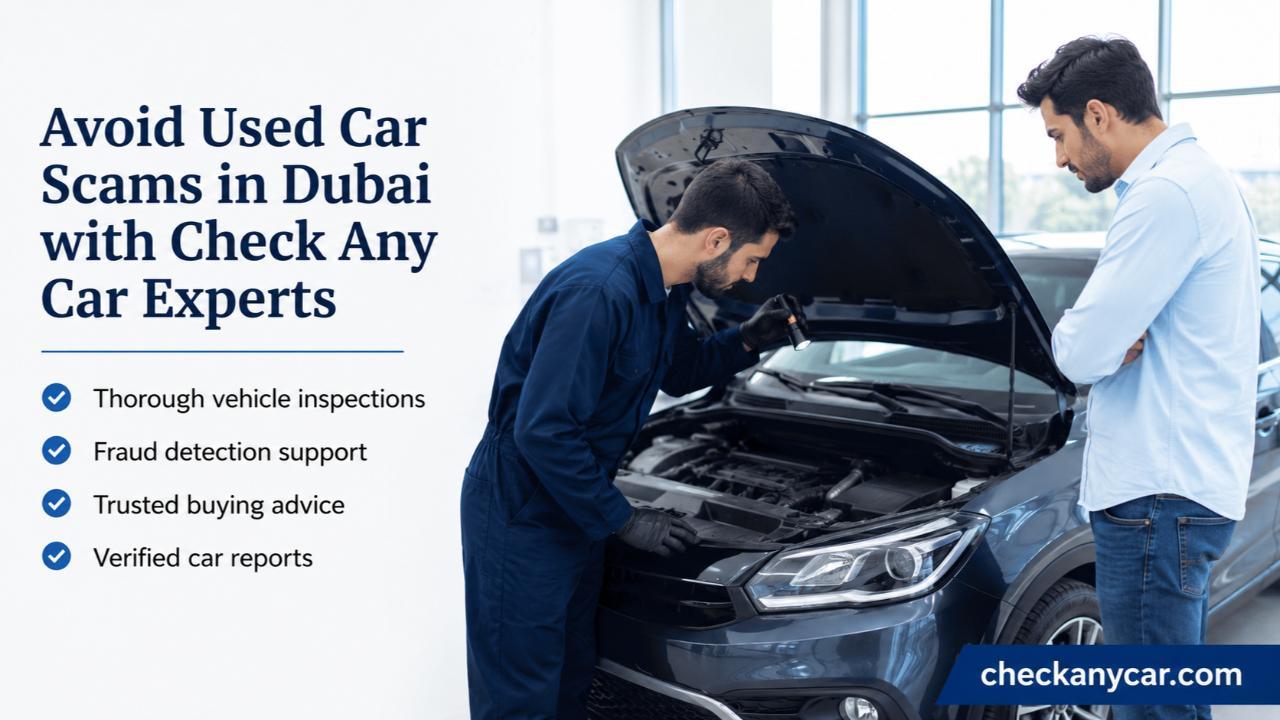
Note: Check Any Car provides comprehensive protection against Used Car Scams in Dubai by delivering thorough vehicle verification services. Our expert mechanics inspect hidden accident damage, verify odometer authenticity, and check official registration history. Avoid costly financial traps and ensure complete peace of mind before making your next automobile investment.
Common Types of Used Car Scams You Must Watch Out For
Understanding how dishonest sellers operate helps you spot trouble before it catches you off guard. Here are some of the most frequent schemes happening in today's pre-owned market:
-
Odometer Rollback Traps: Shady sellers use digital tools or manual tampering to lower the mileage reading on the dashboard. A car showing 50,000 miles might actually have driven over 150,000 miles. You end up paying top dollar for a heavily worn vehicle that will soon need massive mechanical repairs. Look for unusual wear on the steering wheel, pedals, and driver seat cushion that does not match low mileage claims.
-
Title Washing Schemes: When a car gets severely damaged in a flood, fire, or crash, insurance companies classify it as a total loss or salvage. Fraudulent sellers shift the paperwork across state lines or alter official records to erase these negative flags. They sell the damaged car to an unsuspecting buyer as clean, hiding structural integrity problems or electrical rot beneath fresh paint.
-
Fake Online Listings and Deposit Fraud: Scammers post gorgeous photos of cars they do not own on popular online classified sites at prices well below market value. When you contact them, they claim to be out of town or away on military deployment. They ask for a refundable deposit or shipping fee before letting you see the vehicle. Once you send the funds, the listing vanishes and the seller cuts off all communication.
-
Cloned Vehicle Identification Numbers: Criminals steal the Vehicle Identification Number (VIN) from a legally registered car of the same make and model, then attach that duplicate number onto a stolen or salvage vehicle. This makes the stolen car look completely legitimate on paper, leaving you at risk of losing the car to law enforcement without compensation.
-
Curbstoning Practice: Unlicensed dealers act as private individual sellers to flip defective or salvaged cars without following business regulations or consumer protection laws. They pretend to be selling their personal family car, but if you check their phone number online, you might discover they have listed dozens of different vehicles over the past few months.
Smart Steps to Shield Yourself From Used Car Scams
Protecting yourself requires adopting a methodical mindset every time you consider buying a pre-owned vehicle. Never let emotional excitement over a shiny paint job make you overlook practical steps. Staying disciplined throughout the inspection and purchasing process keeps scammers far away from your savings.
Start by insisting on a proper test drive in varied conditions, including city traffic and open highway speeds. Listen for strange noises, test every button, turn on the air conditioner, and feel how the brakes respond. Bring a trusted friend or knowledgeable family member along whenever you go to meet a seller. Having an extra set of eyes helps spot irregularities you might miss, and meeting in broad daylight at public locations ensures your personal safety during negotiations.
Always schedule a professional pre-purchase evaluation with an independent mechanic before committing to buy. A qualified mechanic can put the car up on a lift to inspect for frame damage, hidden rust, fluid leaks, or signs of recent structural repairs that regular buyers cannot see. If a seller refuses to let an independent mechanic inspect the car, treat that refusal as an immediate deal-breaker and walk away.
Additionally, match the Vehicle Identification Number stamped on the car chassis directly against every official document, including the title, service receipts, and registration cards. Check for inconsistencies in names, dates, and recorded mileages across different service records. Taking a few quiet hours to review paper records carefully will save you from months of legal and financial headaches later on.
Conclusion
Navigating the pre-owned vehicle marketplace does not have to feel overwhelming when you know what to expect and take sensible safety steps. By recognizing the red flags, refusing to rush into suspicious offers, and verifying paperwork carefully, you can comfortably find a dependable vehicle that fits your budget without becoming another victim of deceptive sellers.
Whenever you want complete confidence in your next purchase, partnering with experts makes all the difference. That is where Check Any Car comes in to give you full clarity on vehicle history, mechanical condition, and documentation before you hand over any payment. With the right awareness and trustworthy tools on your side, you can shop with true peace of mind and drive away happy.

 English
 Arabic
 Spanish
 Portuguese
 Deutsch
 Turkish
 Dutch
Dutch
 Italiano
 Russian
 Romaian
 Portuguese (Brazil)
 Greek
Greek