Running a gym involves more than just equipment and trainers. Owners handle memberships, class schedules, payments, and communication all at once. Doing this manually or through outdated systems creates friction for both staff and members. A gym management app changes this by bringing everything into one place.
This article looks at how these apps affect daily gym operations. We will also explore what members experience differently when a gym adopts this kind of technology.
The Daily Reality of Running a Gym
Gym owners deal with constant moving parts. Members come and go throughout the day. Classes need scheduling. Equipment needs maintenance tracking. Staff need shift management. Payments need processing.
Without a central system, these tasks pile up. Front desk staff might juggle paper sign-in sheets. Trainers might track class attendance on clipboards. Payment reminders might get sent manually through emails or calls.
This creates room for errors. A member might get double-booked into two classes. A payment might get missed entirely. Small mistakes add up and affect both efficiency and member trust over time.
A gym management app addresses these issues by connecting every part of daily operations. Staff and members interact with the same system, reducing confusion and manual work.
What Members Experience Differently
Simplified Class Booking
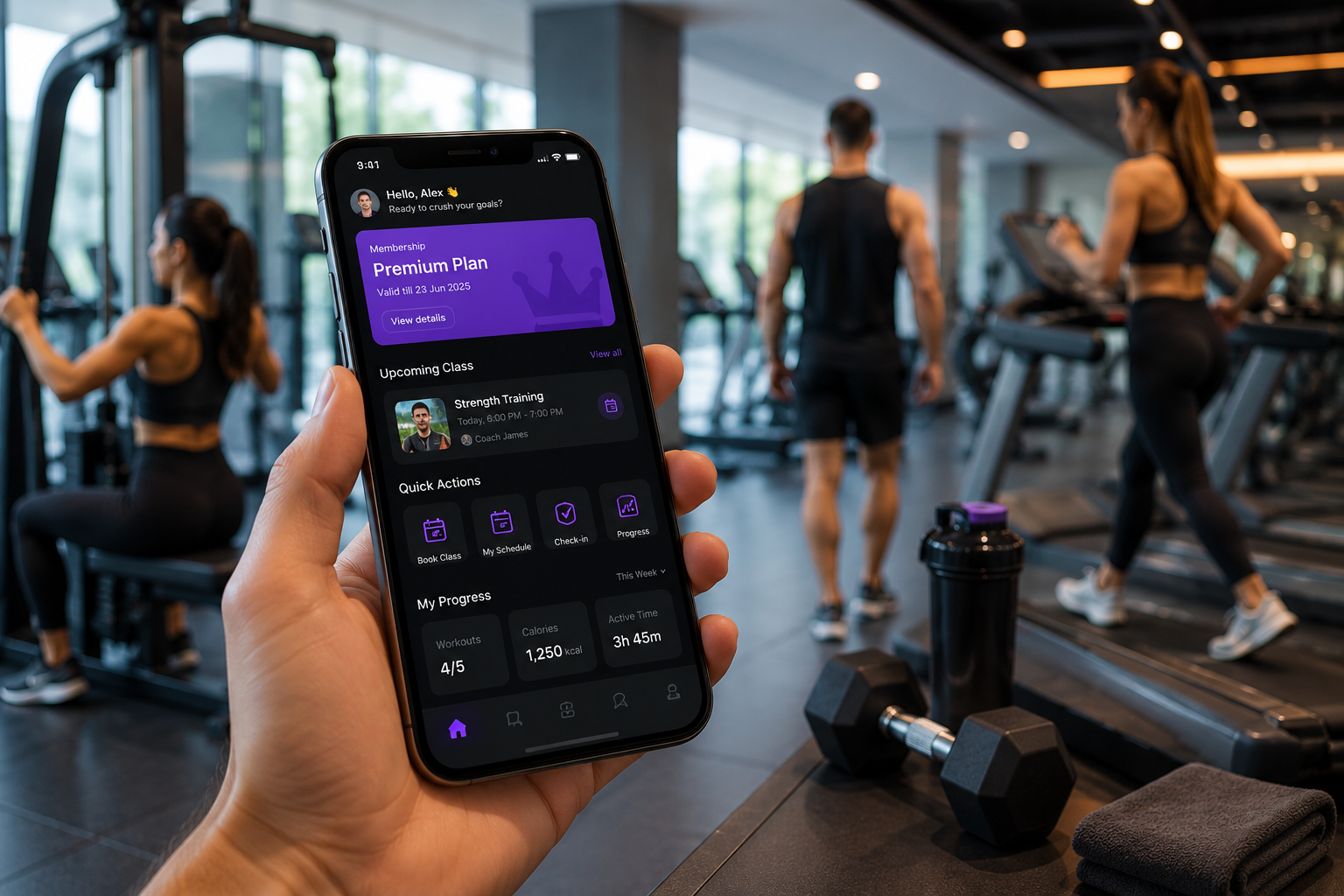
Members no longer need to call the front desk or wait in line to book a class. With a gym management app, they can browse the schedule and reserve a spot from their phone.
This convenience matters. Members are more likely to stick with a fitness routine when booking takes seconds rather than minutes. Fewer barriers mean better consistency.
Real-Time Schedule Updates
Class cancellations and time changes happen. Without an app, members might show up to a class that no longer exists. A connected system sends instant notifications when schedules change.
This reduces frustration and wasted trips. Members stay informed without needing to check a physical board or call ahead.
Easy Access to Membership Details
Members often wonder about their remaining sessions, billing dates, or contract details. A gym management app puts this information directly in their hands. There is no need to ask staff or dig through old emails.
Streamlined Check-In Process
Long lines at the front desk frustrate members, especially during peak hours. Many apps allow digital check-in through a phone scan or code. This speeds up entry and reduces bottlenecks.
Progress Tracking
Some gym apps include features for tracking workouts, attendance, or fitness goals. Members can see their progress over time, which helps keep motivation high. This turns the app into more than just a scheduling tool.
How Staff Benefit From Better Operations
Reduced Administrative Work
Front desk staff spend less time on repetitive tasks like manual sign-ins or answering the same scheduling questions. This frees up time to focus on member interactions instead of paperwork.
Automated Payment Processing
Chasing down late payments takes time and can feel awkward for staff. A gym management app can automate billing and send reminders without staff needing to get involved directly.
Better Class Capacity Management
Trainers and staff can see exactly how many members are booked into each class. This helps avoid overcrowding and ensures each session runs smoothly, with the right amount of equipment and space available.
Simplified Staff Scheduling
Just as members book classes, staff shifts can also be managed through the same system. This reduces scheduling conflicts and makes it easier to cover last-minute absences.
Centralized Communication
Instead of relying on group texts or scattered emails, staff can send updates directly through the app. This keeps announcements organized and ensures members actually see important information.
Common Features Found in Gym Management Apps
Most gym management apps share a core set of features, though the exact tools vary by provider. Understanding these features helps clarify what the technology actually does day to day.
Class scheduling and booking sits at the center of most apps. Members can view upcoming classes, see available spots, and reserve their place instantly.
Membership and billing management handles recurring payments, contract details, and renewal dates. This reduces manual tracking for both staff and members.
Check-in systems speed up entry, often through QR codes or membership scans. This reduces front desk congestion during busy hours.
Communication tools allow gyms to send announcements, class reminders, or promotional updates directly to members through push notifications.
Reporting and analytics give gym owners insight into attendance trends, revenue, and class popularity. This data helps guide future decisions about scheduling and staffing.
Why Member Retention Often Improves
Member retention is one of the biggest challenges gyms face. People often cancel memberships not because they dislike the gym itself, but because of small frustrations that build up over time.
A gym management app removes many of these friction points. Booking becomes easier. Communication becomes clearer. Members feel more in control of their own schedules and progress.
When members can track their own attendance and goals, they often stay more engaged. Seeing consistent progress, even in small increments, can be a strong motivator to continue their membership.
Staff also play a role here. With less time spent on administrative tasks, they can focus more on building relationships with members. This personal connection often matters just as much as convenience.
Considerations Before Choosing an App
Not every gym management app fits every business. Gym owners should think through a few factors before adopting new technology.
Size and type of gym matters. A small boutique studio may need different features than a large multi-location fitness chain. Some apps specialize in specific gym formats, like yoga studios or CrossFit boxes.
Integration with existing tools is worth checking. Many gyms already use payment processors or marketing tools. A good app should work alongside these systems rather than requiring a complete overhaul.
Ease of use for both staff and members should be a priority. A complicated interface can create more frustration than it solves, even if the features themselves are useful.
Data security also deserves attention. Since these apps handle payment information and personal data, gyms need to understand how that information is protected.
The Bigger Picture for Fitness Businesses
Fitness is a competitive industry. Members have plenty of options, and small inconveniences can push them toward a competitor. Operational efficiency, while often invisible to members, shapes their overall experience in subtle ways.
A gym management app does not replace good coaching or a welcoming atmosphere. What it does is remove friction from the parts of the experience that often go unnoticed until something goes wrong, like a double-booked class or a billing error.
As fitness technology continues to develop, these apps are likely to include more personalized features, from tailored workout suggestions to deeper progress tracking. For now, their core value remains the same. They simplify daily operations while giving members more control over their own fitness journey.
Gyms that adopt this kind of technology are not necessarily choosing convenience over community. In many cases, reducing administrative friction gives staff more time to build the relationships that keep members coming back.




 English
 Arabic
 French
 Spanish
 Portuguese
 Deutsch
 Turkish
 Dutch
Dutch
 Italiano
 Romaian
 Portuguese (Brazil)
 Greek
Greek