


Dubai Tour Packages for Discovering the Emirate is Early Oil Era and Economic Transformation
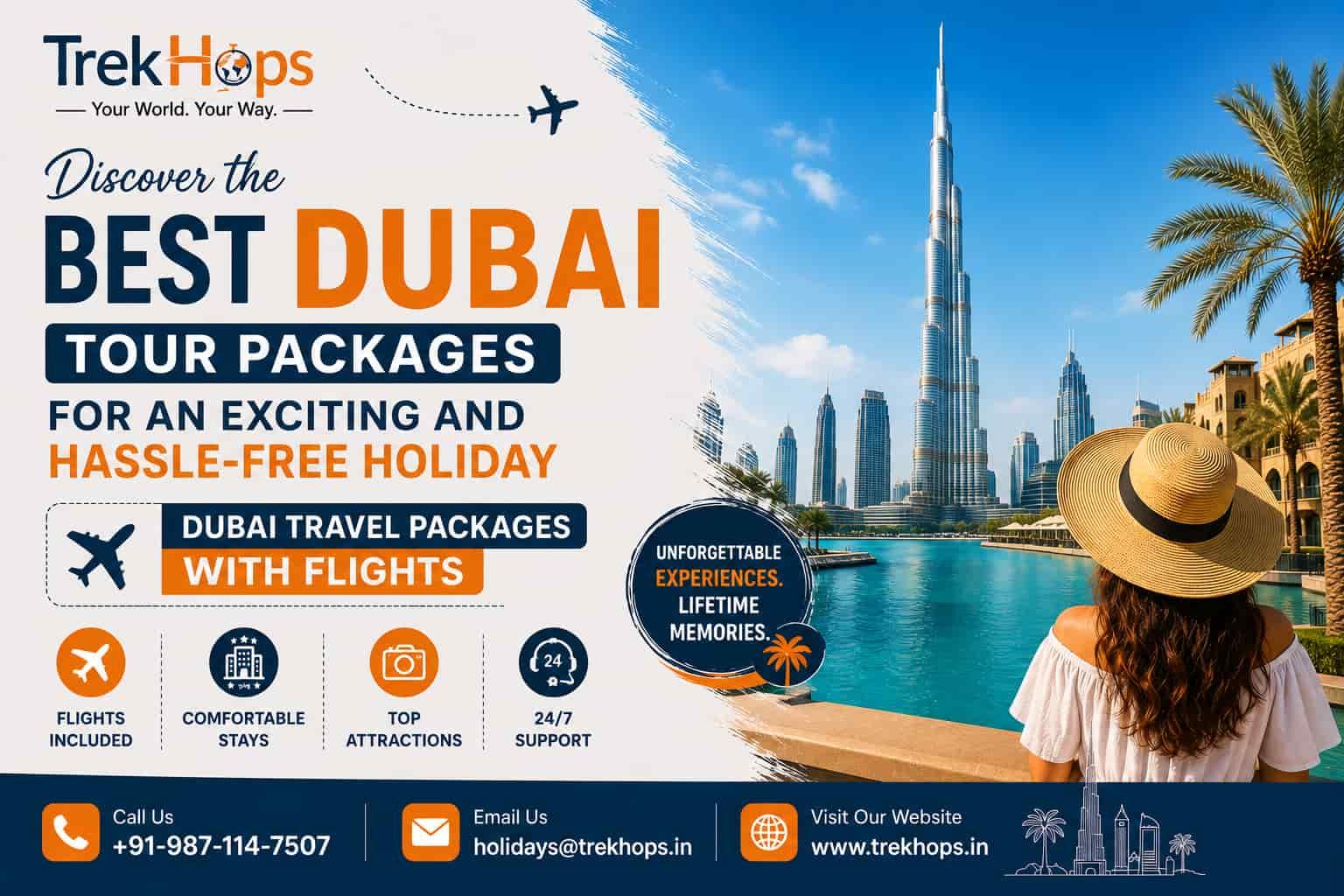
Dubai's modern identity is often associated with futuristic skyscrapers, luxury hotels, global business districts, and ambitious infrastructure. Yet the city's transformation into an international economic center has relatively recent roots. Before oil revenues began reshaping the emirate's economy, Dubai depended heavily on maritime trade, pearl diving, fishing, and regional commerce.
The discovery of oil did not simply change Dubai's economy overnight. Instead, oil revenues helped provide capital for infrastructure and development, while the emirate gradually diversified into trade, transportation, real estate, tourism, finance, and other industries. For travelers interested in understanding this remarkable transformation, Dubai tour packages can be planned around historical neighborhoods, museums, heritage sites, and modern landmarks that illustrate different stages of the city's development.
Dubai Before the Oil Era
Before oil became economically important, Dubai was a relatively small coastal trading community. Its location along the Arabian Gulf gave it access to maritime routes connecting merchants and communities across the region.
Dubai Creek played an important role in this economy. Traditional boats transported goods, while merchants traded products with neighboring regions and international markets.
Pearl diving was also significant. Divers ventured into Gulf waters during the pearl-diving season, while fishermen and boatbuilders supported the wider maritime economy.
These activities created commercial networks that would later contribute to Dubai's ability to develop as a trading center.
The Discovery of Oil in Dubai
Oil was discovered in Dubai in the 1960s, marking an important turning point in the emirate's economic history.
Commercial oil production began later in the decade, and revenues provided additional resources for developing infrastructure and public facilities.
However, Dubai's story differs from that of some other oil-producing regions because its petroleum reserves were comparatively limited. This encouraged the emirate to look beyond oil and build other sources of economic activity.
The oil era therefore became an important foundation for development rather than the final destination of Dubai's economic strategy.
How Oil Revenues Changed Dubai
Oil income provided resources for major infrastructure projects at a time when Dubai was beginning to expand.
Investment in roads, electricity, water systems, telecommunications, ports, and other public infrastructure helped create the foundation for future economic growth.
These improvements also made Dubai more attractive to businesses, traders, residents, and international investors.
Infrastructure as the Foundation for Growth
Economic transformation requires more than financial resources. Businesses need reliable transportation, utilities, communications, and commercial facilities.
Oil revenues helped accelerate the development of these systems, allowing Dubai to move beyond its earlier dependence on traditional maritime industries.
The infrastructure created during this period would later support the emirate's growing logistics, tourism, real estate, and commercial sectors.
Dubai Creek and the Continuity of Trade
Although oil changed the scale and direction of Dubai's economy, trade remained important.
Dubai Creek continued to function as a commercial and maritime center, while the city expanded its relationships with regional and international markets.
Traditional souks in areas such as Deira and Bur Dubai provide visitors with a connection to this earlier trading environment.
Walking through these neighborhoods can help travelers understand that Dubai's economic transformation did not begin from nothing. The city already had a commercial culture and international outlook before oil revenues accelerated development.
Jebel Ali and the Expansion of Global Trade
One of the most important steps in Dubai's diversification was the development of modern port and logistics infrastructure.
Jebel Ali became a major maritime gateway, helping Dubai strengthen its position as a regional and international trade center.
The port supported the movement of goods while encouraging the development of warehouses, industrial facilities, logistics companies, and commercial operations nearby.
This strategy helped Dubai shift from relying primarily on natural resources toward building an economy based on connectivity and international commerce.
Travelers exploring Dubai today can see the results of this strategy in the city's extensive transportation and logistics infrastructure.
From Oil to Economic Diversification
Dubai's long-term economic strategy increasingly focused on industries beyond petroleum.
Several sectors became important to the emirate's development, including:
- International trade
- Logistics
- Aviation
- Tourism
- Real estate
- Financial services
- Retail
- Hospitality
- Technology
- Business services
Diversification helped reduce dependence on oil and created an economy connected to global markets.
This approach is one of the most important reasons Dubai developed differently from a traditional oil-dependent economy.
Dubai International Airport and Global Connectivity
Aviation became another major part of Dubai's economic transformation.
Dubai International Airport expanded significantly as the emirate's population, tourism sector, and international business activity grew.
The airport's global connectivity helped businesses access international markets while making Dubai increasingly attractive to tourists and multinational companies.
For travelers, the airport is also a practical example of how infrastructure investment contributed to the city's transformation from a regional trading community into a globally connected destination.
Free Zones and International Business
Dubai's free zones provided another mechanism for attracting international businesses.
These specialized business environments offered infrastructure and regulatory frameworks designed to facilitate commercial activity and international investment.
Different free zones developed around industries including logistics, technology, media, finance, manufacturing, and other sectors.
The growth of these business districts helped establish Dubai as a regional headquarters location for companies operating across the Middle East, Africa, and South Asia.
Tourism as a Major Part of Dubai’s Transformation
Tourism eventually became one of the most visible elements of Dubai's diversified economy.
Major investments in hotels, shopping centers, entertainment venues, cultural attractions, beaches, and architectural landmarks helped create a destination capable of attracting visitors from around the world.
The development of Burj Khalifa, Palm Jumeirah, Dubai Mall, Museum of the Future, and other landmarks reflects a later stage of Dubai's economic transformation.
These attractions are not simply tourist sites. They also represent the city's broader strategy of building an internationally recognizable brand around business, hospitality, entertainment, and innovation.
Understanding the Transformation Through Old and New Dubai
One of the best ways to appreciate Dubai's economic development is to compare its historic and modern districts.
In Al Fahidi Historical Neighbourhood, travelers can encounter traditional architecture, narrow lanes, heritage buildings, and cultural spaces.
In Downtown Dubai, the environment changes dramatically. Glass towers, large commercial developments, luxury hotels, and major attractions represent the city's modern economy.
Seeing both areas during the same trip provides a visual timeline of Dubai's transformation.
Oil and Dubai’s Water and Infrastructure Development
Economic growth also required reliable access to essential resources.
Dubai's hot desert climate and limited natural freshwater resources created significant challenges as the population and urban environment expanded.
Water desalination became an important part of supplying the growing city.
Travelers interested in this aspect of Dubai's development can explore Affordable Dubai Holiday Packages- Exploring Dubai’s Rise as a Global Logistics and Trade Hub alongside infrastructure-focused topics to understand how transportation, trade, water systems, and economic development have evolved together.
This broader perspective shows that Dubai's transformation involved interconnected infrastructure rather than a single economic factor.
Museums and Heritage Experiences
Travelers interested in the early oil era can include museums and heritage attractions in their itinerary.
Historical exhibitions may provide information about:
- Dubai before oil
- Traditional maritime industries
- Pearl diving
- Early commerce
- Oil exploration
- Infrastructure development
- Traditional Emirati life
- Economic diversification
These experiences can help put modern Dubai into historical context.
Rather than viewing the city only through its newest attractions, travelers can explore how earlier generations lived and how economic changes gradually transformed the emirate.
Planning a History-Focused Dubai Itinerary
A history-focused itinerary does not need to exclude Dubai's famous modern attractions.
Explore Old Dubai First
Begin with Al Fahidi, Dubai Creek, and nearby traditional markets to understand the city's early commercial identity.
Visit Modern Dubai
Continue with Downtown Dubai, Burj Khalifa, Dubai Mall, and other major developments to observe the later stages of urban transformation.
Connect the Two Experiences
Think of the itinerary as a timeline. Old Dubai demonstrates the foundations of commerce and community, while modern districts illustrate the results of decades of infrastructure investment and economic diversification.
Planning Your Dubai Trip From Vadodara
Travelers from Gujarat can organize their Dubai holiday according to their preferred departure city, budget, travel dates, accommodation, and sightseeing priorities.
For travelers beginning their journey from Vadodara, Dubai travel packages from Vadodara can be considered when planning a structured holiday that combines transportation, accommodation, sightseeing, and cultural experiences.
When comparing options, travelers should examine the complete itinerary rather than focusing only on the advertised package price. Hotel location, airport transfers, sightseeing inclusions, meals, entrance tickets, and transportation can all influence the overall value.
Finding the Right Package for a Historical Dubai Experience
Travelers who want to explore both Dubai's history and modern development should choose an itinerary with enough flexibility.
How to Find Affordable Dubai Holiday Packages Without Compromising on Experiences can be a useful topic to consider when comparing different travel options.
A lower-cost itinerary does not necessarily mean eliminating cultural or historical experiences. Visitors can combine heritage neighborhoods, public spaces, traditional markets, and affordable transportation with selected paid attractions.
This approach can create a more balanced holiday while allowing travelers to explore multiple sides of Dubai.
Best Time to Explore Dubai’s History
The cooler months are generally more comfortable for exploring heritage neighborhoods and walking through traditional markets.
During hotter periods, visitors can schedule outdoor heritage activities in the morning or evening and use indoor museums and cultural attractions during the warmer part of the day.
Travelers should also check attraction schedules before visiting, as museum hours and cultural programs can vary.
Final Thoughts
Dubai's early oil era represents an important chapter in the emirate's transformation, but it is only one part of a much larger economic story. Oil revenues helped accelerate infrastructure development, while Dubai's existing trading culture and strategic location supported further diversification.
Over time, investments in ports, airports, roads, free zones, tourism, real estate, finance, and technology helped create an economy that extended far beyond petroleum.
For travelers, understanding this history can make a Dubai holiday more meaningful. Dubai tour packages that combine Old Dubai, heritage attractions, museums, traditional markets, and modern landmarks allow visitors to see the progression from a maritime trading community to a globally connected city.
The contrast between traditional neighborhoods and futuristic developments is ultimately what makes Dubai's economic story so distinctive. It is a story not simply of oil wealth, but of infrastructure, trade, diversification, entrepreneurship, and long-term urban transformation.

 English
 Arabic
 French
 Spanish
 Deutsch
 Turkish
 Dutch
Dutch
 Italiano
 Russian
 Romaian
 Portuguese (Brazil)
 Greek
Greek