


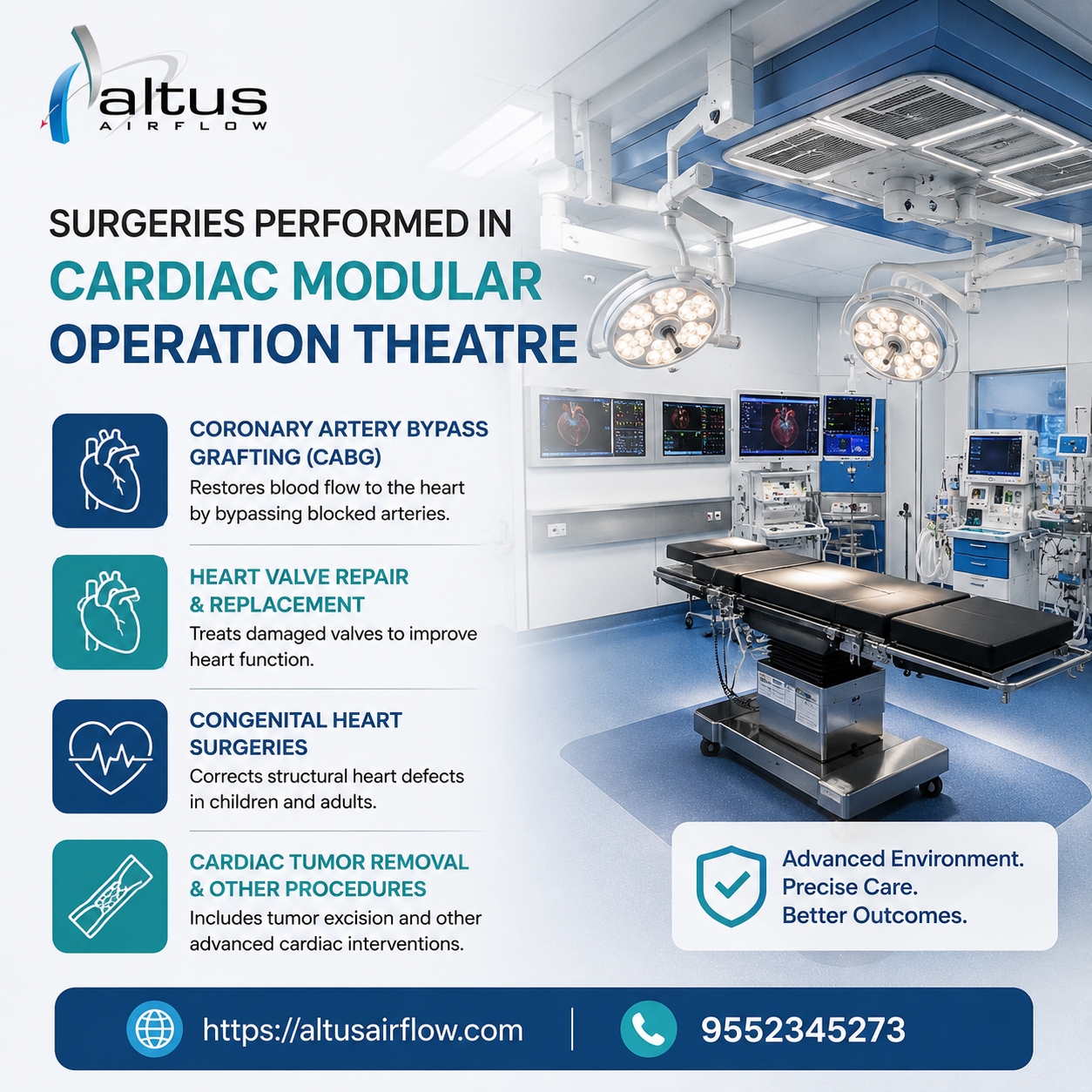
What Surgeries Can Be Performed in a Cardiac Modular Operation Theatre?
Introduction
A Cardiac Modular Operation Theatre is a specially designed surgical environment that supports complex cardiovascular procedures requiring controlled airflow, strict infection prevention, advanced medical infrastructure, and efficient surgical workflows. These theatres are planned to accommodate sophisticated cardiac equipment, anesthesia systems, surgical lighting, medical gases, monitoring devices, and specialized operating tables. Altus Airflow develops modular healthcare environments with a focus on hygienic surfaces, environmental control, and coordinated infrastructure for demanding cardiac procedures.
Cardiac surgery requires precision, reliable equipment, and a carefully controlled operating environment. Depending on the hospital's clinical capabilities and the expertise of its cardiac surgical team, a dedicated cardiac theatre can support procedures ranging from coronary artery bypass surgery and valve repair to congenital heart surgery and major vascular interventions. The theatre's design helps surgical teams work efficiently while maintaining appropriate environmental conditions throughout lengthy and complex procedures.
What Is a Cardiac Modular Operation Theatre?
A cardiac modular operation theatre is a purpose-built surgical space designed specifically to support cardiovascular and cardiothoracic procedures. Unlike a conventional operating room, it is planned around the specialized requirements of cardiac surgery.
The theatre typically incorporates controlled ventilation, HEPA filtration, appropriate temperature and humidity management, seamless wall and ceiling surfaces, medical gas systems, electrical infrastructure, surgical lighting, monitoring provisions, and equipment integration.
The modular approach allows different components of the theatre to be coordinated as part of one integrated environment. This can support efficient installation, maintenance, cleaning, and future modifications.
The actual procedures performed depend on the hospital's cardiac department, available equipment, surgeon expertise, patient requirements, and applicable clinical protocols.
1. Coronary Artery Bypass Grafting
Coronary artery bypass grafting, commonly known as CABG, is one of the major procedures performed in cardiac surgery departments.
CABG is used to improve blood flow to the heart when coronary arteries are significantly narrowed or blocked. During the procedure, a surgeon uses a healthy blood vessel from another part of the patient's body to create a bypass around the blocked coronary artery.
The procedure can require specialized anesthesia, cardiac monitoring, surgical equipment, and postoperative support. A properly designed cardiac operating environment provides the infrastructure required for the surgical team to perform this complex procedure efficiently.
2. Heart Valve Repair
Heart valve repair is another important cardiac surgical procedure. It is performed when a heart valve does not function properly because of conditions such as narrowing or leakage.
The objective of valve repair is to restore more effective valve function while preserving the patient's existing valve structure whenever clinically appropriate.
Cardiac valve procedures require careful coordination among surgeons, anesthesiologists, perfusionists, nurses, and technical staff. The operating theatre therefore needs adequate space for monitoring systems, surgical equipment, anesthesia equipment, and other essential devices.
3. Heart Valve Replacement
When a damaged valve cannot be adequately repaired, valve replacement may be considered. A diseased valve can be replaced with a suitable prosthetic valve according to the patient's clinical condition.
Valve replacement surgery can be technically demanding and may require extended operating time. The theatre should therefore provide reliable environmental control and adequate space for surgical and monitoring equipment.
The controlled environment also supports the infection-prevention measures required for major cardiac procedures.
4. Congenital Heart Surgery
Congenital heart surgery addresses structural heart conditions that are present from birth. These procedures can involve children, adolescents, or adults depending on the specific congenital condition.
Examples include surgical correction of certain septal defects and other structural abnormalities. The complexity varies considerably depending on the patient's age, anatomy, and diagnosis.
A cardiac theatre used for congenital procedures may require specialized equipment and appropriate arrangements for pediatric or adult cardiac care.
5. Aortic Surgery
Aortic surgery involves treatment of serious conditions affecting the body's largest artery. Procedures may be performed for conditions such as aneurysms, dissections, or other structural abnormalities.
These surgeries can be highly complex and may require advanced cardiovascular monitoring, blood management, anesthesia support, and specialized surgical equipment.
Because aortic procedures can involve significant clinical risks and prolonged operating times, the theatre environment needs to support efficient teamwork and rapid access to essential equipment.
6. Minimally Invasive Cardiac Surgery
Some cardiac procedures can be performed using minimally invasive approaches rather than traditional open surgical techniques.
Minimally invasive cardiac surgery generally uses smaller incisions and specialized instruments. Depending on the procedure, it may reduce surgical trauma and support recovery, although suitability depends on the patient's condition and the surgeon's assessment.
The operating theatre must accommodate specialized visualization systems, instruments, monitoring equipment, and other technology required for the selected procedure.
7. Thoracic and Cardiothoracic Procedures
Cardiothoracic surgery includes procedures involving the heart, lungs, chest, and related structures. Depending on the hospital's specialization, a cardiac operating theatre may support selected thoracic procedures.
These can include certain lung resections, procedures involving the mediastinum, and other operations requiring advanced thoracic surgical capabilities.
The theatre should be designed to accommodate the equipment and surgical team required for these procedures without compromising workflow.
8. Pacemaker and Cardiac Device-Related Procedures
Some cardiac facilities perform surgical procedures involving implanted cardiac devices. These may include pacemaker-related procedures and other device interventions.
The specific theatre or procedure room required depends on the complexity of the intervention and the hospital's clinical protocols. Equipment may include specialized imaging, monitoring, anesthesia, and device-related systems.
Proper planning helps ensure that the surgical team has sufficient access to the patient and essential equipment throughout the procedure.
9. Emergency Cardiac Surgery
Cardiac operating theatres may also support emergency procedures when patients require immediate surgical intervention.
Emergency cardiac conditions can include acute complications involving coronary arteries, valves, the aorta, or other cardiovascular structures. In such situations, rapid access to the operating theatre and efficient preparation are extremely important.
The theatre layout should support quick movement of patients, surgical staff, anesthesia equipment, monitoring devices, blood products, and emergency equipment.
10. Reoperation and Complex Revision Surgery
Patients who have previously undergone cardiac surgery may sometimes require revision or repeat procedures. These operations can be particularly complex because of previous surgical changes and scar tissue.
A dedicated cardiac surgical environment should provide the space, equipment access, and infrastructure required for the surgical team to manage complicated procedures.
Advanced monitoring and anesthesia support are also important during these cases.
How Does Theatre Design Support Cardiac Surgeries?
A Cardiac Modular Operation Theatre is designed around more than the operating table. Its infrastructure needs to support the complete surgical workflow.
Controlled Airflow
Controlled ventilation and filtration help maintain a clean surgical environment. Air distribution should be designed according to the theatre's intended clinical requirements.
HEPA Filtration
High-efficiency filtration can help reduce airborne particulate contamination when incorporated into an appropriately designed HVAC system.
Temperature and Humidity Control
Stable environmental conditions can support staff comfort, equipment performance, and the controlled operating environment.
Seamless Interior Surfaces
Smooth and easy-to-clean walls, ceilings, and floors can support routine cleaning and infection-control procedures.
Medical Gas Infrastructure
Cardiac procedures may require oxygen, medical air, vacuum, and other medical gases. Properly designed pipeline systems provide access where required.
Electrical and Backup Power
Cardiac surgery relies on multiple electrically powered systems. Appropriate electrical distribution and backup power arrangements are therefore important for operational continuity.
Surgical Lighting
High-quality surgical lighting provides the illumination required for precise procedures while minimizing shadows and glare.
Equipment Integration
The theatre should provide appropriate space and service connections for anesthesia machines, patient monitors, surgical equipment, imaging systems, perfusion equipment, and other devices used by the clinical team.
Why Is Infection Control Important During Cardiac Surgery?
Cardiac procedures are complex and can involve lengthy operating times. Maintaining appropriate infection-control practices is therefore an important part of surgical facility planning.
The theatre environment should support cleaning and disinfection through suitable surfaces, controlled access, appropriate airflow, and effective room zoning.
Doors, walls, ceilings, flooring, ventilation systems, and medical infrastructure should work together rather than being considered separately. This integrated approach can help create a more consistent and manageable surgical environment.
How Does Modular Construction Benefit Cardiac Surgical Facilities?
Modular construction allows important theatre components to be planned and coordinated as an integrated system. Wall panels, ceilings, doors, HVAC systems, lighting, medical gases, electrical services, and other infrastructure can be incorporated according to the facility's requirements.
Another benefit is the ability to plan maintenance and future upgrades more systematically. As cardiac technology develops, hospitals may need to modify equipment layouts or introduce additional systems.
A well-planned modular environment can provide the flexibility needed to accommodate such changes while maintaining the required clinical workflow.
Factors to Consider Before Planning a Cardiac OT
Before developing a cardiac surgical theatre, hospitals should evaluate several factors:
-
Types of cardiac procedures planned
-
Number and size of surgical teams
-
Equipment and technology requirements
-
Patient and staff movement
-
Medical gas requirements
-
HVAC and filtration strategy
-
Electrical and backup power requirements
-
Infection-control requirements
-
Equipment storage and support areas
-
Emergency access and evacuation routes
-
Cleaning and maintenance requirements
-
Future expansion and technology upgrades
Planning these factors at the beginning can help avoid operational difficulties after installation.
Conclusion
A Cardiac Modular Operation Theatre can support a broad range of cardiovascular and cardiothoracic procedures, including coronary artery bypass grafting, valve repair and replacement, congenital heart surgery, aortic surgery, minimally invasive cardiac procedures, and selected emergency and revision surgeries. The exact procedures depend on the hospital's clinical capabilities, surgical expertise, equipment, and patient-care protocols.
The theatre's infrastructure should be planned around the needs of cardiac surgery, with appropriate HVAC, filtration, medical gases, electrical systems, lighting, seamless surfaces, and equipment integration. Altus Airflow provides modular healthcare infrastructure designed around these technical and operational considerations. By combining appropriate environmental control with practical surgical planning, Altus Airflow helps create efficient and hygienic spaces suitable for demanding cardiac care.
Frequently Asked Questions
1. What surgeries can be performed in a Cardiac Modular Operation Theatre?
A Cardiac Modular Operation Theatre can support CABG, valve repair and replacement, congenital heart surgery, aortic surgery, minimally invasive cardiac procedures, and other specialized cardiac operations depending on hospital capabilities.
2. Can CABG surgery be performed in a cardiac modular OT?
Yes. CABG is one of the major procedures that can be performed in a dedicated cardiac operating theatre.
3. Are valve replacement surgeries performed in cardiac OTs?
Yes. Cardiac operating theatres can be designed to support both valve repair and valve replacement procedures.
4. Can congenital heart surgeries be performed there?
Yes. Dedicated cardiac theatres can support selected congenital heart procedures for pediatric and adult patients.
5. Is a cardiac modular OT suitable for emergency surgery?
Yes. When appropriately designed, it can support emergency cardiac procedures requiring rapid access and specialized infrastructure.
Read Our Previous Blog --------------->What type of doors are installed in a Modular Cardiac Operation Theatre?

 English
 French
 Spanish
 Portuguese
 Deutsch
 Turkish
 Dutch
Dutch
 Italiano
 Russian
 Romaian
 Portuguese (Brazil)
 Greek
Greek