


How Gymnastics Bar Training Can Complement Overall Fitness
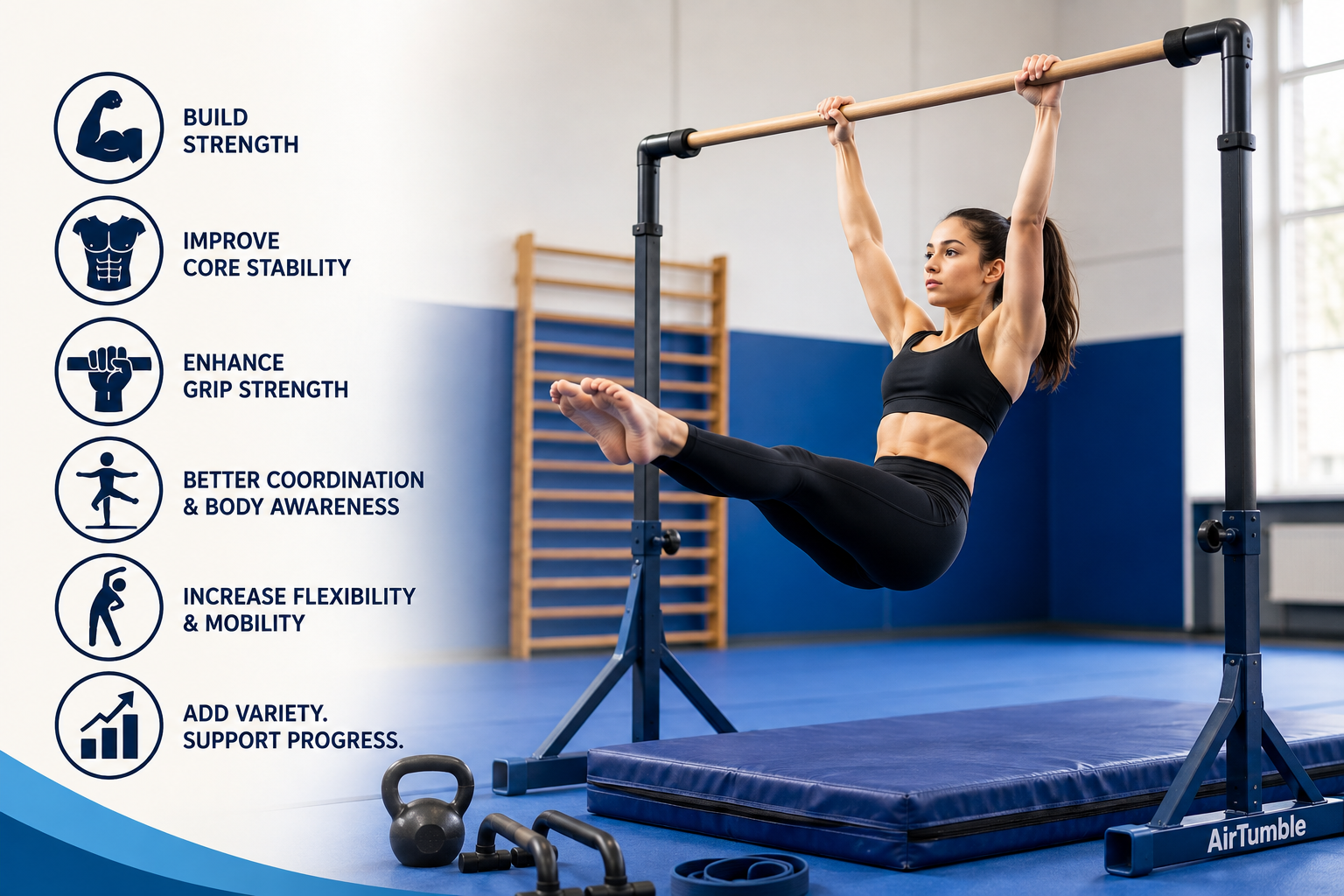
Fitness routines often focus on familiar activities such as running, cycling, weight training, or bodyweight exercises. However, adding skill-based movements can introduce new challenges that improve strength, coordination, flexibility, and body awareness. Gymnastics equipment can be particularly useful because it encourages controlled movement while engaging several muscle groups at the same time.
A Gymnastics Bar can be incorporated into a broader fitness routine for people who want to develop functional strength and improve movement quality. With appropriate instruction and suitable equipment, bar-based exercises can complement traditional workouts without replacing other important forms of physical activity.
Building Upper-Body Strength
One of the most obvious benefits of bar training is its ability to challenge the upper body. Exercises involving hanging, pulling, holding, and controlled movement can engage the shoulders, arms, chest, and back.
Unlike some isolated strength exercises, bar movements often require multiple muscles to work together. This can make training more dynamic while encouraging better control of the body.
Beginners can start with simple supported hangs or short-duration holds, while experienced athletes may progress toward more demanding movements. The level of difficulty should always be appropriate for the individual's experience, strength, and equipment setup.
Developing Core Stability
A strong core contributes to many everyday and athletic movements. It helps the body maintain stability while the arms and legs move, making core conditioning an important part of general fitness.
Bar exercises can naturally challenge the abdominal and lower-back muscles because the body often needs to remain controlled while suspended or moving around the equipment. Static holds, knee raises, and other suitable exercises can introduce additional core work into a fitness routine.
The objective is not simply to perform more repetitions. Maintaining controlled movement and proper positioning is generally more valuable than rushing through an exercise.
Improving Grip Strength
Grip strength is sometimes overlooked in general fitness programs. Yet it can support activities ranging from lifting weights to carrying objects and participating in recreational sports.
Regular bar exercises can place sustained demands on the hands and forearms. Beginners can gradually build tolerance through short, controlled sessions rather than attempting prolonged hangs immediately.
Grip training can also complement resistance exercises. Individuals who already perform rows, deadlifts, or other pulling movements may find that additional grip-focused work helps create a more balanced approach to strength development.
Supporting Coordination and Body Awareness
Fitness is not only about how much weight a person can lift or how quickly they can move. Coordination and body awareness are equally important components of physical performance.
Gymnastics-based movements require attention to body position, balance, timing, and control. Working with a Gymnastics Bar can therefore provide a different type of challenge from conventional gym exercises.
For younger athletes, these skills can support general movement development. Adults can also benefit from activities that require concentration and controlled positioning, particularly when they want to make their workouts more varied.
Enhancing Flexibility and Mobility
Strength and flexibility work well together. Strong muscles can perform effectively, but adequate mobility is also needed to achieve comfortable and efficient movement.
Bar-based training can be paired with stretching and mobility exercises. For example, controlled hanging may be incorporated into a wider routine that includes shoulder mobility, hip stretches, hamstring work, and dynamic warm-ups.
However, flexibility should be developed progressively. Individuals should avoid forcing a range of motion simply to achieve a particular position. A gradual approach can help maintain better control and reduce unnecessary strain.
Adding Variety to Fitness Programs
Doing the same workout repeatedly can become monotonous. Introducing new movement patterns can keep training more engaging while exposing the body to different physical challenges.
A Gymnastics Bar can be used alongside activities such as bodyweight training, running, resistance exercises, stretching, and conditioning. A weekly program might include strength sessions on some days, cardiovascular training on others, and skill-based movement practice as an additional component.
This variety can make fitness more comprehensive. It also allows individuals to focus on different physical qualities instead of repeatedly training the same muscles in the same way.
Encouraging Progressive Training
Effective fitness programs usually involve some form of progression. This does not necessarily mean adding heavier weights. Progress can involve increasing repetitions, improving technique, extending hold duration, or learning a more challenging variation.
Bar training offers several opportunities for gradual progression. Someone beginning with basic holds can eventually work toward controlled pulling movements or more advanced exercises as their ability develops.
The key is to progress according to individual readiness. Advanced skills should not be attempted simply because they appear impressive. Appropriate supervision and equipment are especially important when exercises involve elevated positions or significant landing forces.
Creating a More Complete Home Workout
Home fitness equipment is often selected according to available space and intended use. A bar can provide opportunities for upper-body, core, grip, and coordination exercises without requiring a large collection of separate machines.
AirTumble, for example, offers gymnastics equipment intended to support different types of training environments. When selecting equipment, users should consider construction, stability, dimensions, weight limits, installation requirements, and the manufacturer's safety guidance.
A suitable training surface should also be considered. Equipment used for gymnastics movements should be paired with appropriate protective surfaces when exercises involve jumping, dismounting, or potential falls.
Pairing Bar Training With Suitable Mats
A balanced setup involves more than choosing the main piece of equipment. The surrounding training surface can also influence comfort and safety.
A previous guide, “7 Differences Between Gymnastics Mats and Crash Mats,” explains how these two types of mats differ in purpose, thickness, firmness, impact absorption, portability, and intended training situations. The article notes that standard training mats are generally useful for floor exercises and lower-impact activities, while crash mats are designed for situations involving greater landing forces.
Readers planning a home training area can use that guide as a useful reference when deciding what type of mat may be appropriate for their setup. Selecting equipment according to the specific movement being practiced is more useful than assuming that every mat provides the same level of protection.
Maintaining Safe Training Habits
Regardless of fitness level, safety should remain a priority. Equipment should be checked regularly for signs of wear, instability, loose components, or damage. The training area should also provide sufficient space for the movements being performed.
Warm-ups can prepare the body for activity, while gradual progression can help prevent unnecessary overload. Beginners may benefit from working with a qualified coach or instructor to learn correct technique before attempting more advanced movements.
Most importantly, fitness equipment should be used according to its intended purpose and the manufacturer's instructions.
Final Thoughts
Bar-based exercises can provide a valuable addition to a well-rounded fitness program. They can challenge upper-body strength, core stability, grip, coordination, mobility, and body awareness while introducing greater variety into regular workouts.
The best results come from treating this type of training as one component of overall fitness rather than a complete replacement for cardiovascular exercise, strength training, flexibility work, and recovery. With sensible progression, appropriate equipment, and proper safety practices, bar training can become a useful part of a balanced exercise routine.
FAQs
1. Is bar training suitable for beginners?
Yes. Beginners can start with basic movements such as supported holds and short hangs before gradually progressing to more demanding exercises.
2. What muscles can bar exercises work?
Depending on the movement, bar exercises can engage the shoulders, arms, back, abdominal muscles, forearms, and other stabilizing muscles.
3. Can bar training replace traditional strength training?
Not necessarily. It can complement conventional strength exercises, but a complete fitness program should ideally include different forms of strength, cardiovascular, mobility, and conditioning work.
4. Is a mat necessary when training with gymnastics equipment?
The appropriate surface depends on the exercise and equipment. Movements involving jumps, dismounts, or potential falls may require suitable landing protection.
5. How often should beginners practice bar exercises?
Frequency depends on fitness level, goals, recovery, and the intensity of the exercises. Beginners should generally allow adequate recovery and increase training demands gradually.

 English
 French
 Spanish
 Portuguese
 Deutsch
 Turkish
 Dutch
Dutch
 Italiano
 Russian
 Romaian
 Portuguese (Brazil)
 Greek
Greek