


Thailand Juice Consumption Shifts Toward Lower Sugar, Functional Benefits, and Convenient Formats
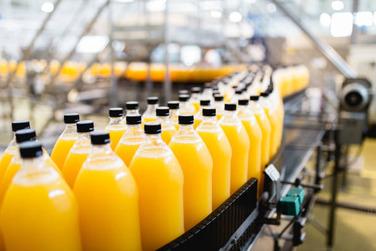
Thailand's juice industry is evolving as consumers become more conscious of sugar intake, product functionality, convenience, and value. Juice remains an important part of the country's beverage landscape, but manufacturers are increasingly adapting formulations and positioning to compete with other ready-to-drink categories.
According to the supplied analysis from Vyansa Intelligence, the Thailand juice market was valued at USD 745 million in 2025 and is projected to reach USD 875 million by 2032, representing a 2.32% CAGR from 2026 to 2032. The market is entering a period in which value growth is increasingly dependent on product innovation, health-oriented positioning, and changing retail behavior rather than simply higher consumption volumes.
Lower-Sugar Formulations Reshape Juice Products
One of the most significant changes affecting Thailand's juice industry is the country's sugar excise policy. The supplied analysis identifies the final phase of Thailand's tiered sugar-tax structure, effective from April 2025, as a major influence on product formulation. The policy applies to fruit and vegetable juices and encourages manufacturers to reduce sugar content to limit tax exposure.
Thailand's Excise Department also provides official rules for determining sugar levels in beverages for taxation purposes, with tax rates linked to sugar concentration.
For juice manufacturers, this means formulation is no longer simply a matter of flavor preference. Sugar content can influence production economics, pricing, product positioning, and consumer appeal simultaneously.
Juice Drinks Remain the Volume Leader
Juice drinks containing up to 24% juice account for approximately 60% of Thailand's juice industry, according to the supplied report. Their relatively accessible pricing and broad availability make them particularly important for mass-market consumption.
These beverages compete directly with other affordable ready-to-drink products, including tea and energy drinks. Consequently, manufacturers need to provide consumers with reasons to choose juice beyond basic refreshment.
Flavor variety, convenient packaging, affordability, and added functional benefits can help juice drinks maintain relevance in a highly competitive beverage environment.
The segment also provides room for innovation through products incorporating fruit pieces, jelly textures, blended ingredients, and new flavor combinations.
Functional Benefits Create Premium Opportunities
Thai consumers are increasingly exposed to beverages positioned around health and wellness. This is encouraging juice manufacturers to move beyond conventional fruit-based refreshment toward products offering additional functional benefits.
The supplied analysis highlights products containing added micronutrients such as vitamin C and lycopene, particularly within premium juice offerings.
Functional positioning can help brands differentiate higher-value products from inexpensive juice drinks. Instead of competing exclusively on price, manufacturers can emphasize nutritional attributes, ingredient quality, natural positioning, and specific consumer needs.
This approach is particularly relevant in modern retail and e-commerce, where consumers have more opportunity to compare product characteristics before purchasing.
Coconut and Plant Waters Gain Attention
Coconut water and other plant-based waters represent another important opportunity within Thailand's evolving beverage landscape. The supplied report identifies plant waters as an area aligned with consumer interest in lighter and more wellness-oriented beverages.
Thailand's strong association with coconut production provides an additional advantage for brands developing coconut-based beverages. Products can emphasize Thai origin, natural ingredients, hydration, and functional attributes.
For juice companies, expanding into plant waters can also provide portfolio diversification. Instead of relying exclusively on traditional fruit juice, manufacturers can participate in adjacent beverage categories that respond to changing expectations around sugar and wellness.
Retail Stores Remain Central to Distribution
The off-trade channel accounts for approximately 85% of the industry, according to the supplied analysis. Convenience stores, local retailers, supermarkets, hypermarkets, and online platforms all contribute to this channel.
Convenience stores and small local grocers are especially important for mass-market juice drinks because they support frequent, impulse-oriented purchases.
This distribution structure makes packaging and product visibility particularly important. Products need to communicate their flavor, nutritional positioning, and value quickly in a highly competitive retail environment.
Modern retail and online platforms, meanwhile, provide more opportunities for premium products that require greater consumer consideration.
E-Commerce Supports Premium Discovery
Online retail is creating additional opportunities for juice manufacturers, particularly for premium and functional products. The supplied report notes that digital channels can provide greater assortment and allow consumers to discover products that may have limited visibility in conventional convenience-store environments.
E-commerce can support products such as wellness-oriented juices, specialized blends, limited editions, and bundled offerings. Digital platforms also allow manufacturers to communicate ingredient information and product benefits more extensively than is possible on a small physical package.
For established brands, online performance can provide a testing ground for new products before wider distribution through supermarkets and other retail outlets.
Packaging Becomes a Differentiation Tool
Packaging is becoming increasingly important as manufacturers attempt to distinguish products across crowded beverage shelves. The supplied report includes PET bottles, aseptic cartons, glass bottles, metal cans, disposable cups, and pouches among the principal packaging formats.
Different formats serve different consumption occasions. Portable bottles and pouches can appeal to consumers seeking convenience, while cartons can support products requiring longer shelf stability.
Premium brands may also use packaging design to communicate natural ingredients, quality, or Thai provenance. As product choices increase, packaging can therefore become an important part of brand identity rather than simply a container.
Fruit Variety Supports Product Innovation
Thailand's strong fruit culture provides manufacturers with a broad foundation for flavor development. A recent survey published by Thailand's Ministry of Commerce found that 73.40% of respondents regularly purchased fruit, with oranges, watermelon, bananas, mangoes, guava, and pineapple among the popular choices.
This creates opportunities for juice manufacturers to develop products around familiar local fruits and seasonal ingredients.
Combining recognizable flavors with modern formats can help brands appeal to consumers who want both familiarity and convenience. Premium products can further differentiate themselves through blends, functional ingredients, or clean-label positioning.
Household Finances Create a Pricing Challenge
Price sensitivity remains an important consideration. The supplied report identifies high household debt and constrained purchasing power as challenges for premium juice products. When consumers face financial pressure, higher-priced beverages can be more vulnerable to substitution by lower-cost alternatives.
This creates a two-tier competitive environment. Mass-market products need to maintain affordability and broad availability, while premium products must provide enough additional value to justify their higher prices.
Manufacturers therefore need to balance ingredient costs, packaging expenses, sugar-reformulation requirements, and consumer willingness to pay.
Regulatory Compliance Influences Product Development
Food regulations also influence how juice products are formulated and presented. Thailand's Food and Drug Administration maintains requirements covering beverages in sealed containers, nutrition labeling, and food labeling.
Official Thai FDA guidance also specifies requirements for labeling concentrated beverages and declaring fruit content in applicable products.
For manufacturers, regulatory compliance is therefore closely connected with product development, packaging design, ingredient declarations, and marketing communication.
Outlook for Thailand's Juice Industry
Thailand's juice industry is moving toward a more diversified and health-conscious product environment. Traditional juice drinks continue to provide the volume base, but growth opportunities increasingly lie in lower-sugar formulations, functional beverages, coconut and plant waters, premium products, innovative packaging, and digital retail.
Manufacturers that can maintain affordability while responding to changing health expectations are likely to be better positioned. The ability to reformulate products around sugar requirements without compromising taste will remain particularly important.
At the same time, Thailand's strong fruit culture provides an extensive foundation for new flavors and blends. Combining locally relevant ingredients with convenient formats and functional positioning can help brands create products suited to evolving consumer preferences.
The industry's future is therefore likely to be shaped less by simple volume expansion and more by premiumisation, healthier formulations, retail innovation, and differentiation through functionality and product experience.

 English
 Arabic
 French
 Spanish
 Portuguese
 Deutsch
 Dutch
Dutch
 Italiano
 Russian
 Romaian
 Portuguese (Brazil)
 Greek
Greek