


Real Estate Tokenization Development: What Happens When Investors Trade Property Tokens?
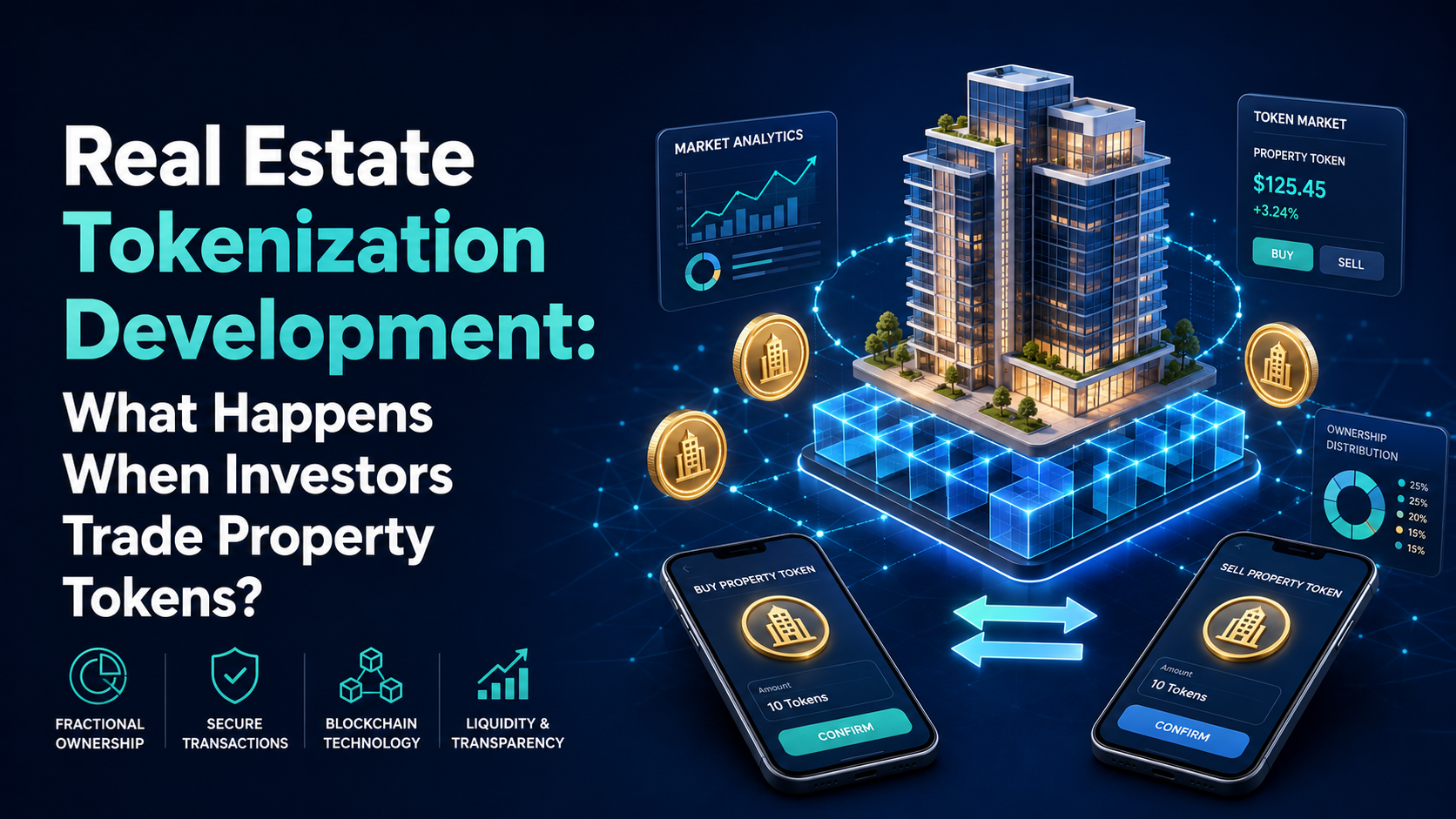
Real estate has traditionally required large amounts of capital, lengthy paperwork, legal checks, and direct involvement in property transactions. Real estate tokenization introduces another way to represent ownership or economic interests in property through blockchain-based tokens. Instead of purchasing an entire building or property share through conventional structures, investors may acquire digital tokens linked to a specific real estate asset or legal entity.
However, issuing property tokens is only one stage of the process. What happens after investors receive those tokens is equally important. When investors trade property tokens, several activities take place in the background. Ownership records may be updated, compliance checks may be performed, settlement instructions may be processed, and distributions connected to the property may need to follow the new ownership information.
This is where real estate tokenization development becomes more than a token issuance exercise. A properly planned system must account for trading, investor verification, settlement, custody, reporting, and property-related payments. The following sections explain what happens when investors trade property tokens and how these transactions can operate within a tokenized real estate ecosystem.
1. Investors First Receive Property Tokens
Before trading begins, the property needs to go through a tokenization process. A property may be placed under a legal entity, trust, fund, or another suitable ownership structure depending on the jurisdiction and investment model. Digital tokens are then issued to represent the agreed ownership rights or economic interests.
For example, a commercial property valued at $10 million could be divided into 100,000 digital tokens. If each token represents a defined interest in the structure holding the property, investors can purchase smaller positions rather than acquiring the entire asset.
A real estate tokenization company may manage the technology that supports issuance, investor onboarding, token balances, transaction records, and other platform functions. The legal relationship between the token and the property must still be established through appropriate documentation.
At this stage, investors generally receive tokens in a blockchain wallet or an account connected to the platform. Their ownership information can then be associated with the platform's investor records.
2. An Investor Decides to Sell
The trading process starts when an investor decides to sell property tokens. The investor may place a sell order through a marketplace, exchange-style interface, or peer-to-peer trading system.
Suppose an investor owns 2,000 tokens and wants to sell 500. The platform records the proposed sale and checks whether the investor is allowed to trade the asset. Some tokenized properties may have holding periods, transfer restrictions, geographic limitations, or investor eligibility rules.
The platform may also check whether the proposed buyer meets the requirements attached to that particular offering. This is important because property tokens may not be freely transferable like ordinary cryptocurrencies.
A real estate tokenization platform development project therefore needs trading logic that considers both the token transaction and the legal restrictions surrounding the underlying property.
3. The Buyer Goes Through Verification
A property token trade usually involves more than matching a buyer with a seller. The buyer may need to complete identity verification, investor accreditation checks where applicable, sanctions screening, and other compliance procedures.
The exact requirements depend on the jurisdiction, security classification, offering structure, and target investor group.
Once the buyer satisfies the required checks, the platform can determine whether the buyer is permitted to purchase the particular property token. If the buyer does not meet the conditions, the transaction may be rejected before settlement.
This process makes investor onboarding an important part of real estate tokenization development. A real estate tokenization development company may therefore include identity verification, document collection, investor classification, wallet screening, and transaction monitoring within the platform.
4. The Trading System Matches the Transaction
After the buyer and seller are approved, the trading mechanism brings their orders together.
Different platforms can use different trading models. One system may use an order book where buyers and sellers submit prices. Another may use direct peer-to-peer transactions. A marketplace may also use scheduled trading windows instead of continuous trading.
For example, an investor could offer 500 property tokens at $105 per token while another investor submits an order to purchase 500 tokens at that price. Once the platform's conditions are satisfied, the trade can proceed toward settlement.
The trading interface may look similar to other digital asset markets, but the underlying process can involve additional property-related checks.
5. Smart Contracts Process the Token Transfer
Once a trade is approved, a smart contract can handle the movement of tokens between the seller and buyer.
The seller's token balance decreases by the number of tokens sold, while the buyer's balance increases by the same amount. The blockchain records the transaction according to the rules programmed into the contract.
For example:
Seller wallet: 2,000 tokens
Tokens sold: 500
Remaining balance: 1,500 tokens
Buyer wallet: 1,000 tokens
Tokens purchased: 500
New balance: 1,500 tokens
The token transfer itself may happen quickly, but the complete transaction process can include additional steps involving payment settlement, compliance checks, ownership records, and reporting.
This is why real estate token development requires attention to both smart contract logic and the broader transaction workflow.
6. Payment Is Settled Between the Parties
The next stage involves payment. Depending on the platform, investors may pay using fiat currency, stablecoins, or another permitted settlement method.
If a buyer purchases 500 tokens at $105 each, the purchase value is $52,500. The platform must coordinate the payment with the token transfer according to its settlement model.
Some systems may use delivery-versus-payment mechanisms. In this arrangement, the token transfer and payment are linked so that one side of the transaction does not complete without the corresponding settlement condition being satisfied.
Payment processing may also involve banks, payment providers, custodians, or regulated financial intermediaries.
A real estate asset tokenization company working on such a system must therefore consider the relationship between blockchain transactions and conventional financial infrastructure.
7. Ownership Records Are Updated
After settlement, ownership information needs to reflect the new investor position.
The blockchain ledger records the token transfer, while the platform may maintain additional investor records for compliance, reporting, and administrative purposes. Depending on the legal structure, the blockchain wallet holding the token may not itself be the complete legal ownership record.
This distinction matters because token ownership and legal rights must remain aligned.
If an investor previously owned 2% of a tokenized property structure and sells part of that position, the relevant records need to reflect the reduced interest. The platform may also update information used for future distributions, voting rights, notices, and investor reporting.
8. Property Income Can Follow the New Ownership
One major reason investors may trade property tokens is to gain exposure to property income or potential asset appreciation.
Suppose a tokenized commercial property generates rental income that is distributed to eligible token holders. If an investor sells tokens before the next distribution date, the platform needs rules for determining who receives the relevant payment.
The answer may depend on the offering documents and distribution policy. Some systems may use a record date. Others may calculate entitlements based on holding periods or other contractual rules.
Smart contracts can assist with distribution calculations, but the underlying financial rules must first be defined properly.
This means real estate tokenization platform development can involve payment modules that connect token balances with rental income, interest, dividends, or other permitted distributions.
9. Trading History Remains Available
Every completed blockchain transaction creates a transaction record. Investors and platform administrators can use these records to review token movements.
A platform may display information such as purchase price, sale price, transaction date, token quantity, wallet information, and settlement status, subject to privacy and regulatory requirements.
Trading records can also help administrators prepare investor statements and transaction reports.
For property owners, this information can provide a view of investor activity around a tokenized offering. For investors, it can provide a record of their transactions and current holdings.
The presentation of this information must still respect applicable privacy and financial regulations.
10. Restrictions Can Prevent Certain Trades
Property tokens do not necessarily operate like unrestricted cryptocurrency assets. A smart contract may include transfer restrictions that prevent a transaction from occurring when certain conditions are not met.
For example, a token may only be transferable between verified investors. A particular offering may restrict transfers during an initial holding period. Another may limit participation to investors from approved jurisdictions.
The platform may also place restrictions based on the status of a wallet or investor account.
These controls can be implemented through smart contracts and off-chain compliance systems. Their purpose is to connect the digital trading process with the legal and regulatory requirements of the offering.
11. Custody Can Change During Trading
Investors may hold property tokens in self-custody wallets or through custodial arrangements. When tokens are traded, custody records may change along with token ownership.
In a custodial platform, the investor may not directly manage a blockchain wallet. Instead, the platform or licensed custodian may maintain wallet infrastructure on behalf of investors.
This can simplify the user experience, but it introduces additional operational responsibilities. Wallet security, transaction authorization, recovery procedures, access controls, and transaction monitoring all need attention.
A real estate tokenization platform development company may therefore include custody-related functions depending on the business model and regulatory environment.
12. Secondary Trading Can Affect Property Liquidity
One of the major attractions of tokenized property is the possibility of creating secondary markets for eligible investors.
Traditional real estate transactions can take weeks or months because they may involve property searches, financing, legal documentation, title checks, and settlement procedures. A digital token market can potentially reduce some transaction steps for eligible participants.
However, tokenization does not automatically create liquidity. A property token can only trade when buyers and sellers are available and when the legal structure permits those transfers.
This distinction is important for businesses considering real estate tokenization. A platform may provide trading infrastructure, but market activity still depends on investor demand, pricing, asset quality, regulations, and market conditions.
13. The Property Still Exists Outside the Blockchain
Trading property tokens does not mean the physical property itself moves on the blockchain.
The building, land, lease agreements, tenants, insurance policies, tax obligations, maintenance contracts, and other property-related matters continue to exist in the physical and legal world.
The blockchain primarily records the digital representation of the investment interest defined by the tokenization structure.
For this reason, tokenized real estate requires coordination between blockchain technology and traditional property administration. Rental income, property expenses, valuations, legal documents, and corporate actions may need to be connected with the platform.
14. Platform Administrators Monitor Transactions
Behind every property token marketplace, administrators may monitor trading activity and investor accounts.
They may review failed transactions, unusual activity, transfer restrictions, investor status, payment issues, and distribution records. Automated systems can handle many routine checks, while certain situations may require human review.
The platform can also generate reports for property owners, fund managers, investors, compliance teams, and administrators.
For a real estate tokenization company, these operational functions can be just as important as the investor-facing trading interface.
15. What Happens When an Investor Sells All Tokens?
If an investor sells their entire position, their token balance may reach zero. Depending on the platform rules, the investor may still retain access to historical statements and transaction records.
If the investor had voting rights or income rights connected to token ownership, those rights may cease or change according to the offering terms.
The platform can also update the investor's status for the specific property while retaining the necessary records of previous transactions.
This shows why token trading should be considered as a complete lifecycle rather than simply a transfer between two wallets.
16. What Real Estate Tokenization Development Needs to Support Trading
A platform designed for property token trading may contain several connected modules. These can include investor onboarding, identity verification, property listing, token issuance, wallet management, trading, payment settlement, smart contracts, compliance controls, reporting, custody, and distribution management.
The architecture will depend on the target market and business model. A private investment platform may have different requirements from a marketplace intended for a broader investor audience.
Businesses researching the Top real estate tokenization companies or Best real estate tokenization companies should therefore look beyond the visual appearance of a platform. They should examine how the system handles investor verification, token transfers, settlement, property records, compliance, and post-trade administration.
Conclusion
When investors trade property tokens, the transaction involves much more than moving digital assets between two wallets. The process can include investor verification, trade matching, payment settlement, smart contract execution, ownership updates, custody changes, compliance checks, and future income calculations. The physical property remains under its existing legal and operational structure while the blockchain records and manages the digital investment interests defined by the offering. This makes real estate tokenization a combination of property administration, financial processes, legal structures, and blockchain technology. Businesses considering real estate tokenization development should plan for the complete investor lifecycle, from initial purchase through secondary trading and eventual exit. A suitable real estate tokenization development company can help businesses structure the platform around their property model, investor requirements, and transaction workflows. Blockchain App Factory provides Real estate tokenization development services for businesses planning platforms that support property token issuance, investor management, trading, settlement, and related platform functions.
FAQs
1. What happens when investors trade property tokens?
When investors trade property tokens, the platform may verify both parties, check transfer restrictions, match the trade, process payment, transfer tokens through blockchain infrastructure, and update ownership and transaction records.
2. Can property tokens be traded like cryptocurrencies?
Not always. Property tokens can have legal and regulatory restrictions that do not apply to ordinary cryptocurrencies. Trading may be limited to verified investors or approved jurisdictions.
3. Does selling a property token mean selling part of the physical property?
Not necessarily. A token may represent an ownership interest, economic interest, debt claim, fund interest, or another right linked to a property structure. The exact rights depend on the legal arrangement behind the offering.
4. Are smart contracts required for property token trading?
Smart contracts are commonly used to manage token transfers and transaction rules, but the complete platform may also require off-chain systems for compliance, investor records, payments, reporting, and property administration.
5. How does rental income reach property token holders?
The process depends on the offering structure. Rental income may be distributed according to token holdings, record dates, holding periods, or other contractual rules. The platform can calculate eligible amounts and coordinate distributions.
6. What is involved in real estate token development?
Real estate token development can include property onboarding, legal structuring, token design, smart contracts, investor verification, wallet management, trading functions, payment processing, compliance controls, reporting, and administrative tools.
7. Why is secondary trading important for tokenized real estate?
Secondary trading can give eligible investors another way to sell or acquire property-related interests without waiting for a traditional property sale. However, actual liquidity depends on market demand and applicable transfer rules.
8. What should businesses look for in a real estate tokenization platform development company?
Businesses should assess experience with token standards, smart contracts, investor onboarding, compliance workflows, wallet infrastructure, payment settlement, secondary trading, reporting, and property-related financial processes.
9. Can investors trade property tokens internationally?
International trading depends on the jurisdictions involved and the legal structure of the token offering. Investor eligibility, securities regulations, tax rules, and transfer restrictions may affect whether an international transaction is permitted.
10. Is real estate tokenization suitable for every property?
No. The suitability of tokenization depends on factors such as property type, ownership structure, investor demand, jurisdiction, regulatory requirements, financial model, and the intended trading environment.

 English
 French
 Spanish
 Portuguese
 Deutsch
 Turkish
 Dutch
Dutch
 Italiano
 Russian
 Romaian
 Portuguese (Brazil)
 Greek
Greek