


200 Hour Yoga Teacher Training Rishikesh Curriculum Explained: From Asana to Teaching Methodology
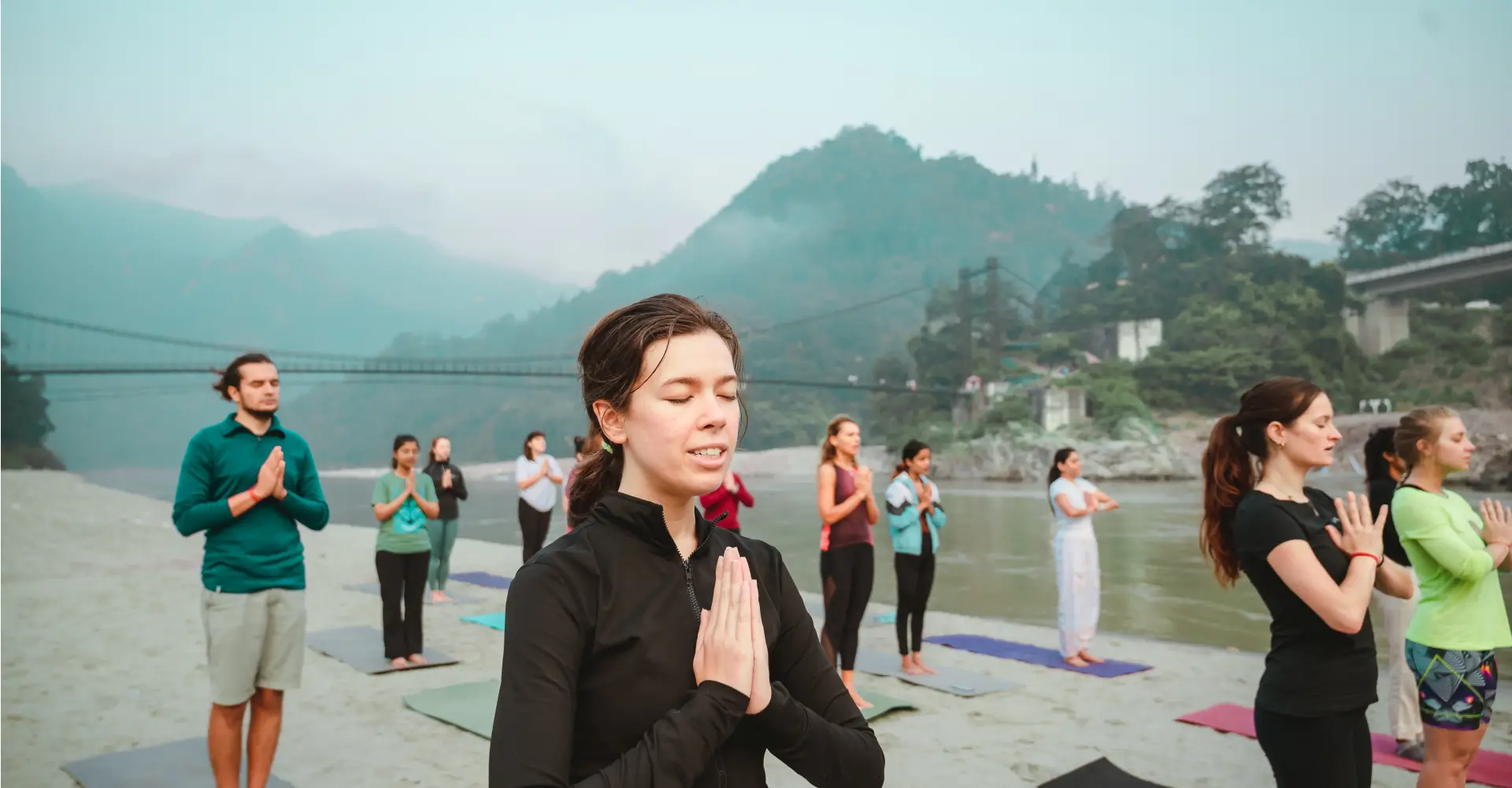
Choosing a 200 hour yoga teacher training in Rishikesh is about much more than learning a collection of yoga poses. A well-structured curriculum gradually brings together asana, breathwork, meditation, philosophy, anatomy, alignment, and teaching skills. At Rishikesh Yog Nirvana, the 25-day programme includes Ashtanga Vinyasa, Hatha Yoga, Vinyasa Flow, pranayama, meditation, yoga philosophy, anatomy, body alignment, shatkarma, and teaching methodology.
That combination matters because a yoga teacher needs more than physical flexibility. You need to understand why a posture is performed, how to adapt it, how to communicate clearly, and how to create a safe and meaningful class.
Asana: Where the Physical Foundation Begins
Asana forms a substantial part of the 200 hour YTTC Rishikesh experience. Students work with postures through structured practice rather than simply moving through attractive sequences.
The curriculum at Rishikesh Yog Nirvana places particular emphasis on Ashtanga Vinyasa, Hatha Yoga, and Vinyasa Flow. Students explore alignment, transitions, modifications, sequencing, and the relationship between breath and movement.
You may study standing poses, seated postures, forward bends, twists, backbends, balancing postures, and finishing sequences. More importantly, you begin to understand how these movements can be taught to people with different abilities and physical backgrounds.
Ashtanga Vinyasa and Vinyasa Flow: Learning to Move With Purpose
Ashtanga Vinyasa introduces discipline and structure. Students learn elements such as Sun Salutations, postural sequences, breath coordination, drishti, bandhas, and transitions.
Vinyasa Flow adds another dimension. Instead of following one fixed sequence, students learn how postures can be connected creatively while maintaining logical progression. This develops an important teaching skill: knowing how to construct a class rather than merely copying one.
For anyone considering a 200-hour yoga teacher training Rishikesh, this combination can provide a useful bridge between traditional practice and adaptable class design.
Pranayama: Understanding the Breath
Pranayama is treated as a distinct area of study rather than a brief addition to an asana class. The curriculum includes practices such as Nadi Shodhana, Kapalabhati, Bhastrika, and Ujjayi, along with instruction concerning safe application and contraindications.
The objective is not simply to memorise breathing techniques. Students learn how breath awareness can support concentration, meditation, and the overall structure of a yoga session.
Yoga Philosophy and Ethics: Going Beyond the Mat
A 200 hour yoga TTC India curriculum would be incomplete without philosophy.
Students explore foundational ideas associated with Patanjali's Yoga Sutras, the Bhagavad Gita, the eight limbs of yoga, yamas, niyamas, karma, dharma, and yogic lifestyle. These subjects help place physical practice within a broader philosophical framework.
This is also where the role of a yoga teacher becomes more thoughtful. Teaching is not simply demonstrating impressive postures; it involves responsibility, communication, boundaries, awareness, and respect for students.
Anatomy and Alignment: Making Practice More Informed
Yoga anatomy gives students a practical understanding of how the body moves. Rather than treating every student as though they have identical proportions and mobility, the curriculum considers differences in range of motion, joint mechanics, muscular function, and common restrictions.
At Rishikesh Yog Nirvana, anatomy study includes the musculoskeletal and nervous systems, movement principles, injury prevention, contraindications, and modifications.
Alignment study complements this knowledge. Students learn how to observe a posture, identify potential problems, and offer appropriate adjustments or alternatives.
Meditation and Mantra: Training Attention
Meditation adds another layer to the training. The programme introduces practices including breath-focused meditation, visualisation, body awareness, Trataka, Yoga Nidra, and mantra chanting.
For many students, this becomes one of the quieter but most significant parts of the experience. The mat is no longer only a place for movement; it becomes a setting for developing concentration and awareness.
Shatkarma and Traditional Yogic Practices
Traditional yogic cleansing practices, or shatkarma, are also included. The curriculum covers practices such as Jala Neti, Sutra Neti, Agnisara Kriya, and Trataka under instruction and supervision.
Because some traditional practices require appropriate technique and care, students should approach them as practices to learn responsibly rather than techniques to experiment with independently.
Teaching Methodology: The Point Where Practice Becomes Teaching
This is arguably the most important transition in a 200 hour RYT Rishikesh journey.
Teaching methodology covers class planning, sequencing, verbal cues, voice projection, demonstrations, observation, adjustments, class management, and teaching practice. Students practise teaching and receive feedback from instructors and peers.
A strong curriculum therefore asks a different question from “Can you perform the pose?”
It asks: Can you explain it clearly, observe your students, offer an appropriate modification, manage the room, and guide the class with confidence?
That distinction helps turn personal yoga experience into teachable knowledge.
From Student to Teacher: How the Subjects Connect
The real value of a comprehensive curriculum is found in the connections between subjects.
You study an asana, then examine its alignment. You connect movement with breath. Anatomy helps you understand physical considerations. Philosophy provides context. Teaching methodology shows you how to communicate the practice. Meditation develops awareness and steadiness.
The result is a more integrated learning experience rather than a collection of unrelated classes.
Is This Curriculum Suitable for Beginners?
Yes. The programme is presented as suitable for beginners as well as students with previous yoga experience, and prior teaching experience is not required.
However, students should be prepared for a structured and immersive learning environment. A 200-hour programme combines physical practice with theory, self-study, observation, teaching practice, and reflection.
Frequently Asked Questions
What is included in a 200 hour yoga teacher training in Rishikesh?
The curriculum includes asana, Ashtanga Vinyasa, Hatha Yoga, Vinyasa Flow, pranayama, meditation, philosophy, anatomy, alignment, shatkarma, and teaching methodology.
Is the 200 hour YTTC Rishikesh suitable for beginners?
Yes. Rishikesh Yog Nirvana states that its 200-hour programme is designed for all levels, including complete beginners.
What is taught in the teaching methodology module?
Students learn class sequencing, verbal cueing, demonstration, observation, adjustments, class management, and practical teaching, with feedback during teaching sessions.
Does a 200 hour yoga TTC India course include anatomy?
Yes. Anatomy and physiology are core components of the curriculum, with attention to movement, alignment, restrictions, safety, and modifications.
What yoga styles are taught during the programme?
The Rishikesh Yog Nirvana programme includes Ashtanga Vinyasa, Hatha Yoga, and Vinyasa Flow, alongside pranayama, meditation, philosophy, anatomy, and other yogic practices.
How long is the Rishikesh Yog Nirvana 200-hour programme?
The programme is structured as a 25-day course, with training running six days a week and one rest day.
What is 200-hour yoga teacher training Rishikesh useful for?
It provides foundational education in yoga practice and teaching methodology for students who want to deepen their personal practice or work toward becoming yoga teachers.
Is certification included?
Rishikesh Yog Nirvana states that successful students receive a certificate from its Yoga Alliance-registered school.
Grow Into the Teacher You Want to Become
Rishikesh Yog Nirvana — where your 200 hour yoga teacher training in Rishikesh becomes a journey from practising asana to learning how to guide others with knowledge, awareness, and authenticity.

 English
 Arabic
 French
 Spanish
 Portuguese
 Deutsch
 Turkish
 Dutch
Dutch
 Italiano
 Russian
 Romaian
 Greek
Greek