


Simparica Trio for Dogs: Uses, Administration, Safety, and Parasite Prevention
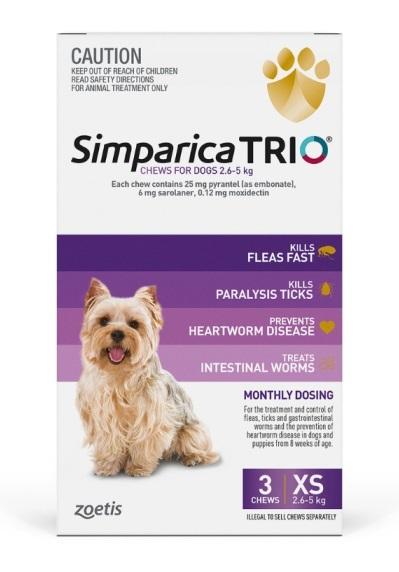
Simparica Trio for dogs is a prescription veterinary medication used to address several common canine parasite concerns. It combines three active ingredients that work against different parasites, including fleas, ticks, heartworms, roundworms, and hookworms covered by its U.S. labeling. Understanding its uses, administration, potential side effects, and precautions can help dog owners better understand its role in parasite prevention.
What Is Simparica Trio for Dogs?
Simparica Trio for dogs is an oral chewable medication containing three active ingredients: sarolaner, moxidectin, and pyrantel.
Each ingredient serves a different purpose. Sarolaner belongs to the isoxazoline class and works against certain external parasites, particularly fleas and ticks. Moxidectin provides protection against heartworm disease and also works against certain internal parasites. Pyrantel is used to control susceptible intestinal worms.
The combination addresses multiple parasite concerns through a single monthly administration, subject to veterinary guidance and the applicable U.S. prescribing information.
What Parasites Does It Address?
Parasite coverage is one of the primary considerations when evaluating Simparica Trio for dogs. The medication is labeled for several important parasites affecting dogs.
It kills adult fleas and helps control flea infestations. Fleas can cause persistent itching and skin irritation and may contribute to flea allergy dermatitis in sensitive animals.
The medication also kills certain tick species. Ticks can transmit diseases to dogs, making tick control an important part of preventive care, particularly for dogs that regularly spend time outdoors.
In addition, the medication helps prevent heartworm disease and treats or controls certain intestinal parasites, including roundworms and hookworms.
The specific parasite species covered should always be confirmed using the current U.S. product information.
How Does Simparica Trio Work?
The three active ingredients work through different biological mechanisms.
Sarolaner interferes with specific nervous-system pathways in susceptible fleas and ticks. This causes paralysis and death of the affected parasites.
Moxidectin acts against certain parasitic organisms and helps prevent heartworm disease by targeting immature heartworm stages. It also contributes to control of certain internal parasites.
Pyrantel affects the neuromuscular system of susceptible intestinal worms. This causes the parasites to become immobilized and allows them to be eliminated from the dog's digestive system.
Together, the ingredients provide activity against several types of parasites.
How Is Simparica Trio Administered?
Simparica Trio for dogs is generally administered orally once a month. The appropriate chewable strength is selected according to the dog's body weight.
The medication should be administered according to veterinary instructions and the current prescribing information. Dogs should receive the formulation corresponding to their applicable weight range.
Growing puppies can gain weight rapidly, so their weight may need to be checked periodically to determine whether a different formulation is appropriate.
The medication should not be divided between dogs or given to another animal based on a prescription intended for a different dog.
Age and Weight Considerations
Age and weight are important factors when determining whether the medication is appropriate. The U.S. labeling establishes minimum age and weight requirements.
A veterinarian can determine whether a particular puppy or adult dog meets the applicable requirements.
Weight changes can also affect which chewable strength is appropriate. Regular veterinary visits provide opportunities to reassess the dog's weight and overall health.
Potential Side Effects
Like other veterinary medications, Simparica Trio for dogs can cause adverse reactions.
Possible reactions can include vomiting, diarrhea, lethargy, reduced appetite, and other digestive symptoms. Neurological reactions have also been reported with medications in the isoxazoline class.
Potential neurological signs can include tremors, lack of coordination, or seizures. Such reactions may occur in dogs with or without a previous history of seizures.
If a dog develops severe, unusual, or persistent symptoms after receiving the medication, veterinary advice should be obtained promptly.
Dogs With a History of Seizures
Special consideration may be necessary for dogs with previous seizures or neurological disorders. The veterinarian should be informed about any history of seizures, tremors, unexplained episodes, or other neurological symptoms.
The veterinarian can assess the dog's individual medical history and determine whether the potential benefits and risks of treatment are appropriate.
A dog's neurological history should not be overlooked simply because the animal has a need for flea, tick, or heartworm prevention.
Heartworm Prevention
Heartworm disease is caused by a parasitic worm transmitted through mosquito bites. Once infected, dogs can develop serious cardiovascular and respiratory complications.
Simparica Trio for dogs is labeled for heartworm disease prevention by controlling immature stages of the parasite. It is intended as a preventive treatment rather than a medication for eliminating established adult heartworms.
Regular heartworm testing is an important part of canine preventive care. A veterinarian can recommend an appropriate testing and prevention schedule based on the dog's age, location, lifestyle, and medical history.
Flea and Tick Management
Flea and tick exposure varies according to geographic location, season, environment, and the dog's activities.
Dogs that regularly visit parks, wooded areas, hiking trails, grasslands, or other outdoor environments may have increased opportunities for tick exposure.
Flea management can also involve the household environment. Flea eggs and immature stages can remain in carpets, bedding, furniture, and other areas where pets spend time.
When an infestation exists, environmental cleaning may be necessary in addition to treating the affected animal.
Intestinal Parasites
Roundworms and hookworms are common intestinal parasites that can affect dogs. Puppies may be particularly vulnerable, although adult dogs can also become infected.
Depending on the parasite and severity of infection, intestinal worms can contribute to digestive problems, poor growth, weight loss, or other health issues.
Veterinary examinations and appropriate fecal testing can help identify intestinal parasites and determine whether additional treatment or monitoring is needed.
Other Medications and Health Conditions
Before a dog receives Simparica Trio for dogs, the veterinarian should be informed about all other medications, supplements, and treatments being used.
Existing medical conditions can also influence parasite-control decisions. Dogs that are pregnant, breeding, elderly, underweight, or affected by chronic or neurological conditions may require individualized evaluation.
Providing a complete medical history allows the veterinarian to assess whether the medication is suitable for the individual dog.
Conclusion
Simparica Trio for dogs is an oral prescription medication that addresses several parasite concerns through three active ingredients: sarolaner, moxidectin, and pyrantel. Under its U.S. labeling, it is used against certain fleas, ticks, heartworms, roundworms, and hookworms.
The medication is generally administered monthly, with the appropriate strength determined by the dog's weight and applicable prescribing requirements. Potential adverse reactions can occur, including gastrointestinal and neurological effects, making individual veterinary assessment important.
For dogs in the United States, parasite prevention involves more than selecting a medication. Age, weight, health history, geographic location, lifestyle, and exposure to fleas, ticks, mosquitoes, and intestinal parasites all influence preventive-care decisions. The suitability and administration of Simparica Trio for dogs should therefore follow current veterinary guidance and prescribing information.

 English
 Arabic
 Spanish
 Portuguese
 Deutsch
 Turkish
 Dutch
Dutch
 Italiano
 Russian
 Romaian
 Portuguese (Brazil)
 Greek
Greek