


Pairing Large Format Tiles with Wood, Metal & Natural Textures
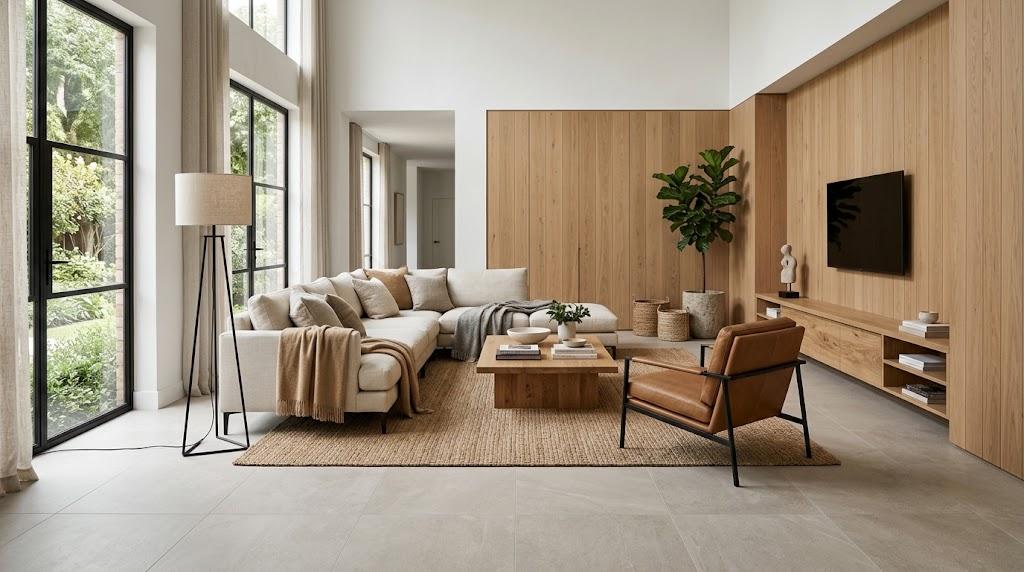
There is a recurring challenge in modern interiors: how to create a room that feels both refined and comfortable. Expansive ceramic surfaces provide a striking foundation, but they can easily tilt toward sterility if used in isolation. The answer lies in thoughtful material mixing — pairing those hard, smooth planes with the grain of timber, the definition of metal, and the softness of natural textures. When balanced well, the result is a space that feels both intentional and genuinely lived in.
The Appeal of Expansive Surfaces
The preference for bigger formats has reshaped showroom floors across the industry. Walk into any tile shop and the evidence is hard to miss. Traditional twelve-by-twelve pieces have retreated, replaced by dramatic slabs that can stretch to 24x48 inches or beyond. What draws attention first is the near elimination of grout lines, which creates a cleaner visual field across the room.
Large format tiles also expand the perceived size of a room. A floor composed of just a few expansive pieces reads as one continuous surface, eliminating the repetitive grid pattern that smaller formats impose. The finishing options have diversified considerably too — polished porcelain, honed concrete, and stone-effect surfaces that closely replicate natural materials.
However, the very precision of these products presents a challenge. A space finished entirely in uniform, flawless surfaces risks feeling more like a design catalog than a real home. Without deliberate contrast, the atmosphere tends toward the impersonal. Complementary materials are what shift that perception.
Pairing with Wood
Timber is the most natural counterbalance to the hard, engineered quality of porcelain or stone. It brings visible grain, warm tones, and an organic unpredictability that no manufactured surface can fully replicate. The combination works because each material occupies a distinctly different place on the tactile and visual spectrum.
Think about a living room where large format tiles span the entire floor. A coffee table crafted from reclaimed oak, surrounded by matching shelves, immediately grounds the space. The wood's natural imperfections — knots, uneven grain, subtle tonal shifts — disrupt the uniformity of the ceramic below. One surface feels controlled and deliberate; the other feels spontaneous.
Color temperature determines whether the pairing succeeds. Cool grey porcelain pairs well with warm species such as cherry or hickory. Dark, moody surfaces benefit from lighter timbers like ash or birch, which introduce brightness without competing for attention.
Timber solves practical challenges at material boundaries as well. A wood transition strip where tile gives way to another flooring type creates a smooth, cohesive flow that metal alternatives cannot quite match. Those who visit a tile shop for transitional hardware will often find metal options dominating the selection, yet wood consistently produces a more organic result. Inside bathrooms, timber accent walls framed by ceramic evoke the atmosphere of a high-end spa. The acoustic benefit deserves mention — wood naturally dampens the reverberation that large hard surfaces create, making a room feel quieter and more settled.
Integrating Metal Accents
Where wood softens a room, metal sharpens its character. Metallic details provide the crisp, architectural punctuation that separates a thoughtfully designed space from one that merely looks finished. Against the broad, uninterrupted planes created by oversized surfaces, even modest metallic elements carry significant visual weight.
The shower offers an instructive example. A brushed brass fixture against a matte stone-look wall creates a focal point through contrast alone. The metal catches and redirects light in ways the surrounding surface cannot. Brushed nickel, polished chrome, and matte black achieve similar results with distinctly different moods — from warm and traditional to cool and contemporary.
Metal also functions as a finishing tool at material edges. A thin profile where ceramic meets painted drywall produces a clean, defined line. Matte black trim against light-coloured surfaces has become a popular choice, introducing graphic definition with minimal visual clutter.
A designer browsing a tile shop might also notice how well structural metal complements large ceramic surfaces in open-plan spaces. Steel staircase stringers, exposed beams, and dark-framed windows all benefit from proximity to expansive ceramic flooring. The relationship between the two materials creates visual tension that elevates the entire composition. The rule of thumb is restraint — a few well-positioned metallic touches accomplish more than an abundance of the same material, which risks pushing a domestic space toward an overly industrial tone.
Bringing in Natural Textures
Manufactured ceramic surfaces achieve a consistency that genuine materials rarely possess. Even products designed to emulate natural stone display a uniformity that authentic stone does not. This level of perfection, while technically impressive, can flatten the visual depth of a room. The remedy is intentional imperfection — woven fibers, unpolished surfaces, and living elements that introduce genuine irregularity.
Placed on top of large format tiles, a generously sized woven rug provides immediate tactile contrast. The rough fiber absorbs the acoustic reflections that hard surfaces generate while adding visual warmth. The rug should be proportionally scaled to the room — large enough to extend beneath the front legs of surrounding furniture rather than sitting as an undersized rectangle in the center of the space.
Textile layers continue the softening effect. Linen curtains beside a tiled wall introduce movement and a relaxed quality that contrasts with the rigidity of ceramic. A loosely woven throw draped over a chair adds another tactile dimension. These are low-commitment additions that change how a room feels without permanent alteration.
Greenery contributes a vitality that manufactured materials cannot replicate. A tall potted plant positioned against a ceramic floor creates a compelling dialogue between organic growth and geometric precision. Smaller elements build further depth — woven baskets, wooden trays, unglazed pottery on open shelving. Each contributes a distinct material note to the overall composition. Leather furniture rounds things out. A well-crafted ottoman or armchair adds a rich warmth that develops character over time and bridges the gap between the room's harder and softer surfaces.
Tips for Making It Work
Merging diverse materials into a cohesive interior benefits from a disciplined approach rather than improvisation alone.
Begin by testing samples within the space itself. Many who visit a tile shop come away with selections that look perfect under showroom lights, only to find them stark and lifeless at home. Your home operates under different conditions — directional morning light, warm evening lamps, flat overcast skies. Bringing samples home and positioning them alongside existing cabinetry, hardware, and finishes reveals how the combination actually behaves in context.
Scale should guide furniture and textile choices. Oversized surfaces demand proportionally large elements. A petite rug or a delicate accent table will look insignificant against a vast floor. Choose furnishings with visual substance — substantial sofas, generous dining surfaces, thick-weave textiles that hold their own beside the ceramic.
Maintain color discipline throughout. Two principal tones and a single accent color provide sufficient variety to generate interest without creating visual competition. If ceramic and timber form the base, let metal serve as the accent. Avoid layering bright colors on top of an already texturally rich palette. Let the inherent qualities of each material — its grain, its sheen, its weave — supply the variety.
Match material selections to the function of each room. Bathrooms require moisture-resistant timber or quality wood-look alternatives alongside the ceramic. Large format tiles work beautifully in open living areas where their scale can be fully appreciated, but more delicate materials may suit private quarters better. Making these practical distinctions early prevents costly mistakes and ensures longevity.
Wrapping Up
Bringing expansive ceramic surfaces into dialogue with timber, metal, and organic textures is ultimately a matter of achieving contrast that serves both function and atmosphere. The tile delivers a durable, clean foundation. The complementary materials contribute warmth, texture, and the sensory richness that turns a constructed space into a home.
Approach the process with patience. Visit a tile shop to compare finishes and formats in person, then bring samples into your home to evaluate them alongside your chosen materials. Observe how they respond to changing light throughout the day. Trust what you see. When the balance between surfaces clicks into place, the room achieves something rare — contemporary clarity paired with genuine domestic warmth.

 English
 Arabic
 Spanish
 Portuguese
 Deutsch
 Turkish
 Dutch
Dutch
 Italiano
 Russian
 Romaian
 Portuguese (Brazil)
 Greek
Greek