Mild gynecomastia can cause noticeable chest fullness even when a man is otherwise healthy and physically active. For some men, the enlargement is mainly caused by fatty tissue, while others have a combination of fat and glandular tissue. Understanding this difference is important when considering Lipo Chest Surgery.
Liposuction can be an effective option for selected patients, but it does not remove firm glandular tissue. Therefore, the suitability of the procedure depends on the underlying cause of the chest enlargement and the individual's goals.
What Is Mild Gynecomastia?
Gynecomastia refers to enlargement of male breast tissue. It can occur because of hormonal changes, certain medications, medical conditions, weight changes, or other factors.
Mild gynecomastia may appear as a small amount of fullness around the nipple or chest. Some men may notice it mainly when wearing fitted shirts, while others may feel self-conscious when swimming or exercising without a shirt.
The appearance can be caused by glandular tissue, excess fat, or both.
Can Lipo Chest Surgery Treat Mild Gynecomastia?
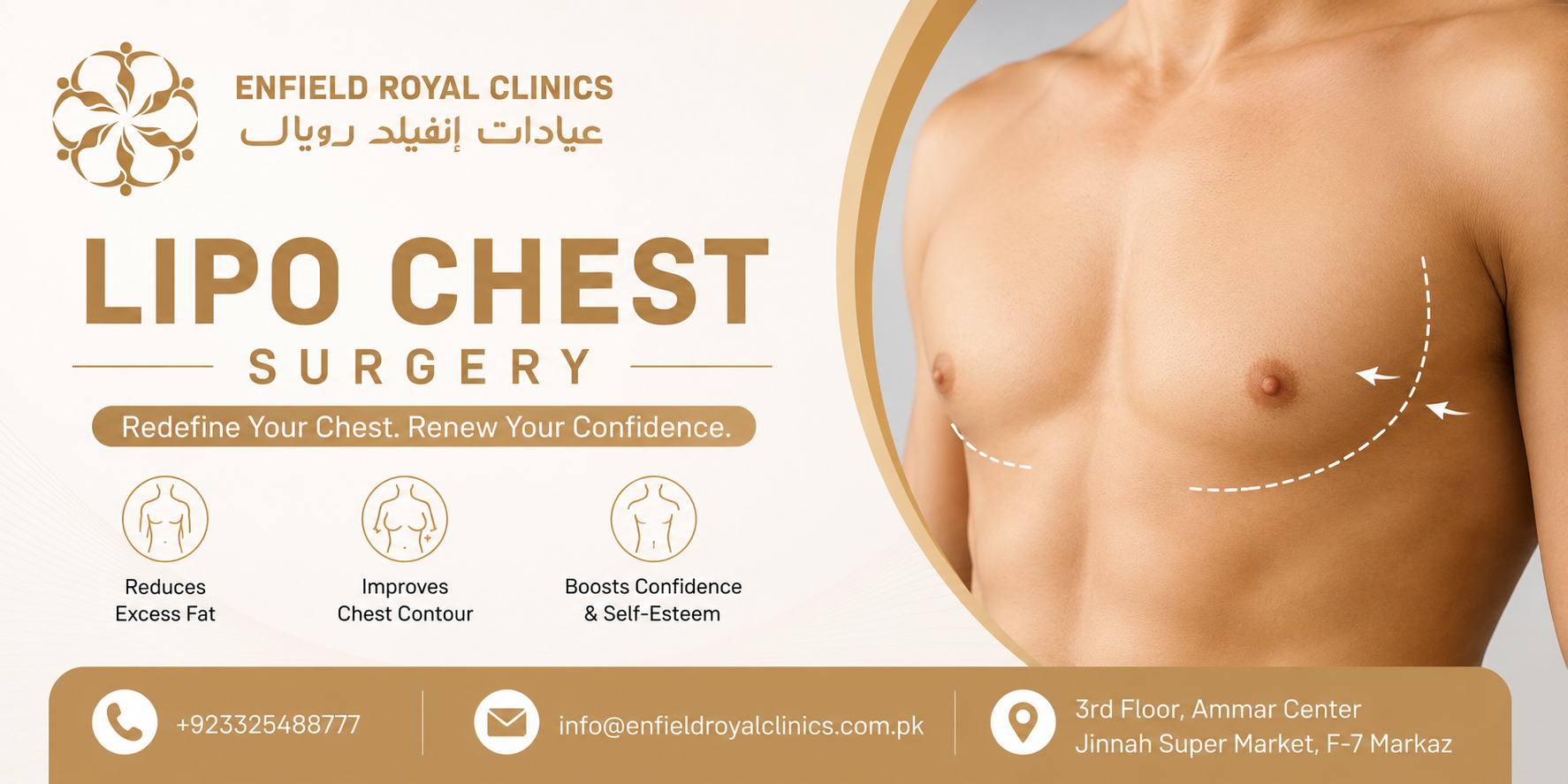
In some cases, yes. Lipo Chest Surgery may be suitable when the chest enlargement is primarily caused by excess fatty tissue.
Liposuction removes localized fat through a thin cannula inserted through small access points. Reducing the fatty component can make the chest appear flatter and more proportionate.
However, liposuction alone may not completely correct mild gynecomastia when firm glandular tissue is the main cause.
Why Does the Cause of Gynecomastia Matter?
Not all chest fullness is the same. Fatty tissue is generally softer, while glandular tissue can feel firmer and may be concentrated beneath the nipple.
Lipo Chest Surgery targets fat, not dense glandular tissue. If the surgeon determines that glandular enlargement is significant, a different technique may be necessary.
In some patients, liposuction and glandular tissue removal are combined to address both components.
How Is Mild Gynecomastia Evaluated?
A consultation begins with an assessment of the chest and medical history. The surgeon may ask about changes in weight, medications, health conditions, previous procedures, and the duration of the chest enlargement.
The physical examination helps determine whether the fullness appears to be primarily fatty, glandular, or a combination.
In certain situations, additional medical evaluation may be recommended to investigate an underlying cause.
This assessment is important before choosing Lipo Chest Surgery.
Who May Be a Suitable Candidate?
A man with mild gynecomastia may be considered for Lipo Chest Surgery when:
- Excess chest fat is a significant contributor.
- Weight is relatively stable.
- Overall health is suitable for surgery.
- Skin has reasonable elasticity.
- The patient has realistic expectations.
- The chest fullness has been appropriately evaluated.
These factors do not automatically make someone a candidate. A qualified surgeon needs to assess the individual before recommending treatment.
What If Glandular Tissue Is Present?
If mild gynecomastia includes a small amount of glandular tissue, liposuction may not be enough on its own.
The surgeon may recommend removing the glandular tissue through a small surgical incision. In some cases, Lipo Chest Surgery can be performed alongside glandular tissue removal to improve the overall contour.
This combined approach can address both the fatty and glandular components of the chest.
Can Exercise Treat Mild Gynecomastia?
Exercise can help reduce overall body fat and strengthen the chest muscles, but it cannot directly remove enlarged glandular tissue.
If the chest fullness is mostly caused by fat, weight management and exercise may improve the appearance. However, some men continue to have localized fullness despite reaching a healthy weight.
When stubborn fatty tissue remains, Lipo Chest Surgery may provide targeted contouring.
Does Lipo Chest Surgery Make the Chest Flat?
For suitable candidates, removing excess fat can make the chest look flatter and smoother.
The final appearance depends on the amount of fatty tissue, skin quality, chest anatomy, muscle development, and healing.
The goal should be a natural-looking improvement rather than removing excessive tissue. Removing too much fat can potentially create contour irregularities.
What Is Recovery Like?
Recovery from Lipo Chest Surgery varies between individuals. Temporary swelling, bruising, tenderness, tightness, and changes in sensation may occur.
A compression garment may be recommended to support the treated area and help manage swelling.
Patients should follow their surgeon's instructions regarding wound care, physical activity, medication, and follow-up appointments.
Strenuous exercise and heavy lifting should generally be avoided until the surgeon confirms that healing has progressed sufficiently.
When Will Results Become Visible?
Some improvement may be noticeable shortly after Lipo Chest Surgery, but swelling can temporarily affect the appearance of the chest.
As the swelling decreases, the contour gradually becomes clearer. Final results may take several weeks or months to fully develop.
Patients should remain patient during the healing process and avoid judging the final outcome too early.
Are the Results Long-Lasting?
Fat cells removed through Lipo Chest Surgery are permanently removed from the treated area. However, the remaining fat cells can enlarge with significant weight gain.
Maintaining a stable weight and healthy lifestyle can help preserve the improved chest contour.
If gynecomastia is related to an underlying hormonal issue or medication, addressing that cause may also be important for long-term management.
What Are the Potential Risks?
Like other surgical procedures, Lipo Chest Surgery has potential risks. These may include swelling, bruising, infection, bleeding, temporary or lasting changes in sensation, contour irregularities, and anesthesia-related complications.
The risks vary according to the individual and the extent of treatment.
Choosing a qualified surgeon and following postoperative instructions can help support safer recovery.
Is Lipo Chest Surgery the Right Choice for Mild Gynecomastia?
There is no universal answer. If mild gynecomastia is mainly caused by localized fat, Lipo Chest Surgery may be a suitable treatment option.
If glandular tissue is the primary cause, liposuction alone may not provide the desired correction. A combined approach may be considered when both fat and glandular tissue contribute to the enlargement.
A professional evaluation is therefore the most reliable way to determine the appropriate treatment.
Final Thoughts
So, is Lipo Chest Surgery suitable for mild gynecomastia? It can be, particularly when excess fatty tissue is the main reason for chest fullness. Liposuction can reduce localized fat and create a flatter, smoother contour.
However, mild gynecomastia can also involve glandular tissue, which liposuction cannot directly remove. In those cases, glandular tissue removal or a combination of techniques may be recommended.
If mild gynecomastia is affecting your confidence, consult a qualified surgeon for an examination and personalized treatment plan. The right approach depends on the underlying cause, your anatomy, health, and desired outcome.




 Arabic
 French
 Spanish
 Portuguese
 Deutsch
 Turkish
 Dutch
Dutch
 Italiano
 Russian
 Romaian
 Portuguese (Brazil)
 Greek
Greek