


Japan’s Agricultural Machinery Sector Moves Toward Smarter and More Efficient Farming
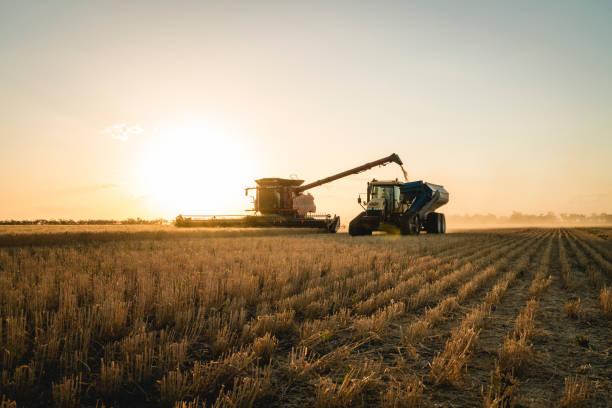
Agricultural machinery plays a central role in Japan’s farming system, supporting activities such as land preparation, planting, crop management, harvesting, transportation, and other field operations. Equipment is becoming increasingly connected with automation, digital technologies, safety systems, and data-driven farming practices. These developments are particularly relevant as agricultural producers seek practical ways to maintain productivity while adapting to changing workforce conditions.
According to a Vyansa Intelligence report, Japan’s agricultural machinery industry was valued at USD 4.5 billion in 2025 and is projected to reach USD 6.76 billion by 2032, representing a CAGR of 5.99% from 2026 to 2032. These figures provide a quantitative perspective on an industry shaped by mechanization, smart farming technologies, equipment modernization, operator requirements, safety considerations, and changing agricultural production practices.
Mechanization Supports Modern Agricultural Operations
Agricultural machinery allows farmers to perform physically demanding tasks with greater consistency and efficiency. Tractors, planting equipment, harvesting machinery, crop-management equipment, and other specialized systems can support different stages of agricultural production.
In Japan, machinery is increasingly being considered alongside broader smart agriculture initiatives. The Ministry of Agriculture, Forestry and Fisheries promotes technologies that use robotics and information and communications technology to support highly efficient and high-quality agricultural production.
The industry analysis therefore extends beyond conventional machinery and includes the technologies that are increasingly integrated into farm operations.
Smart Agriculture Is Reshaping Equipment Use
Digitalization is becoming an important component of Japanese agricultural practices. Smart agriculture can incorporate automated machinery, data utilization, remote monitoring, robotics, and other technologies designed to support agricultural decision-making and field operations.
The Ministry of Agriculture, Forestry and Fisheries has established a dedicated framework for promoting smart agriculture and provides guidance on areas including autonomous agricultural machinery, agricultural drones, AI, data, and information infrastructure.
According to this agricultural machinery industry report, the development of equipment is therefore increasingly connected with digital agricultural systems.
Automation Can Address Changing Workforce Conditions
Japan's agricultural sector is facing changes in its workforce structure. The Ministry of Agriculture, Forestry and Fisheries notes that the number of core agricultural workers is expected to decline substantially over the coming years and identifies smart agricultural technologies as important for maintaining production capacity under population decline.
Automation can help address some of the operational challenges associated with reduced labor availability. Technologies such as automated steering, intelligent machinery, remote monitoring, and other smart systems can reduce the amount of direct manual intervention required for particular tasks.
However, automation does not eliminate the importance of agricultural knowledge. Farmers and operators still need to understand equipment, field conditions, crop requirements, and operational procedures.
Intelligent Equipment Requires Appropriate Infrastructure
The effectiveness of connected agricultural machinery depends partly on the infrastructure surrounding it. Data networks, digital platforms, compatible equipment, technical support, and operator skills can all influence how effectively smart technologies are incorporated into farming.
Japan's smart agriculture initiatives include efforts to improve the practical environment for technology deployment, including guidance related to autonomous agricultural machinery and agricultural information and communications infrastructure.
The latest industry analysis consequently needs to consider agricultural machinery as part of a broader technological ecosystem.
Equipment Safety Remains a Major Consideration
Agricultural machinery can involve moving components, heavy equipment, cutting systems, transportation, and other operational risks. Safety therefore remains an important consideration when machinery is developed, selected, and used.
Japan's Ministry of Agriculture, Forestry and Fisheries operates an agricultural machinery safety-performance assessment system designed to evaluate the safety performance of commercially available equipment and encourage manufacturers to develop safer machinery.
The system currently covers several types of agricultural machinery, including tractors, combine harvesters, rice transplanters, and grain dryers.
This shows how equipment development is increasingly connected with formal safety evaluation.
Operator Skills Remain Important
Even sophisticated agricultural equipment requires knowledgeable users. Operators need to understand controls, machine functions, field conditions, maintenance procedures, and safety requirements.
Smart machinery can provide additional information, but farmers still need to interpret that information and make practical decisions.
Training is therefore an important component of technology adoption. As machinery incorporates more automated and digital functions, users may need new technical capabilities alongside conventional agricultural knowledge.
Machinery Development Is Becoming More Integrated
Modern agricultural machinery is increasingly being designed to work alongside other technologies and production methods. Equipment can interact with data systems, positioning technologies, automated controls, sensors, and farm-management platforms.
Japan's smart agriculture policy also emphasizes the development of production systems that combine smart technologies with changes in agricultural production methods. The Ministry of Agriculture, Forestry and Fisheries provides support for introducing smart technologies together with appropriate cultivation systems.
The market research report can therefore be considered within a wider transition toward integrated agricultural production systems.
Specialized Equipment Can Support Different Farm Requirements
Agricultural operations vary according to crops, terrain, farm structure, and production practices. This creates demand for different types of machinery rather than a single equipment solution.
Specialized machinery can address particular activities, while multipurpose equipment can support several operations. The appropriate choice depends on the work being performed and the conditions in which the equipment will operate.
Digital and automated technologies can also be incorporated into specialized machinery, allowing equipment to perform particular tasks with greater consistency.
Maintenance Supports Equipment Reliability
Agricultural machinery operates in environments involving soil, dust, moisture, crop residue, vibration, and extended working periods. Regular maintenance can therefore play an important role in equipment reliability.
Inspection, cleaning, lubrication, servicing, and replacement of worn components can help maintain machinery performance. For increasingly sophisticated equipment, maintenance can also involve electronic systems and software-related components.
A reliable service infrastructure is particularly important when agricultural operations depend on specialized machinery during time-sensitive periods.
Data Is Becoming More Relevant to Farm Equipment
Data can help connect machinery with broader agricultural management practices. Equipment can generate or receive information that supports monitoring, automation, field management, and operational planning.
Japan's smart agriculture framework includes initiatives related to AI, data, open APIs, and information infrastructure, reflecting the increasing role of digital systems in agriculture.
This creates opportunities for agricultural machinery to become part of a connected information environment rather than operating as an independent mechanical asset.
Policy Is Supporting Smart Agricultural Technology
Japan enacted the Smart Agricultural Technology Utilization Promotion Act to encourage the use of smart agricultural technologies and new production methods designed to improve agricultural productivity. The law established certification systems for plans involving smart agricultural technology utilization and technology development.
The policy framework demonstrates the growing institutional importance of agricultural technology and equipment innovation.
The industry analysis therefore needs to account for both machinery development and the policy environment supporting smart agriculture adoption.
Understanding Japan’s Agricultural Machinery Landscape
Japan's agricultural machinery industry is developing alongside a broader transformation of farming practices. Traditional mechanical equipment is increasingly being combined with automation, digital technologies, safety systems, data utilization, and smart production methods.
The market research report provides a quantitative perspective on the industry's development, while official Japanese agricultural initiatives illustrate how machinery is being connected with broader efforts to improve productivity, address workforce challenges, strengthen safety, and promote technology adoption.
The direction of agricultural machinery development is therefore not limited to producing more advanced machines. It increasingly involves creating equipment that can operate safely, integrate with digital systems, support farmers with practical information, and fit changing agricultural production methods.
As Japan's agricultural sector continues adapting to changing workforce conditions and technological opportunities, machinery can remain an important foundation for efficient farm operations. The combination of equipment innovation, smart technologies, operator capabilities, safety assessment, and supporting infrastructure will remain important to the effective use of agricultural machinery across the country's farming systems.

 English
 Arabic
 French
 Portuguese
 Deutsch
 Turkish
 Dutch
Dutch
 Italiano
 Russian
 Romaian
 Portuguese (Brazil)
 Greek
Greek