


Signs Your Skin Needs a Pro, Not Just Products
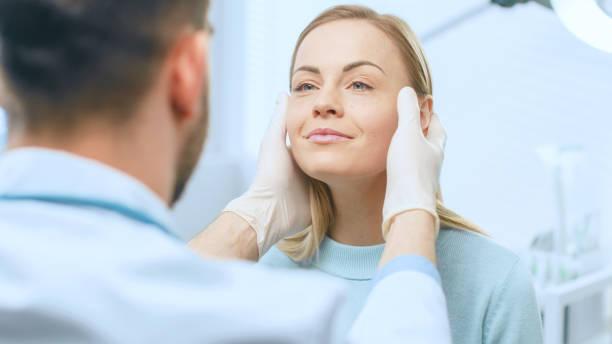
Most people give home routines a fair shot. You buy the salicylic acid cleanser, the niacinamide serum, maybe a couple of things you found from a recommendation online. And for a while, you wait. But what happens when nothing changes? Or worse, what happens when things get worse instead of better? There's a real difference between a skin situation that just needs patience and one that genuinely needs a trained set of eyes. If you're somewhere in Jacksonville and you've been spinning your wheels for months, looking into a Skin Care Clinic in Jacksonville FL might be the most useful thing you do this year. This article walks through the specific signs that mean it's time to stop guessing and get a real professional assessment.
Persistent Breakouts That Just Won't Quit
Six to eight weeks is a reasonable window to give any new routine. That's the general rule dermatologists and estheticians both agree on. But if you've been consistent, not cheating, not switching products every two weeks, and your breakouts are still showing up in the same spots with the same frequency? That's a signal worth taking seriously. Home care can only do so much.
The problem is that acne isn't one thing. It can be hormonal, bacterial, fungal, or triggered by something in your diet or environment. Over-the-counter products mostly treat surface-level symptoms. A trained professional can actually look at the pattern of your breakouts, the depth of the lesions, the type, and make a call about what's actually driving them. Trying random products without that information is a bit like throwing darts in the dark.
And honestly, continuing to layer on actives without guidance can make things worse. Combining acids with retinols without knowing your skin's tolerance level, for example, often causes more irritation than it fixes. Worth stopping and getting a proper read on what's going on.
Sudden Changes in Texture or Tone
New bumps that appear overnight. Patches of skin that suddenly feel rough or look discolored. These aren't always cosmetic issues you can just exfoliate away. Sometimes they need a professional evaluation, full stop.
Texture changes can signal anything from dehydration to keratosis pilaris to something that needs a doctor rather than a spa. Tone changes, especially sudden darkening in patches or redness that doesn't fade, sometimes point to conditions like melasma or rosacea, both of which get worse if you treat them with the wrong products. You can read about melasma causes and treatment approaches if you want background, but the short version is that a professional needs to confirm what you're actually dealing with before you start treating it.
Same goes for new growths or moles that have changed shape or color. That's a conversation for a dermatologist, not a product swap.
Reactions After Trying New Products
Burning. Stinging. Swelling. Peeling beyond what the product label warned you about. These are not normal "purging" signs, and that word gets thrown around way too casually online. A mild adjustment period is real. Actual inflammation is different.
If you've had a reaction to a product that lasted more than a day or two, or that left visible marks behind, please don't just try the next thing on your list. That pattern of reacting strongly to products usually means something about your skin barrier is compromised, and the fix isn't another serum. It's getting your barrier assessed by someone who knows what they're looking at. Angel Brows And Aesthetics is one local option people use when they're trying to sort out exactly this kind of skin situation, including reactions that didn't fully clear up on their own.
A damaged skin barrier doesn't heal faster with more products. It heals with the right approach, and that's not something a label can tell you.
Scarring and Pigmentation That's Getting Worse
This one's quiet but serious. You notice a dark spot from an old breakout. You use a vitamin C serum. Nothing happens. A month later, the spot is darker. That's not a product failure, that's a sign you need professional Skin Care Services in Jacksonville FL, because some forms of pigmentation respond badly to certain actives and need a targeted clinical approach instead.
Post-inflammatory hyperpigmentation is tricky. So is the kind of scarring that sits below the surface of the skin. Textured scars, rolling scars, ice-pick scars. These don't respond to topical creams the way people hope. Professional treatments like chemical peels, microneedling, or laser-based options are designed specifically for this, and they're done under controlled conditions where your skin's reaction can be monitored.
Trying to speed up the process with higher-concentration at-home acids without proper guidance often makes pigmentation darker before it gets better. And sometimes it just makes it darker, period. A professional knows how to sequence treatments so that doesn't happen.
When Your Routine Is Actually Making Things Worse
Here's something people rarely admit: their routine might be the problem. Not a specific product necessarily, but the combination, the order, the frequency. Most people add things over time without removing anything, and slowly the routine becomes a stack of actives that are fighting each other.
Skin Care Services in Jacksonville FL offered by licensed estheticians often start with a consultation that looks at everything you're using. All of it. And usually, the recommendation is to simplify, not add. That alone can turn a struggling skin situation around fast.
It's also worth knowing that some underlying issues, like fungal acne or perioral dermatitis, actually flare up when you use certain commonly recommended ingredients. Moisturizers with fatty acids can feed fungal acne. Some people spend years treating the wrong thing because no one looked closely enough to catch it. A professional assessment isn't a luxury if you've been trying for months and getting nowhere.
What a Professional Assessment Actually Looks Like
It's not just someone looking at your face and suggesting products. A real skin assessment involves questions about your medical history, hormone patterns, diet, stress levels, and sleep. It involves looking at your skin under magnification. It includes checking things like oil production, hydration levels, and the state of your barrier. Pretty different from reading ingredient lists online.
The goal is to match a treatment plan to what's actually happening with your skin, not what seems most likely based on a quiz. A Skin Care Clinic in Jacksonville FL with trained staff can often spot in one session what you've been missing for months on your own. That's not a knock against home care. It's just the difference between guessing and knowing.
Frequently Asked Questions
How long should I try home products before seeing a professional?
Six to eight weeks of consistent use is a fair trial. If you're not seeing any improvement after that window, or if things are getting worse, it's time to get a professional opinion. Don't wait another three months just to be sure.
Will a professional just try to sell me expensive products?
A good esthetician or clinic won't push products on you. Their job is to assess your skin and give you a realistic plan. Some of that might involve professional-grade products, but a trustworthy provider will explain why, not just hand you a bag of stuff.
Can an esthetician treat medical skin conditions?
Estheticians handle cosmetic skin concerns. If your issue looks like it's medical, like severe cystic acne, suspicious moles, or an autoimmune-related skin condition, they'll refer you to a dermatologist. That's actually a sign of a good professional, knowing when to hand off.
Is there a difference between seeing an esthetician and a dermatologist?
Yes, and it matters. Dermatologists are medical doctors who can prescribe medication and treat skin diseases. Estheticians focus on skin health and cosmetic treatments. Depending on what you're dealing with, you might need one or the other, or both.
What should I bring to my first skin care consultation?
Bring a list of every product you're currently using, including cleansers and SPF. Mention any medications you take, since some affect skin behavior significantly. And try to come with a clean face if possible, so the professional can see your baseline without anything on top of it.
If your skin has been stuck in the same frustrating loop for months, that's really the only signal you need. Products can maintain healthy skin. They're not always built to fix it.

 English
 Arabic
 French
 Spanish
 Portuguese
 Turkish
 Dutch
Dutch
 Italiano
 Russian
 Romaian
 Portuguese (Brazil)
 Greek
Greek