


Real Estate Token Development: How Much Does It Cost to Launch a Property Token Platform?
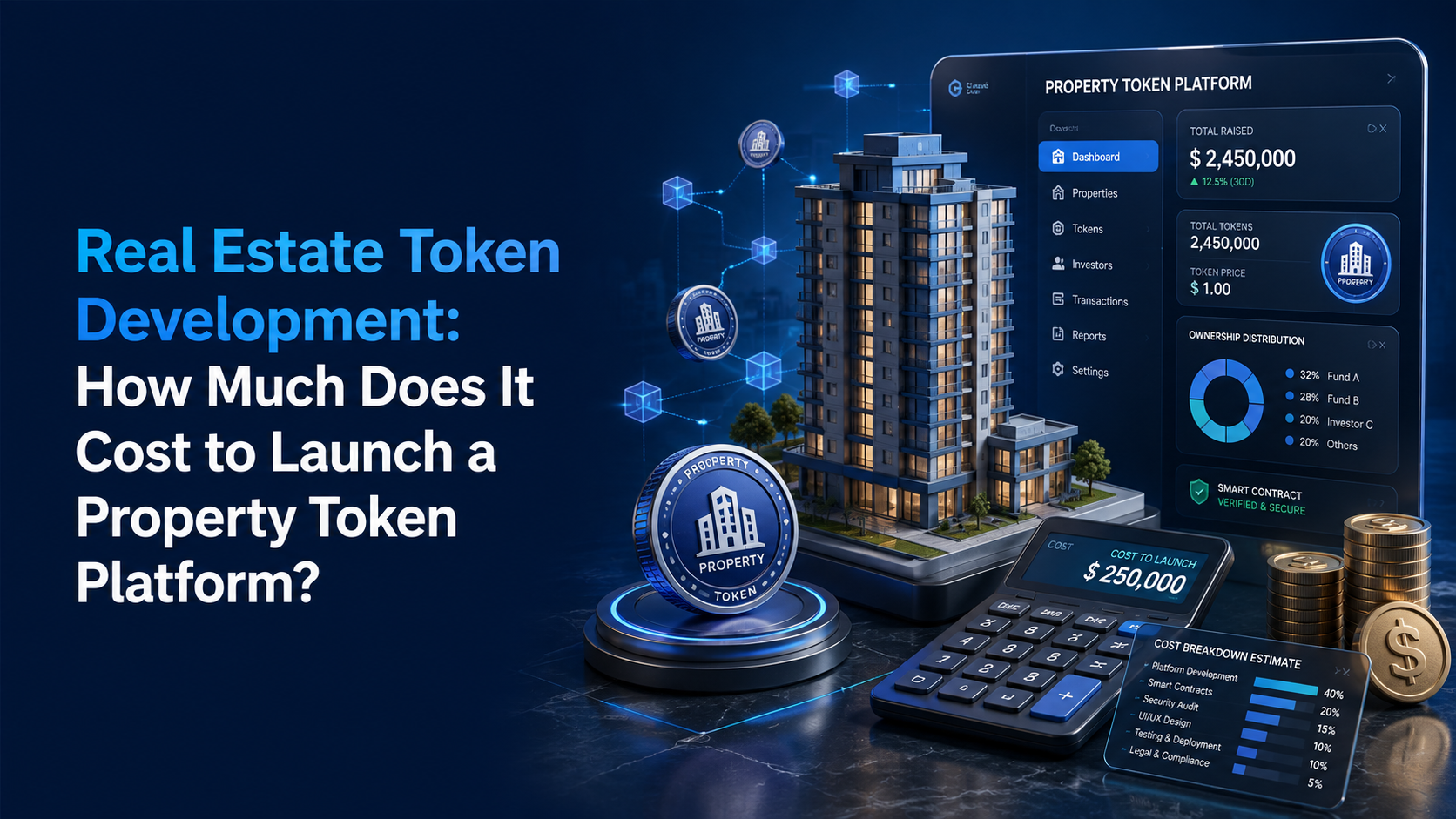
Real estate has traditionally required substantial capital, legal paperwork, lengthy transactions, and direct involvement from intermediaries. Property tokenization introduces a different model in which ownership interests, economic rights, or investment positions can be represented through blockchain-based tokens. This approach has created growing interest among property owners, investment firms, developers, and technology businesses looking at digital asset markets.
However, launching a property token platform involves much more than developing smart contracts. The total budget depends on the property structure, token model, blockchain network, investor features, compliance requirements, security arrangements, marketplace functions, and ongoing operations.
For businesses considering real estate token development, a practical budget can range from approximately $50,000 for a relatively simple platform to more than $300,000 for a feature-rich system with complex compliance, marketplace functions, integrations, and institutional-grade security. The final figure depends heavily on the project scope.
This article explains the major cost areas involved in launching a property token platform and the factors that can increase or reduce the development budget.
What Is Real Estate Token Development?
Real estate token development involves creating blockchain-based tokens that represent rights connected to a property or property-related investment. Depending on the legal structure, a token may represent fractional ownership, an interest in a special purpose vehicle, revenue rights, debt exposure, or another legally defined claim.
A property token platform generally brings together property onboarding, investor verification, token issuance, wallet management, payments, ownership records, compliance processes, and secondary trading functions.
The technology is only one part of the project. Legal structuring, property documentation, investor eligibility rules, custody arrangements, tax considerations, and jurisdictional requirements also influence the project budget.
A real estate tokenization company may therefore approach the project as a combination of blockchain development, financial technology, legal architecture, and investment platform design.
Average Cost to Launch a Property Token Platform
There is no universal price for real estate tokenization development because every project has different requirements. A basic platform with property listings, investor onboarding, token issuance, wallet connectivity, and administrative controls may cost around $50,000 to $90,000.
A mid-range platform with stronger compliance functions, payment integrations, smart contract automation, investor dashboards, reporting, and trading features may fall between $90,000 and $180,000.
A larger platform designed for multiple properties, different asset classes, secondary trading, complex compliance workflows, institutional users, multiple blockchain networks, and extensive integrations can move beyond $200,000 and may reach $300,000 or more.
These figures are general development ranges rather than fixed quotations. A business should prepare a detailed specification before selecting a development partner.
Major Cost Factors in Real Estate Token Development
1. Business and Token Model
The first cost factor is the business model. A platform for fractional property investment has different requirements from one designed for real estate funds, commercial properties, rental income, or debt-backed assets.
The token model also matters. Developers need to determine whether tokens represent equity, economic rights, debt, membership interests, or another legal position. The decision affects smart contract logic, investor records, compliance processes, and platform workflows.
A simple token model may reduce development time, while a more complicated structure can require additional contracts, testing, legal review, and administrative functions.
2. Property Onboarding Module
Property owners need a way to submit asset information before a token offering begins. The platform may collect property documents, valuation details, ownership information, financial records, images, location data, rental information, and other supporting materials.
An administrative team may then review and approve the property before it appears on the investment marketplace.
The cost depends on whether the platform uses a simple submission form or a detailed workflow involving document verification, approval stages, valuation records, and compliance checks.
3. Smart Contract Development
Smart contracts manage many blockchain-based activities within a property token platform. They may handle token issuance, transfers, investor restrictions, distributions, ownership records, and other programmed rules.
Development costs depend on the token standard, blockchain network, contract complexity, transfer restrictions, upgrade requirements, and distribution logic.
Security testing is also important. A smart contract vulnerability can create financial and legal problems, so professional testing and independent audits may add several thousand dollars to the overall budget.
4. Investor Dashboard
Investors need a dashboard where they can browse properties, review offering information, complete verification, purchase tokens, monitor holdings, and view relevant investment records.
A basic dashboard may include portfolio balances and transaction history. A more sophisticated version can include property-level financial information, distributions, statements, tax documents, token activity, notifications, and investment analytics.
The number of user roles and dashboard functions has a direct effect on development cost.
5. KYC and AML Functions
Property token platforms commonly require identity verification and investor screening. Depending on the jurisdiction and offering structure, the platform may need KYC, AML checks, sanctions screening, accreditation or eligibility checks, and ongoing monitoring.
Businesses can integrate third-party compliance providers instead of developing every verification function internally. Integration fees, provider charges, API work, and workflow development should therefore be included in the project budget.
6. Wallet and Payment Integration
Investors need a practical way to hold and purchase property tokens. A platform may support external wallets, embedded wallets, custodial accounts, bank payments, stablecoins, or other payment methods.
Each additional payment or wallet method introduces integration work, testing, transaction handling, and security requirements.
Fiat payment support can be particularly useful for investors who are unfamiliar with cryptocurrency, but it can also introduce additional compliance and payment-provider requirements.
7. Property Marketplace
A marketplace allows investors to browse available properties and compare investment opportunities.
Common marketplace functions include property categories, investment amounts, token prices, funding progress, expected distributions, property documents, search filters, and offering status.
If the platform also supports secondary trading, the technical requirements become more complex. Order management, transfer restrictions, investor eligibility, settlement processes, and trading records may all need additional development.
8. Admin Panel
An administrative dashboard gives platform operators control over users, properties, offerings, tokens, transactions, compliance records, reports, and platform settings.
Different administrator roles may be required for compliance officers, property managers, finance teams, support staff, and platform administrators.
Role-based access controls and detailed activity logs can increase development costs but are useful for platforms handling financial transactions and sensitive investor information.
Development Team and Location
The composition of the development team can have a major effect on cost.
A typical real estate tokenization development company may involve blockchain developers, backend developers, frontend developers, UI designers, QA engineers, DevOps specialists, project managers, and security professionals.
Developer location also affects hourly rates. Teams in North America and Western Europe generally charge more than teams in India, Southeast Asia, or Eastern Europe. However, cost should not be the only selection factor. Experience with tokenization, financial platforms, smart contracts, compliance workflows, and security should receive significant attention.
A smaller team can reduce initial expenditure, while a larger team may shorten development time for a complex platform.
Blockchain Selection and Its Effect on Cost
The blockchain network influences smart contract development, transaction costs, wallet support, infrastructure, and future platform operations.
Businesses can choose from networks with different transaction models, developer ecosystems, token standards, and institutional adoption levels.
A platform operating on one blockchain is usually less expensive than a multi-chain platform. Supporting several networks requires additional contract work, wallet integrations, testing, monitoring, and infrastructure.
The decision should therefore be based on the intended investor base, asset type, transaction requirements, jurisdiction, and long-term operating model rather than development cost alone.
Legal and Compliance Expenses
Legal expenses can represent a significant portion of a real estate tokenization budget.
A business may need legal advice concerning securities regulations, property ownership structures, token classification, investor eligibility, offering documents, transfer restrictions, taxation, custody, and jurisdiction-specific rules.
The legal structure may involve a special purpose vehicle or another ownership arrangement that connects the digital token with the underlying property rights.
These expenses are separate from software development. A technically complete platform cannot compensate for an unsuitable legal structure, so businesses should account for legal work from the beginning of the project.
Security and Smart Contract Audits
Security should receive its own budget category.
Property token platforms can handle identity information, investment funds, digital assets, ownership records, and financial data. Security testing may include application penetration testing, smart contract audits, wallet security reviews, API testing, access control testing, and infrastructure assessments.
A smart contract audit can cost anywhere from several thousand dollars to considerably more depending on contract complexity and audit scope.
Ongoing monitoring may also be required after launch because software, dependencies, wallets, APIs, and blockchain environments can change over time.
Third-Party Integrations
A property token platform may depend on several external services. These can include identity verification, sanctions screening, payment processing, property data, valuation services, tax reporting, custody, blockchain infrastructure, analytics, email delivery, and customer support.
Each integration introduces development and maintenance costs.
Businesses should also review recurring API or subscription charges. A platform with many third-party dependencies can have a relatively low initial development cost but higher monthly operating expenses.
UI and User Experience Costs
Real estate investors often expect a platform that presents property information in a familiar investment format.
The interface may include property images, financial figures, investment terms, token allocation information, documents, portfolio values, transaction history, and distribution records.
A simple interface costs less than a highly interactive platform with advanced dashboards, charts, notifications, investor analytics, and multiple user journeys.
The design process should focus on making financial information understandable without adding unnecessary interface complexity.
Maintenance and Operating Costs
Launching the platform is not the end of the budget.
Businesses should reserve funds for software maintenance, security updates, blockchain infrastructure, server hosting, monitoring, bug fixes, compliance updates, third-party API charges, customer support, and future feature releases.
Annual maintenance expenses can vary significantly based on the platform's size and operational requirements. A small system may require relatively limited maintenance, while a multi-property marketplace with active trading can require a dedicated technical and compliance team.
Cost Comparison by Platform Type
A simple way to estimate the budget is to divide property token platforms into three categories.
Basic Platform: $50,000 to $90,000
This type may include property listings, investor registration, KYC integration, wallet connectivity, token issuance, an investor dashboard, an admin panel, and basic reporting.
It is suitable for businesses testing a single-property or limited-property concept.
Mid-Level Platform: $90,000 to $180,000
This range may include multiple property offerings, stronger compliance workflows, payment integration, advanced investor dashboards, automated distributions, detailed reporting, document management, and broader administrative functions.
This model is suitable for businesses preparing a commercial tokenization platform.
Large-Scale Platform: $200,000 to $300,000+
A larger platform can include multiple blockchain networks, secondary trading, institutional accounts, complex compliance rules, custody integration, automated settlement, extensive reporting, advanced security systems, and multiple property categories.
The budget can rise beyond $300,000 when the project involves complex legal structures, several jurisdictions, sophisticated trading infrastructure, or substantial third-party integrations.
How to Reduce Development Costs
Businesses can control spending by defining the first release carefully.
Starting with one blockchain, a limited number of property types, selected payment methods, and a focused investor workflow can reduce the initial development burden.
A phased release can also help. The first version can focus on property onboarding, investor verification, token issuance, investment transactions, and portfolio management. Secondary trading, multi-chain support, advanced analytics, and institutional features can be added later.
Using an existing tokenization framework or white-label solution can also reduce development time compared with creating every component from the beginning. However, businesses should examine the underlying technology, security practices, contract ownership, customization limits, compliance capabilities, and ongoing fees before making a decision.
How to Choose a Real Estate Tokenization Development Company
Choosing a development partner requires more than comparing quotes.
Businesses should examine previous work in blockchain, property technology, digital securities, smart contracts, investor platforms, and financial applications. A capable real estate tokenization platform development company should also understand how technology connects with legal and operational requirements.
When comparing Top real estate tokenization companies or Best real estate tokenization companies, businesses should review development methodology, security processes, post-launch support, integration experience, contract audit practices, and ownership of the delivered source code.
A low initial quote may become expensive if important functions are excluded and added later. A detailed scope document makes price comparisons more meaningful.
Final Cost Checklist for Property Token Development
Before approving a budget, businesses should account for the following areas:
- Business model and token structure
- Legal and regulatory analysis
- Property onboarding
- Smart contract development
- Smart contract auditing
- Investor registration
- KYC and AML integration
- Wallet integration
- Fiat and crypto payment support
- Investor dashboard
- Property marketplace
- Secondary trading, if required
- Admin dashboard
- Security testing
- Blockchain infrastructure
- Third-party APIs
- Cloud hosting
- Reporting and analytics
- Maintenance and technical support
Looking at these expenses together provides a more realistic picture than considering software development alone.
Conclusion
Real estate token development can cost anywhere from about $50,000 for a basic property token platform to $300,000 or more for a large system with advanced trading, multi-chain support, extensive integrations, security requirements, and complex compliance workflows. The final budget depends on the token model, property structure, technology stack, investor features, blockchain network, legal requirements, security scope, and operating model. Businesses can manage the initial investment by defining a focused first release and adding additional functions in later phases. Selecting the right real estate tokenization development company is equally important because the project combines blockchain technology with property, investment, compliance, and financial processes. Blockchain App Factory provides Real estate tokenization development services for businesses seeking to launch property token platforms with the technology and features suited to their project requirements.
FAQs
1. How much does real estate token development cost?
A basic platform may cost around $50,000 to $90,000, while a mid-level system can range from $90,000 to $180,000. Large and feature-rich platforms may cost $200,000 to $300,000 or more.
2. What affects the cost of a property token platform?
Major factors include the token model, blockchain network, smart contract complexity, compliance requirements, investor features, payment methods, wallet support, marketplace functions, security testing, integrations, and legal structure.
3. Does legal compliance increase the development budget?
Yes. Legal structuring, securities analysis, investor eligibility, KYC, AML procedures, property ownership arrangements, and jurisdiction-specific requirements can add significant expenses beyond software development.
4. Is smart contract auditing included in development costs?
It may or may not be included in a development quotation. Businesses should confirm whether independent smart contract auditing, penetration testing, and security assessments are part of the proposed budget.
5. Can I launch a property token platform with a smaller budget?
Yes. A focused first version can reduce costs. Businesses can begin with one blockchain, a limited property model, basic investor functions, and selected payment methods before adding more complex capabilities.
6. How long does real estate tokenization development take?
A basic platform may take several months, while a complex platform with trading, compliance workflows, multiple integrations, and extensive security testing can require considerably more time. The schedule depends on the project scope and legal preparation.
7. What does a real estate asset tokenization company usually develop?
Such a company may develop property onboarding systems, token contracts, investor dashboards, compliance integrations, wallets, payment systems, marketplaces, admin panels, reporting tools, and blockchain infrastructure.
8. Should businesses choose custom development or a white-label solution?
Custom development provides greater control over architecture and functionality, while a white-label platform can reduce initial development time. The better option depends on budget, launch goals, required features, ownership preferences, and future product plans.
9. Can property tokens be traded after issuance?
They can be designed for secondary trading where the legal and regulatory framework permits it. The platform may require investor eligibility checks, transfer restrictions, trading functions, settlement processes, and appropriate marketplace infrastructure.
10. What should businesses check before hiring a real estate tokenization platform development company?
Businesses should review blockchain experience, smart contract work, security practices, compliance integration experience, previous tokenization projects, development methodology, support arrangements, source-code ownership, and the full cost breakdown.

 Arabic
 French
 Spanish
 Portuguese
 Deutsch
 Turkish
 Dutch
Dutch
 Italiano
 Russian
 Romaian
 Portuguese (Brazil)
 Greek
Greek