


How Can Zannxtech Electric Track Vehicle Fit Different Jobsite Needs
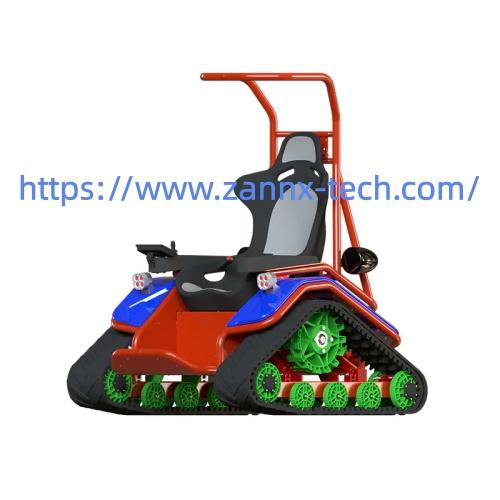
Electric Track Vehicle selection starts with a clear look at how the machine will actually be used. A buyer may be comparing models for agriculture, construction support, material transport, property maintenance, inspection work, or specialized operations. The right choice depends less on a long specification sheet and more on whether the machine fits the working environment, daily workload, terrain, charging routine, and operator expectations. Recent industry discussions around off highway electrification also place strong attention on duty cycles, battery systems, cooling, charging access, and reliability in remote locations.
Terrain should be near the top of the checklist. Flat ground, loose soil, mud, gravel, slopes, snow, and uneven surfaces can place very different demands on the undercarriage and drive system. Buyers should look at ground contact, turning behavior, stability, clearance, and traction control rather than focusing only on rated power. A compact design can be useful where access is limited, while a wider stance may provide greater stability for certain working conditions. The important point is to match the configuration with the site instead of choosing equipment based only on appearance or headline specifications.
Battery planning deserves the same attention. Runtime depends on workload, terrain, speed, payload, temperature, and operating habits. A machine working slowly under heavy load can have a very different energy demand from one performing short transport cycles on relatively firm ground. Buyers should therefore ask about usable battery capacity, charging time, battery management, thermal control, and replacement arrangements. Current off highway research continues to highlight battery weight, charging downtime, operating hours, and infrastructure as practical considerations when choosing electrified machinery.
Payload is another area where careful comparison pays off. Carrying capacity should be considered together with the shape and distribution of the load. A bulky load may create different stability requirements from a compact heavy load. Buyers should also consider whether the machine will frequently climb slopes while carrying materials. In these situations, motor response and torque delivery can influence how smoothly the machine handles changes in load and ground conditions.
Control feel matters too. Operators often work in tight spaces where precise movement is more useful than high travel speed. Smooth acceleration, predictable steering, responsive braking, and easy direction changes can make everyday operation less tiring. For applications involving repeated loading and unloading, simple controls can also help reduce unnecessary movement and improve workflow consistency.
Maintenance should be part of the purchasing conversation before a decision is made. Ask how easily key components can be inspected, where routine service points are located, and whether commonly needed parts can be supplied efficiently. Battery access, electrical connections, drive components, cooling areas, and protective enclosures all deserve practical attention. A machine that is easier to inspect can help simplify routine upkeep, especially when it operates away from a major service center.
Charging arrangements should match the actual work schedule. A short daily duty cycle may allow charging during off hours, while longer shifts can require opportunity charging or additional battery planning. Remote operations need even more preparation because electrical infrastructure may not be readily available. Industry research increasingly treats energy supply as part of the overall off highway equipment solution rather than as a separate issue.
For buyers comparing different configurations, Zannxtech focuses on practical mobility solutions designed around real operating requirements. The goal is to give customers a clearer path from application planning to equipment selection, with attention to terrain, power management, payload, maneuverability, and daily usability.
A thoughtful purchasing process does not need to be complicated. Start with the working site. Define the expected load. Estimate daily operating hours. Check charging access. Then compare dimensions, traction, battery configuration, controls, safety provisions, and maintenance requirements. This approach makes it easier to identify a configuration that fits the job instead of paying for specifications that may have little value in actual use.
For customers reviewing available configurations, application details and product information can be considered together through the Zannxtech product range at https://www.zannx-tech.com/product/ Looking at the equipment from the perspective of real working conditions can make the final decision more practical and easier to justify.

 English
 Arabic
 Spanish
 Portuguese
 Deutsch
 Turkish
 Dutch
Dutch
 Italiano
 Russian
 Romaian
 Portuguese (Brazil)
 Greek
Greek