


Why Does Chronic Ear Discharge Keep Coming Back?
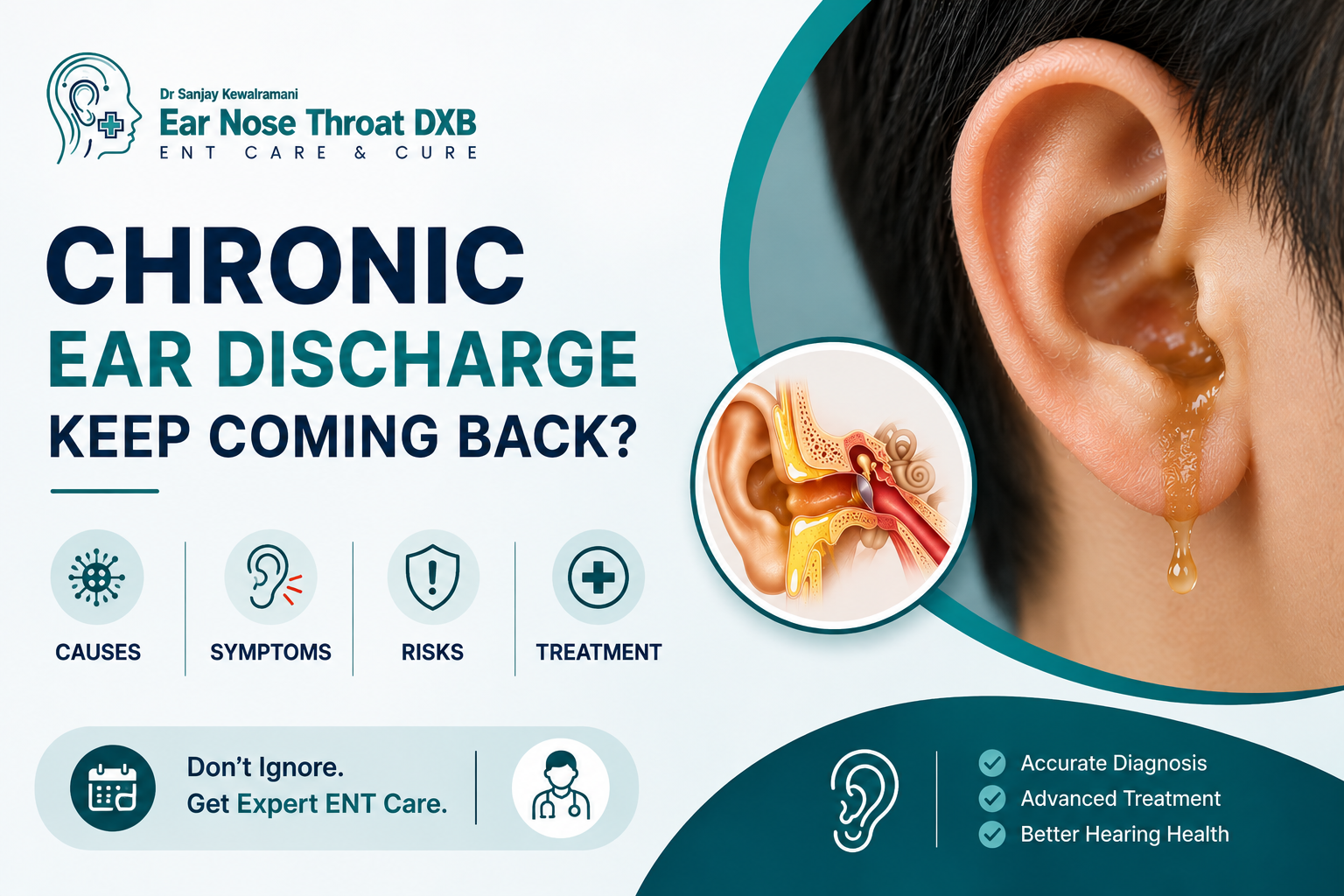
You treat an ear infection, the discharge stops, and everything seems normal. A few weeks or months later, the same ear starts draining again. This repeated cycle can be frustrating, but it can also provide an important clue: the underlying cause of the ear discharge may still be present.
Ear discharge, medically known as otorrhea, is a symptom rather than a disease. When it repeatedly returns, simply treating the visible drainage may not be enough. The ear canal, eardrum, and middle ear need to be examined to understand what is allowing the problem to recur.
From a persistent eardrum perforation to chronic infection or cholesteatoma, several conditions can cause repeated ear discharge.
Why Does the Discharge Stop and Then Return?
Temporary improvement does not always mean that the original ear problem has completely resolved.
Medication may control an active infection and reduce inflammation, causing the discharge to stop. However, if an underlying problem remains, another episode can develop later.
For example, a hole in the eardrum may remain even after an infection improves. Water or bacteria can later enter the middle ear and trigger another episode.
This is why the pattern of recurrence matters. An ENT specialist will often want to know how frequently the discharge returns, how long each episode lasts, and what seems to trigger it.
A Persistent Eardrum Perforation Can Allow Repeated Infections
One important reason for recurring discharge is an eardrum perforation.
The eardrum normally separates the outer ear canal from the middle ear. If there is a persistent opening, the middle ear loses part of this protective barrier.
Water entering the ear while bathing or swimming may then reach the middle ear and contribute to infection in susceptible patients.
A perforation can develop following infection, trauma, or other causes. Some perforations close naturally, while others remain open.
If recurring discharge is associated with a persistent perforation, an ENT specialist may assess its size, location, the condition of the middle ear, and whether hearing has been affected.
Chronic Middle Ear Disease May Not Fully Settle
Some people experience repeated inflammation or infection within the middle ear.
The discharge may disappear between episodes, creating the impression that the ear has completely recovered. However, chronic middle ear disease can remain present and flare up again.
Hearing may also become affected, particularly if the eardrum or small middle ear bones responsible for transmitting sound are involved.
Recurring discharge without significant pain can still occur with chronic middle ear disease. Therefore, waiting for severe pain before seeking medical advice is not always appropriate.
Repeated Outer Ear Inflammation Can Also Cause Drainage
Not every case of chronic discharge comes from behind the eardrum.
The ear canal itself can repeatedly become inflamed. This is known as otitis externa.
Moisture, scratching, frequent use of cotton buds, ear canal trauma, and certain skin conditions may contribute to repeated irritation.
Symptoms can include:
- Itching
- Ear discomfort
- Canal swelling
- Tenderness
- A blocked sensation
- Ear discharge
If the factors irritating the ear canal continue, symptoms may return even after a previous episode has been treated.
Could Cholesteatoma Cause Repeated Ear Discharge?
Yes. Cholesteatoma is an important condition to consider when ear discharge is persistent or repeatedly returns.
A cholesteatoma is an abnormal collection of skin cells and debris that develops in the middle ear or nearby spaces. It is not cancer, but it can gradually enlarge and damage surrounding structures.
Recurring or persistent discharge—sometimes with an unpleasant smell—can be one of its symptoms. Hearing loss, tinnitus, ear pressure, or dizziness may also occur.
Because the symptoms can resemble those of a routine chronic ear infection, examination is necessary to identify the underlying problem.
If you have repeated drainage from the same ear, learn why chronic ear discharge can sometimes be associated with cholesteatoma and why ongoing symptoms deserve appropriate ENT evaluation.
Medication may temporarily control associated infection or drainage, but a cholesteatoma itself generally requires specialist management.
Water Entering the Ear May Trigger Another Episode
Patients with certain chronic ear conditions may notice that discharge starts after swimming or after water enters the ear during bathing.
This can be particularly relevant when there is an eardrum perforation or recurring ear canal inflammation.
If your ENT specialist advises keeping the ear dry, following those instructions may help reduce repeated episodes.
However, recurrent discharge should still be investigated rather than managed only by avoiding water.
Incorrect Ear Cleaning Can Keep the Ear Irritated
Trying to clean a draining ear at home can sometimes make the problem worse.
Cotton buds may push wax and debris deeper into the canal. Other objects can scratch the delicate ear canal skin and create additional irritation.
Repeated trauma can make the skin more vulnerable to inflammation and infection.
Avoid putting cotton buds, pins, keys, matchsticks, or similar objects inside the ear.
If accumulated discharge or debris needs to be removed, professional cleaning allows it to be done while the ear is properly examined.
Why Do Ear Drops Sometimes Work Only Temporarily?
Ear drops can be useful for specific infections and inflammatory conditions, but they need to match the underlying problem.
If discharge stops after using drops but repeatedly returns, several possibilities need to be considered.
The original infection may not be the only problem. A perforation, chronic middle ear disease, skin condition, or cholesteatoma may still be present.
Using leftover drops whenever symptoms return can also delay proper evaluation.
The condition of the eardrum is particularly important when selecting ear medication, as not every preparation is appropriate for every ear.
Can Skin Problems Make Ear Discharge Recur?
Yes.
Eczema, dermatitis, and other skin conditions can affect the ear canal. The skin may become dry, flaky, itchy, or inflamed.
Repeated scratching can damage the protective skin barrier and make secondary infection more likely.
In these situations, treating an infection without addressing the underlying skin condition may result in repeated symptoms.
An ENT specialist can assess whether the drainage originates from the ear canal or deeper within the ear.
Why Is Hearing Testing Sometimes Important?
If chronic ear discharge is accompanied by reduced hearing, a hearing test may provide useful information.
A persistent eardrum perforation or chronic middle ear disease can interfere with normal sound transmission. Cholesteatoma may also affect structures involved in hearing.
Hearing assessment can help determine whether hearing has changed and may assist with treatment planning.
Patients should mention even gradual hearing changes rather than assuming they are simply caused by temporary blockage from discharge.
How Does an ENT Specialist Find the Reason for Recurrence?
Finding the cause usually begins with a detailed history and ear examination.
Your doctor may ask:
- How often the discharge returns
- How long each episode lasts
- Whether it affects the same ear
- Whether the drainage smells unpleasant
- Whether water triggers symptoms
- Whether hearing has changed
- Whether you experience pain, tinnitus, or dizziness
- Whether you have previously had ear surgery
The ear canal and eardrum can then be examined using an otoscope or microscope.
In some cases, discharge and debris are carefully removed to allow a clearer view.
Hearing tests or imaging may be recommended when examination suggests chronic middle ear disease, cholesteatoma, or another condition requiring further investigation.
How Is Recurrent Ear Discharge Treated?
Treatment depends on what is causing the discharge to return.
Management may include professional ear cleaning, prescribed ear drops, treatment of ear canal inflammation, keeping the ear dry when advised, or management of an underlying middle ear problem.
A persistent eardrum perforation may require further assessment, particularly when it contributes to repeated infection or hearing difficulties. Surgical repair may be considered in selected cases.
Cholesteatoma generally requires specialist treatment, and surgery may be recommended depending on its extent.
The goal is not simply to dry the ear temporarily but to manage the condition responsible for repeated drainage.
When Should Recurring Ear Discharge Be Checked Promptly?
Arrange a medical assessment if recurring discharge occurs with
- Increasing or severe ear pain
- Foul-smelling drainage
- Noticeable hearing loss
- Fever
- Significant dizziness
- Swelling or redness behind the ear
- Blood-stained discharge
- Facial weakness
Severe dizziness, facial weakness, significant swelling, neurological symptoms, or severe illness require prompt medical attention.
Frequently Asked Questions
Why does my ear discharge return after treatment?
Treatment may control the immediate infection while an underlying condition, such as an eardrum perforation or chronic middle ear disease, remains.
Can water cause ear discharge to return?
Water entering the ear can contribute to recurring problems in some people, particularly when an eardrum perforation or ear canal inflammation is present.
Can cholesteatoma cause recurring ear discharge?
Yes. Persistent or recurring, sometimes foul-smelling discharge can occur with cholesteatoma, although an ENT examination is necessary for diagnosis.
Should I keep using the same ear drops when discharge returns?
Do not automatically reuse old medication. The cause may be different, and the condition of the eardrum can influence which treatment is appropriate.
Stop the Cycle by Finding the Underlying Cause
When chronic ear discharge keeps coming back, repeated infections may only be part of the explanation. A persistent eardrum perforation, chronic middle ear disease, recurring ear canal inflammation, skin problems, or cholesteatoma may be allowing the problem to continue.
Rather than repeatedly treating each episode as an isolated infection, identifying the underlying cause can provide a clearer path toward appropriate management.
If your ear repeatedly becomes wet or starts draining again after treatment, consider an ENT evaluation. A detailed examination can help determine why the problem keeps returning and what can be done to manage the underlying ear condition.

 English
 Arabic
 French
 Portuguese
 Deutsch
 Turkish
 Dutch
Dutch
 Italiano
 Russian
 Romaian
 Portuguese (Brazil)
 Greek
Greek