


How Cosmetic Dermatology Helps Improve Skin Texture and Tone
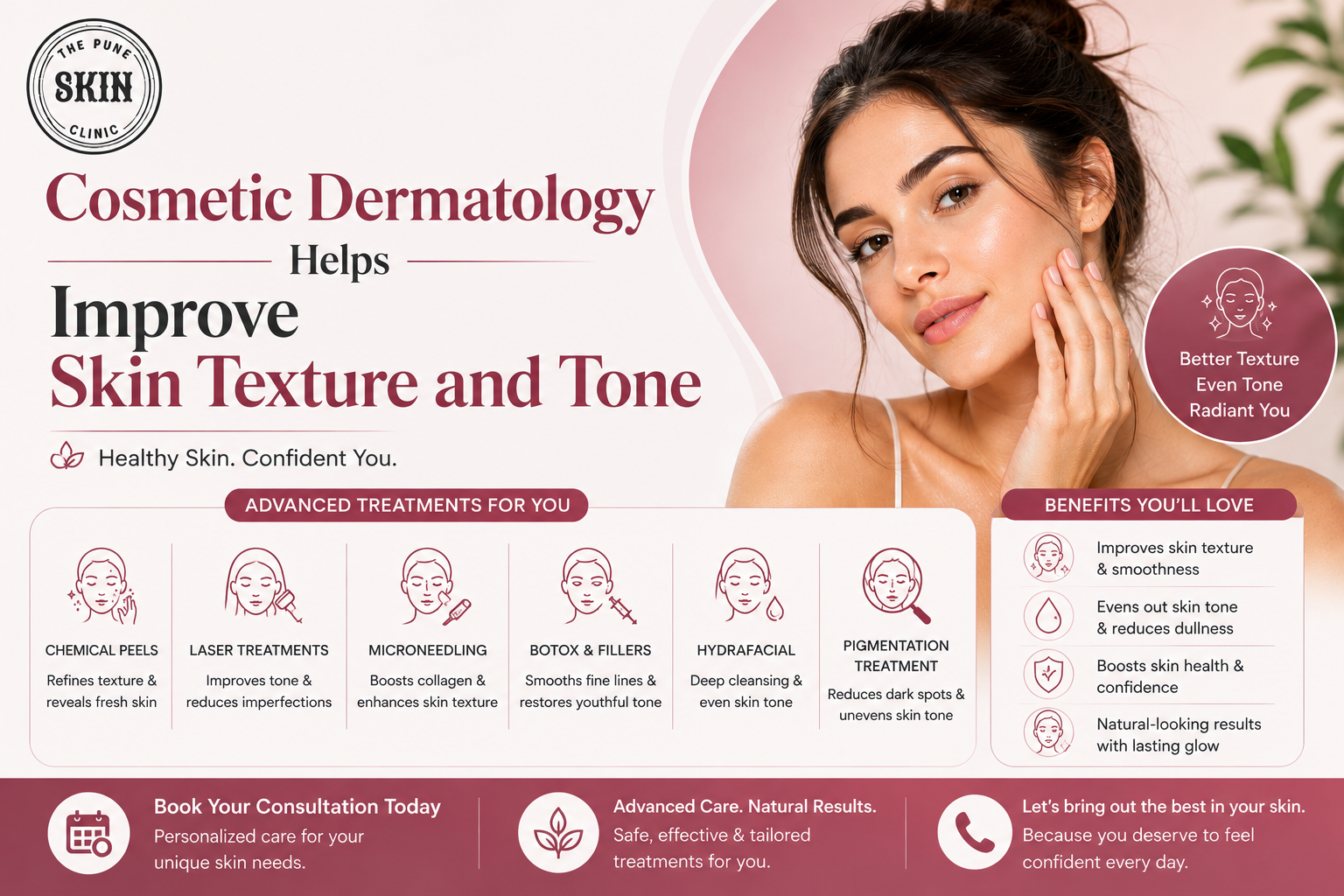
Smooth texture and an even skin tone are often associated with healthy-looking skin, but maintaining them is not always easy. Acne, sun exposure, pigmentation, aging, dryness, and previous skin inflammation can gradually change how the skin looks and feels.
You may notice rough areas, acne scars, dark spots, enlarged-looking pores, dullness, or an uneven complexion. While a regular skincare routine can support skin health, some concerns may need more targeted treatment.
This is where cosmetic dermatology can help. Rather than using the same procedure for every concern, cosmetic dermatology focuses on understanding what is affecting the skin and selecting treatments accordingly.
What Is the Difference Between Skin Texture and Skin Tone?
Skin texture describes how the surface of your skin looks and feels.
Healthy-looking texture is generally smooth and even. Texture may become irregular because of acne scars, enlarged-looking pores, dryness, sun-related changes or the natural aging process.
Skin tone, on the other hand, refers to the colour and overall evenness of the complexion.
Dark spots, post-acne marks, sun-related pigmentation and conditions such as melasma can make some areas appear darker than others.
A person can have uneven texture without significant pigmentation, uneven tone without roughness, or both concerns at the same time.
Understanding this difference is important because treatments for texture and tone are not always the same.
What Causes Uneven Skin Texture?
Uneven texture can develop for several reasons.
Acne is one common cause. Deeper or inflamed acne may sometimes leave depressions or other changes in the surface of the skin.
Aging can also affect texture. Natural changes in collagen and elasticity can make fine lines and other surface irregularities more noticeable over time.
Other contributing factors may include dryness, accumulated dead skin cells and sun-related skin changes.
Because the cause can vary, simply exfoliating the skin more often is not always the answer. Aggressive scrubbing or excessive use of strong skincare products can irritate the skin rather than improve it.
Why Does Skin Tone Become Uneven?
Uneven skin tone often develops when certain areas of the skin produce or retain more pigment than surrounding areas.
This can happen after acne or other inflammation. Once a breakout heals, a dark mark may remain for some time.
Sun exposure can also contribute to pigmentation and make existing dark areas more noticeable.
Hormonal factors may play a role in conditions such as melasma.
Because pigmentation has different causes, treatment should begin by identifying what type of pigmentation is present. Treating every dark patch in the same way may not provide the desired improvement.
How Can Chemical Peels Improve Skin Texture and Tone?
Chemical peels are one option used in cosmetic dermatology for selected surface-level concerns.
During treatment, a carefully chosen chemical solution is applied to the skin to produce controlled exfoliation. As the treated surface renews, certain types of superficial pigmentation and texture irregularities may gradually become less noticeable.
Depending on the peel and the skin concern, chemical peels may be considered for:
- Dull-looking skin
- Superficial pigmentation
- Certain post-acne marks
- Mild texture irregularities
- Uneven-looking complexion
Chemical peels are available in different formulations and strengths. The right choice depends on the person's skin type, sensitivity and treatment goal.
A stronger peel is not automatically more effective or appropriate.
How Does Microneedling Help With Texture?
Microneedling is commonly considered when improving skin texture and selected acne scars is the main goal.
The procedure uses very fine needles to create controlled micro-injuries in the skin. These trigger the body's natural repair response and can stimulate collagen remodeling.
Over time, this process may help improve the appearance of certain acne scars and uneven texture.
Microneedling may also be considered for enlarged-looking pores and selected fine lines.
Results are generally gradual rather than immediate because changes involving collagen take time.
It is also important to understand that acne scars are not all the same. Some scars may respond better to microneedling than others, while deeper or different scar patterns may require another approach.
Can Cosmetic Dermatology Help With Acne Scars?
Yes, selected cosmetic dermatology treatments can help improve the appearance of acne scars, but treatment should match the type of scar.
Some scars create shallow depressions, while others are deeper or narrower. Raised scars behave differently again.
A dermatologist may therefore assess the scar pattern before recommending microneedling, chemical peels, laser procedures or another scar-focused treatment.
Sometimes a combination of treatments may be considered instead of relying on a single procedure.
If active acne is still present, controlling new breakouts may also be important so that additional scarring can be reduced.
How Can Laser Treatments Help With Uneven Tone?
Selected laser and light-based treatments may be used for certain pigmentation concerns and aspects of skin rejuvenation.
These technologies use controlled energy to target specific structures within the skin. However, different types of pigmentation require different approaches.
The patient's skin type and tone are also important when selecting a procedure and treatment settings.
This is why professional assessment matters. A treatment that is appropriate for one pigmentation concern may not be suitable for another.
For people exploring professional options for uneven tone, pigmentation, acne scars, or texture concerns, Cosmetic Dermatology treatments at The Pune Skin Clinic include chemical peels, microneedling, laser-based pigmentation procedures, and acne-scar treatments. A skin assessment can help determine which approach may be appropriate for the individual concern.
Why Is Sun Protection Important for Even Skin Tone?
Professional treatment alone may not be enough to manage uneven skin tone.
Sun exposure can contribute to pigmentation and may make existing dark areas more noticeable. It can also affect the appearance and quality of the skin over time.
Regular sun protection is therefore an important part of a pigmentation-management plan.
This can include using appropriate sunscreen and following other sun-protection measures recommended by your dermatologist.
Sun protection is particularly important after certain cosmetic procedures when the skin may temporarily be more sensitive.
Can Botox and Fillers Improve Skin Texture?
Botox and dermal fillers are part of cosmetic dermatology, but they serve different purposes from treatments primarily aimed at pigmentation or surface texture.
Botox temporarily reduces selected muscle activity and is commonly used for expression lines, such as forehead or frown lines.
Dermal fillers are used to add or restore volume in selected facial areas.
Therefore, someone whose main concern is dark spots or acne-related texture would not automatically need Botox or fillers. Treatment should always match the actual concern.
Why Is a Personalized Treatment Plan Better?
There is no universal treatment for improving skin texture and tone.
Someone with post-acne pigmentation may need a different approach from a person with acne scars. Similarly, someone with rough texture and fine lines may need different care from someone with melasma.
Before suggesting a procedure, a dermatologist may consider:
- Skin type and tone
- Main skin concern
- Type of pigmentation or scarring
- Skin sensitivity
- Active acne or inflammation
- Previous treatments
- Current skincare routine
- Medical history and medications
These factors help determine which treatment is appropriate and which procedures should be avoided or delayed.
What Can You Expect From Treatment?
Cosmetic dermatology should be approached with realistic expectations.
Most texture and pigmentation concerns do not change overnight. Some treatments require multiple sessions, while others produce gradual improvement as the skin renews or collagen remodels.
Temporary redness, sensitivity, dryness, peeling, or mild swelling may occur after certain procedures.
Your dermatologist should explain expected recovery, possible side effects, and aftercare before treatment begins.
Following aftercare instructions is important, especially when it comes to sun protection and the temporary use or avoidance of certain skincare products.
Does Your Daily Skincare Routine Still Matter?
Yes. Cosmetic dermatology does not replace everyday skincare.
Professional procedures may target a particular concern, while daily care helps support and maintain the skin.
A simple routine generally includes gentle cleansing, appropriate moisturization and sun protection. Other products may be recommended depending on concerns such as acne or pigmentation.
Avoid using multiple strong exfoliants, home peels or harsh scrubs in an attempt to achieve faster results. Excessive irritation can damage the skin barrier and may worsen certain pigmentation concerns.
Frequently Asked Questions
Can cosmetic dermatology make rough skin smoother?
Selected treatments such as chemical peels and microneedling may help improve certain types of uneven texture. The appropriate treatment depends on what is causing the roughness.
Which treatment is best for uneven skin tone?
There is no single best treatment. The right approach depends on whether the uneven tone is related to acne marks, sun exposure, melasma or another cause.
Can acne scars be completely removed?
Treatments can improve the appearance of selected acne scars, but complete removal cannot be guaranteed. Results depend on scar type, depth and individual skin response.
How long does it take to improve skin texture?
The timeline varies according to the concern and procedure. Treatments involving collagen remodeling generally produce gradual changes and may require multiple sessions.
Do I still need sunscreen after pigmentation treatment?
Sun protection remains important when managing pigmentation and is especially relevant after certain cosmetic procedures.
Improving Skin Starts With Understanding the Concern
Uneven skin texture and tone can have many causes. Acne scars, pigmentation, sun exposure, inflammation and natural age-related changes can all affect the appearance of the skin in different ways.
Cosmetic dermatology provides targeted options such as chemical peels, microneedling, laser procedures and acne-scar treatments, but the appropriate treatment depends on the individual concern.
Instead of selecting a procedure based on trends or someone else's results, start by understanding your skin. Consult The Pune Skin Clinic for a professional assessment and discuss which treatment approach may be suitable for improving your skin texture, tone, and overall appearance.

 English
 French
 Spanish
 Portuguese
 Deutsch
 Turkish
 Dutch
Dutch
 Italiano
 Russian
 Romaian
 Portuguese (Brazil)
 Greek
Greek